A person holding their stomach in discomfort after eating.
When loose motions hit, most people reach for the kitchen before the pharmacy. Indian households have used the same handful of remedies for generations — pomegranate, curd, banana, cumin water, sago kanji. Many of these traditional remedies have real scientific backing. Some are more useful than others. A few popular ones do not actually help much.
This article walks through the home remedies that genuinely help with loose motions, how to use them properly, what to avoid, and when home care is enough versus when you need to see a doctor.
Setting Realistic Expectations
Home remedies work well for mild to moderate loose motions that come from common causes — viral infections, mild food issues, stress. They support recovery rather than dramatically stop loose motions.
For severe diarrhoea, persistent symptoms, blood in stools, high fever, or significant dehydration, home remedies are not enough. Medical care is needed.
The honest goal of home remedies is to:
Replace lost fluids and electrolytes
Provide easy-to-digest nourishment
Calm the digestive system
Support the gut while it heals itself
Reduce symptoms while the underlying cause resolves
Hydration — The Foundation
Before getting to specific remedies, hydration matters most. Fluid loss is the main danger in loose motions.
1. Oral Rehydration Solution (ORS)
The single most useful "remedy." Replaces fluids, salts, sugars, and minerals lost through diarrhoea.
Use commercial ORS packets dissolved in water as directed.
Or make at home:
1 litre of clean water
6 teaspoons of sugar
Half teaspoon of salt
Optional: pinch of baking soda
Drink small frequent sips throughout the day. Even when you do not feel thirsty.
2. Plain Water
Drink consistently — small amounts every 15 to 30 minutes rather than large amounts at once.
3. Other Useful Fluids
Coconut water — natural electrolytes
Buttermilk (chaas) with rock salt
Clear soups
Diluted fruit juices
Lemon water with salt and sugar
The Traditional Indian Remedies
1. Curd (Dahi)
Plain curd contains probiotic bacteria that support gut health. Particularly useful after the acute phase as the gut recovers.
How to use:
Plain unsweetened curd with rice
Diluted curd as buttermilk with a pinch of rock salt
Curd with banana
Avoid flavoured or sweetened varieties
Avoid very cold curd if it worsens cramps for you.
2. Banana
Rich in potassium (replacing electrolytes), pectin (helping firm stools), and easy to digest.
How to use:
Ripe banana mashed with curd
Plain banana as a snack
1 to 2 daily during illness
3. Rice and Khichdi
Easy to digest, provides energy, gentle on the stomach.
How to use:
Plain white rice (more easily digested than brown rice during illness)
Khichdi made with rice and moong dal, lightly seasoned
Rice water (the water in which rice has been boiled) — drink as a beverage
Curd rice
4. Pomegranate
The seeds and juice have astringent properties that may help firm stools. Long traditional use.
How to use:
Fresh pomegranate seeds
Fresh pomegranate juice
Pomegranate peel powder (half teaspoon with warm water) — stronger traditional remedy
5. Sabudana (Sago) Kanji
Easy-to-digest carbohydrate. Provides energy without irritating the gut.
How to use:
Cook sabudana in water until soft
Add a pinch of salt
Drink the watery preparation
6. Cumin Water (Jeera Pani)
Cumin has carminative properties that soothe digestion and reduce cramping.
How to use:
Boil 1 teaspoon cumin seeds in 2 cups water
Strain and drink warm
2 to 3 times daily
7. Ginger Tea
Soothes nausea and digestive distress.
How to use:
Boil fresh ginger slices in water
Strain and drink warm
Add a teaspoon of honey if desired
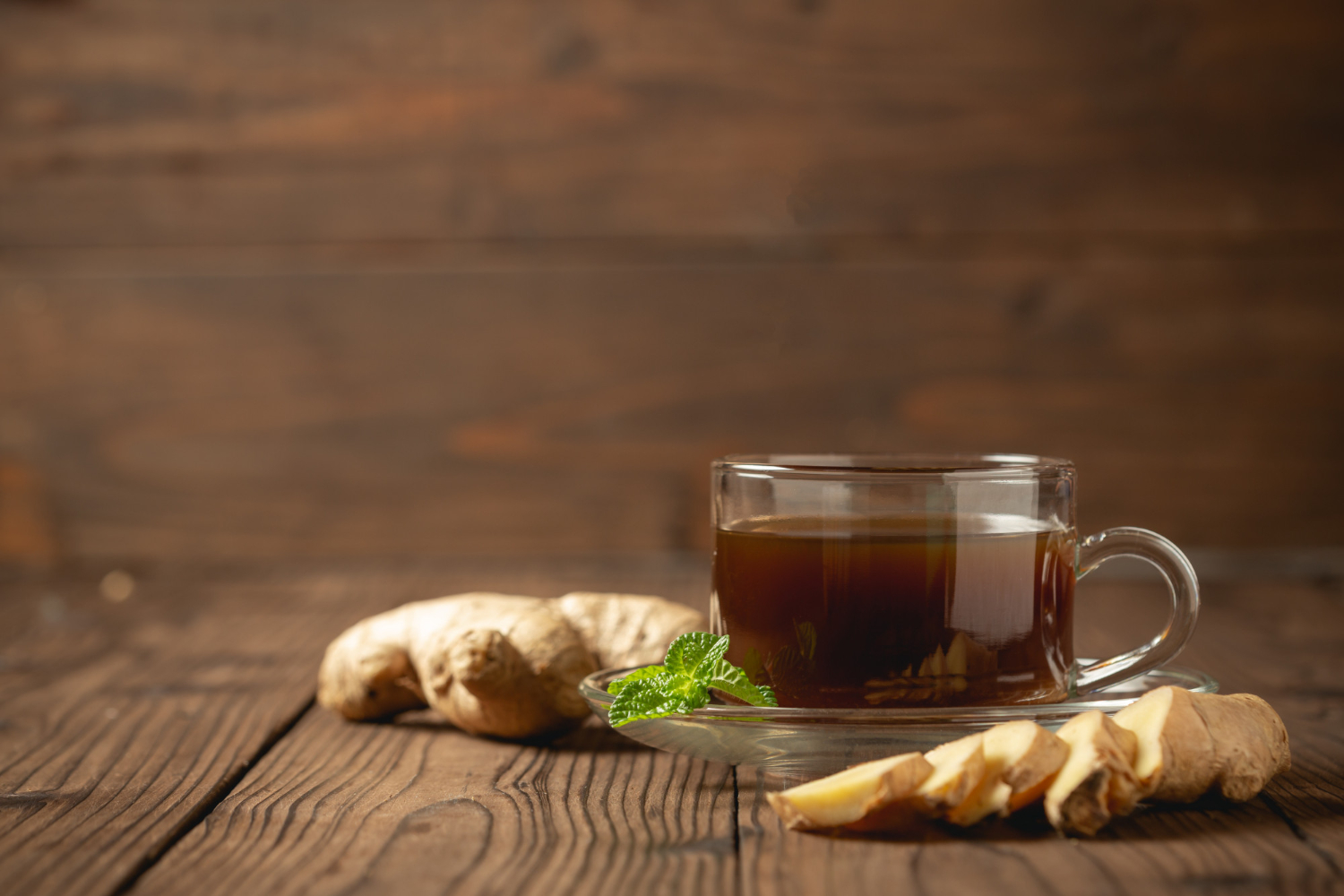
A cup of ginger tea with fresh ginger slices.
8. Mint Tea
Calms intestinal cramping and reduces nausea.
How to use:
Boil fresh mint leaves in water for 5 minutes
Strain and drink warm
9. Fenugreek (Methi) Seeds
Traditional remedy with mild antimicrobial effects.
How to use:
Soak 1 teaspoon overnight
Drink the water in the morning
Or grind into powder and mix with warm water
10. Carom Seeds (Ajwain) Water
Reduces bloating and supports digestion.
How to use:
Boil 1 teaspoon ajwain in 2 cups water
Strain and drink warm
11. Lemon Water with Salt and Sugar
Hydrates and replaces salts. Vitamin C supports recovery.
How to use:
1 glass warm water
Juice of half a lemon
Half teaspoon sugar
Pinch of salt
Drink several times daily
12. Honey
Has natural antibacterial properties. Soothes the digestive tract.
How to use:
2 teaspoons in a glass of warm water
Or with lemon and ginger
Note: Not for infants under 1 year due to botulism risk.
13. Cinnamon
Mild antibacterial effects.
How to use:
Half teaspoon cinnamon powder in warm water with honey
Or in tea
14. Tulsi (Holy Basil)
Anti-inflammatory and immune-supporting.
How to use:
Fresh leaves in tea or warm water
5 to 7 leaves daily
15. Chamomile Tea
Anti-spasmodic — relaxes intestinal muscles.
How to use:
Brew chamomile tea
Drink warm 2 to 3 times daily
16. Apple
Pectin in apples helps firm stools.
How to use:
Boiled apple or applesauce (unsweetened)
Raw apple in small amounts if tolerated
17. Isabgol (Psyllium Husk)
May seem counterintuitive but soluble fibre helps regulate bowel movements.
How to use:
1 teaspoon in a glass of water at bedtime
Drink immediately before it thickens
Use sparingly during acute loose motions; more useful for chronic issues
Foods to Include During Recovery
The BRAT diet plus Indian additions:
Bananas, Rice, Applesauce, Toast (the classic BRAT).
Plus:
Khichdi
Curd
Boiled potatoes
Boiled vegetables (lauki, pumpkin, carrot)
Pomegranate
Sago kanji
Clear soups
Plain biscuits
Coconut water
Buttermilk
Foods to Avoid
During acute loose motions:
Spicy and oily foods
Deep-fried items
Heavy non-vegetarian meals (especially red meat)
Most dairy except curd
Raw vegetables and salads (high fibre can worsen things)
Concentrated fruit juices
Caffeine (coffee, tea in large amounts)
Alcohol
Carbonated drinks
Sugary foods and beverages
Whole grains during acute phase
Beans and legumes (gas-producing)
Cabbage, cauliflower, onions (gas-producing)
Citrus fruits in large amounts
Spicy chutneys and pickles
Street food
Artificial sweeteners (sorbitol, mannitol)
Useful Combinations
Curd + rice + a pinch of cumin powder — gentle, satisfying, restoring.
Banana + curd — quick combination at any time.
Lemon + honey + warm water — hydration with electrolytes.
Pomegranate juice + buttermilk — replenishing combination.
Ginger + lemon + honey tea — calming for nausea and cramps.
Khichdi + curd + lightly cooked vegetables — substantial meal that does not irritate.
Practical Daily Plan During Loose Motions
1. Morning
Glass of warm water with lemon, salt, and sugar
ORS sipped throughout the early morning
Soft idli or plain rice porridge for breakfast
Plain biscuit if hungry
2. Mid-morning
A banana
Cumin water or buttermilk
3. Lunch
Plain rice with curd
Small portion of khichdi
Boiled vegetables (lauki or pumpkin)
Avoid spices and oil
4. Afternoon
Pomegranate seeds or juice
ORS or buttermilk
5. Dinner
Khichdi with curd
Or rice with mashed potato
Lightly cooked vegetables
6. Throughout
ORS sipped continuously
Water in small frequent amounts
Avoid forcing food if appetite is poor
What Each Day Should Look Like
Day 1: Focus on fluids only or very minimal food. ORS, water, coconut water, very plain foods if appetite allows.
Day 2: Gradually add bland foods — rice, banana, curd, khichdi. Continue heavy fluid intake.
Day 3: Continue bland diet. Add lightly cooked vegetables if tolerated. Loose motions should be reducing.
Day 4 onwards: Gradually return to normal diet as tolerated. Avoid spicy, oily foods for several more days.
When Home Remedies Are Not Enough
See a doctor when:
Loose motions persist beyond 3 days
Blood in stools
High fever (above 38.5°C)
Severe abdominal pain
Persistent vomiting unable to keep fluids down
Signs of dehydration:
Very dark urine or no urination
Severe weakness or dizziness
Dry mouth and skin
Sunken eyes
Rapid heartbeat
Confusion
Significant weight loss
For children, older adults, pregnant women, and chronically ill individuals, threshold for medical care is lower.
Common Misconceptions
"Drink less water so the loose motions stop." Dehydration is the main danger. Drink more, not less.
"Stop eating completely." Bland foods help recovery. Complete fasting is counterproductive.
"Curd worsens loose motions." Plain curd usually helps through probiotic effects.
"Bananas constipate, so they cure loose motions." They help bind stools through pectin and replace potassium. Not a complete cure.
"Pomegranate alone fixes everything." It helps but is not magical.
"Loose motions cleanse the body." Most are infections or reactions, not cleansing.
"Anti-diarrhoeal pills are always the right choice." Avoid in bloody stools, high fever, severe infections.
"Antibiotics cure all loose motions." Most are viral, where antibiotics do not help.
"Drinking milk is fine during loose motions." Plain milk often worsens loose motions. Curd is different and usually fine.
"Sugar should be avoided." Some sugar in ORS helps absorb fluids. Sugar in concentrated forms (sweets, packaged juices) can worsen things.
Recovery After Loose Motions
After loose motions resolve:
Reintroduce foods gradually — do not jump back to spicy, oily, heavy meals immediately.
Continue probiotics — curd, yogurt, or probiotic supplements support gut recovery.
A top-view arrangement of milk, cheese, and curd showcasing probiotics.
Stay well hydrated — your body has lost significant fluids.
Get adequate rest — your body has worked hard fighting the infection.
Eat soft, light, easily digestible foods for a few more days.
Reintroduce dairy gradually — your tolerance may be temporarily reduced.
Note any patterns — if you frequently have loose motions with certain foods, consider intolerance.
Special Considerations
1. Children
Use ORS specifically formulated for children
Continue breastfeeding for infants
Zinc supplements help reduce severity (under medical guidance)
Seek medical care promptly for any concerning signs
Avoid loperamide and other anti-diarrhoeal drugs in children
Avoid most over-the-counter anti-diarrhoeal medications
Consult doctor for any significant loose motions
Continue prenatal vitamins as tolerated
Local Realities for Noida
Loose motions are common in NCR, particularly during monsoon and summer months. Working professionals often need to manage symptoms while continuing work — practical home remedies become essential.
Keeping ORS at home, knowing the basic remedies, having reliable filtered water, and avoiding street food during high-risk seasons all help manage and prevent loose motions.
Prakash Hospital Noida — Gastroenterology Care
At Prakash Hospital, Noida, experienced gastroenterologists offer evaluation and treatment of loose motions including stool analysis, identification of causes, and appropriate treatment when home remedies are not enough.
Whether you are in Sector 18, Sector 62, Greater Noida West, or anywhere nearby, Prakash Hospital Noida is a trusted name for gastroenterology consultation.
To book a consultation, call the number.
Closing Thoughts
The traditional Indian remedies for loose motions — curd, banana, rice, khichdi, pomegranate, cumin water, ginger tea, and others — work well for most mild to moderate cases. They support hydration, provide gentle nourishment, calm the digestive system, and let the body heal itself.
The key is recognising when home remedies are enough versus when medical care is needed. Most cases are self-limiting and respond to basic home care within 2 to 3 days. Cases with warning signs — blood, high fever, severe pain, persistent symptoms, signs of dehydration — need medical attention.
Hydration is the priority above all else. ORS at frequent intervals, plain water, coconut water, and buttermilk maintain fluid balance while the gut recovers. Bland foods support healing without irritating the system.
For most people, the kitchen pantry has what is needed to manage loose motions effectively. Combined with rest, patience, and attention to warning signs, home remedies handle the majority of episodes successfully.
We offer expert care across key specialties, including Medicine, Cardiology, Orthopaedics, ENT, Gynaecology, and more—delivering trusted treatment under one roof.
Vitamin D rich foods — a complete list of the best dietary sources, from fish and eggs to fortified foods and mushrooms. Visit Prakash Hospital Noida for health checkups.
Discover the top superfoods for a healthy diet. Learn how to include these nutrient-packed foods in your daily routine for better health, energy and immunity.