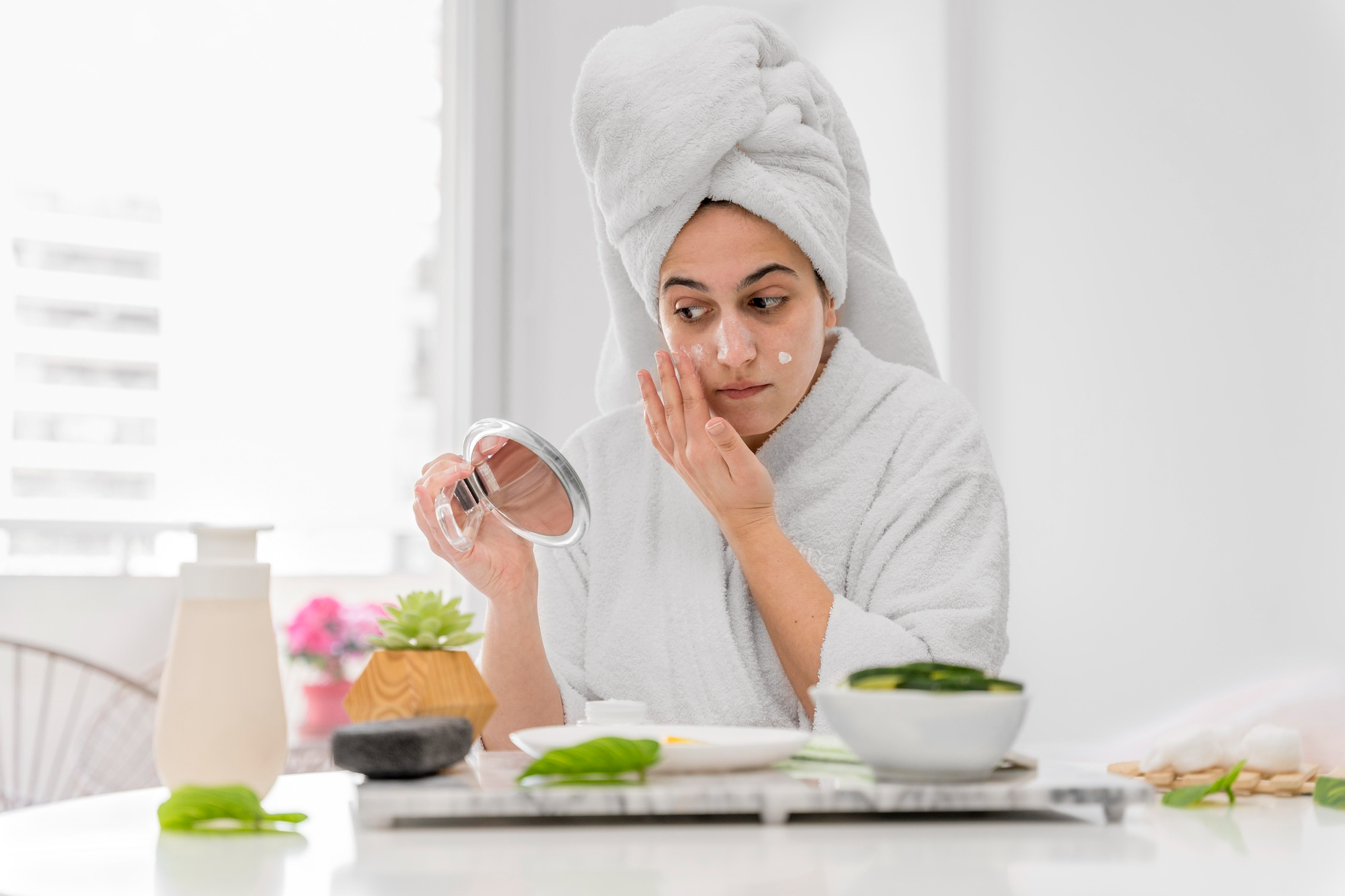
A woman looking in mirror at dark circles under eyes
You wake up in the morning, look in the mirror, and notice the shadows. Even after eight hours of sleep, the area under your eyes looks darker than the rest of your face. Concealer helps temporarily. But the moment makeup comes off, the dark circles are there again. People comment that you look tired. The selfies require filters. The frustration builds.
Dark circles are one of the most common cosmetic concerns in India. They affect men and women, young and old, sleep-deprived and well-rested. The frustrating part is that the same dark circles can have completely different causes in different people — which means the same treatment will not work for everyone.
This article walks through what dark circles actually are, the different causes, the treatments that genuinely work for each cause, and what to avoid.
The skin under the eyes is the thinnest skin on the body — about half the thickness of skin elsewhere. This makes any underlying changes — blood vessels, pigmentation, hollowness, or surface texture — much more visible than they would be elsewhere.
Dark circles are not a single condition. They are a description of an appearance with multiple possible causes. The same dark appearance can come from:
This is why treatments vary. A hyaluronic acid filler that brilliantly fixes hollow-based dark circles will do nothing for pigmented circles. A skin-brightening cream that improves pigment-based dark circles will not address vascular ones.
The first step in treatment is identifying which type you have.
Excess melanin production under the eyes creates a brown or grey appearance. Common in Indian skin types.
Look like: Brown or grey-brown discoloration, fairly uniform, similar appearance in different lighting.
Common causes: Genetics, sun exposure, chronic eye rubbing, eczema, post-inflammatory pigmentation, hormonal changes, certain medications.
Visible blood vessels showing through thin under-eye skin create a blue or purple appearance.
Look like: Bluish or purplish tinge, more visible when tired or in certain lighting, fades with massage that improves circulation.
Common causes: Genetics, very thin skin, nasal congestion, allergies, fatigue, dehydration.
Volume loss or natural anatomy creates a shadow effect from the bone structure beneath.
Look like: Visible groove or depression below the eye, dark appearance from shadow rather than skin colour, may look better lying down.
Common causes: Genetic structure, ageing-related volume loss, weight loss.
A combination of two or more of the above. Common in real-world cases.
Eczema or contact dermatitis — chronic inflammation darkens the area.
Allergies — chronic eye rubbing and inflammation.
Iron deficiency — paleness of skin makes blood vessels more visible.
Vitamin deficiencies — particularly K and B12.
Thyroid issues — affect skin and pigmentation.
Heavy alcohol or smoking — dehydrate and damage skin.
Genetics is one of the most common causes. If your family has dark circles, you likely will too.
Lack of sleep does not directly cause dark circles, but pale skin from poor sleep makes existing dark circles more visible. Sleep deprivation also causes puffiness and shadows.
Ageing thins the skin and reduces fat pads under the eyes, making blood vessels and bone structure more visible.
Sun exposure triggers melanin production, worsening pigmented dark circles.
Rubbing the eyes chronically — common with allergies — causes inflammation and pigmentation.
Dehydration makes skin look dull and emphasises shadows.
Allergies lead to chronic congestion, vessel dilation, and rubbing.
Stress affects sleep quality, skin health, and indirectly dark circles.
Nutritional deficiencies including iron, vitamin B12, and vitamin K can contribute.
Hormonal changes in pregnancy and menopause affect pigmentation.
Smoking and alcohol damage skin and accelerate ageing.
Chronic medical conditions including thyroid disorders, eczema, anaemia.
A simple home test:
Stretch test: Gently stretch the skin under the eye. If the dark colour disappears, it is likely pigmentation. If it remains, it is likely vascular or hollow.
Lighting test: Look at dark circles in different lighting. Hollow circles change significantly with lighting. Pigmented circles remain similar.
Lying down test: Lie on your back and look in a mirror. Hollow-based dark circles often look much better when lying down because the position lifts the soft tissues. Pigmented circles look the same.
A dermatologist can examine the eye area more precisely and identify the type.
Vitamin C serum — antioxidant and brightening. Applied daily under the eyes.
Retinol or retinoids — accelerate cell turnover and reduce pigmentation. Start with low strength to avoid irritation.
Niacinamide — gentle and effective for pigmentation.
Kojic acid — natural skin lightener.
Alpha arbutin — plant-derived alternative to hydroquinone.
Hydroquinone — stronger lightening agent. Used short-term under dermatologist supervision.
Azelaic acid — addresses pigmentation gently.
Chemical peels — using glycolic acid, lactic acid, or other gentle exfoliants for the eye area.
Laser treatments — Q-switched lasers or pico lasers for stubborn pigmentation.
Microneedling with brightening serums — combination treatment.
Sunscreen — most important. Apply daily including the under-eye area. Wear sunglasses.
Stop rubbing eyes — even gentle rubbing over years causes pigmentation.
Treat allergies properly — antihistamines for chronic conditions reduce rubbing.
Address eczema — if present, treat it with appropriate creams.
Caffeine creams — constrict blood vessels temporarily, reducing visible blue tint.
Vitamin K creams — may help with vascular issues.
Retinol — thickens skin slightly over time, reducing visibility of underlying vessels.
Laser treatment for vessels — specifically targets visible blood vessels.
Skin booster treatments — improve skin quality and thickness.
Adequate sleep — improves circulation and reduces vessel dilation.
Hydration — supports overall skin health.
Cold compresses — temporarily constrict vessels and reduce appearance. Cold spoons, chilled tea bags, or cold compresses for a few minutes.
Sleep with head elevated — reduces overnight fluid pooling.
Treat nasal congestion — chronic congestion dilates the under-eye vessels.
Limit salt — reduces water retention.
Limit alcohol — dilates blood vessels.
Hyaluronic acid fillers — the most effective treatment for hollow-based dark circles. Filler is injected to add volume and lift the area, eliminating the shadow.
Results are immediate. Lasts 6 to 18 months depending on the product and individual factors. Must be done by an experienced practitioner.
PRP with filler — combination approach.
Fat transfer — for permanent volume restoration in some cases.
Topical treatments do not address true hollow dark circles. Cosmetic procedures are usually needed for significant results.
Makeup with concealer can help with appearance temporarily.
Cold spoons, chilled tea bags (especially green tea), cold cucumber slices, or cool gel masks reduce vessel dilation and puffiness temporarily.
How to use: Apply for 5 to 10 minutes once or twice daily.
Chilled green tea or black tea bags placed on closed eyes for 10 to 15 minutes. The caffeine and antioxidants help.
Cooling and mild astringent effects. Apply cold slices for 10 to 15 minutes.
Contains catechol with mild lightening properties. Apply slices or soak cotton in potato juice and place on closed eyes for 10 to 15 minutes.
Vitamin E supports skin health. Gently massage a few drops under the eyes before bed. Wash off in the morning.
Soothing and supportive. Apply fresh gel before bed.
Gently cooling and hydrating. Apply with cotton pads.
7 to 9 hours per night. Sleep quality matters.
8 to 10 glasses of water daily.
Iron-rich foods if anaemia contributes. Antioxidant-rich fruits and vegetables. Vitamin C sources. Adequate B12.
Vigorous rubbing of eyes — pigments the area over time.
Heavy face washing with hot water — strips moisture.
Untested home remedies that can irritate — undiluted lemon juice, baking soda paste, harsh scrubs.
Eye makeup that is hard to remove — leads to rubbing.
Sleeping with makeup on — irritates the skin.
Ignoring chronic allergies — they perpetuate the problem.
Excessive sun exposure without protection.
Smoking — damages skin.
Excessive caffeine and alcohol.
Cold compresses and home remedies: Temporary improvement with each use, no long-term change.
Topical treatments for pigmentation: 6 to 12 weeks of consistent use to see meaningful results.
Cosmetic procedures (fillers): Immediate results lasting months.
Laser treatments: Several sessions over months.
Lifestyle changes: Gradual improvement over weeks to months.
A consultation makes sense when:
A dermatologist can identify your specific type and recommend the most effective treatment.
Most childhood dark circles are from allergies or genetics. Treat underlying allergies. Avoid cosmetic interventions in children.
Many topical treatments are not safe in pregnancy. Focus on lifestyle factors and gentle home remedies. Address postpartum.
Dark circles from hollows become more common with age. Cosmetic procedures address these effectively.
Treating the underlying anaemia significantly improves visible dark circles.
"More sleep will fix dark circles." Sleep helps, but does not fix genetic, pigmented, or hollow dark circles.
"Cucumber slices cure dark circles." They provide temporary cooling effects only.
"Concealer is the only real solution." Many treatments work for the underlying cause.
"Dark circles are always from poor sleep." Multiple causes exist, often unrelated to sleep.
"Coffee causes dark circles." Caffeine can contribute through dehydration but is not a primary cause.
"Indians always have dark circles because of skin type." Many Indians do, but treatable causes exist for most.
"You cannot fix hollow dark circles." Fillers work very well for these.
"Expensive eye creams work better." Active ingredients matter more than price.

A woman applying under eye patches for dark circles
Working professionals in Noida have multiple risk factors for dark circles — screen time, sleep deprivation, pollution, stress, and often vitamin D deficiency. The combination creates persistent dark circles in many people regardless of how well they sleep.
Practical adaptations include reducing screen time before bed, using blue light filters, ensuring adequate sleep, managing stress, treating allergies that contribute, addressing nutritional deficiencies, and consulting a dermatologist for stubborn cases.
At Prakash Hospital, Noida, experienced dermatologists offer thorough evaluation of dark circles including identification of the specific type, blood tests for contributing factors, and personalised treatment plans ranging from topical care to advanced cosmetic procedures.
Whether you are in Sector 18, Sector 62, Greater Noida West, or anywhere nearby, Prakash Hospital Noida is a trusted name for skin care.
Dark circles are one of the most common cosmetic concerns and one of the most misunderstood. The same appearance can have several different underlying causes, and using the wrong treatment for your specific type produces disappointing results.
The reliable approach is identifying your type — pigmented, vascular, hollow, or mixed — and then matching the treatment to the cause. Topicals work well for pigmentation. Lifestyle and procedures help with vascular issues. Fillers address hollow types effectively.
Combine professional treatment when needed with consistent daily habits — sunscreen, adequate sleep, hydration, gentle skincare, treatment of underlying conditions like allergies or anaemia.
Patience matters. Real improvement takes weeks to months. Quick fixes typically produce quick disappointment. The right combination of approaches, used consistently, produces meaningful and lasting results for most people.
 Copy
CopyWe offer expert care across key specialties, including Medicine, Cardiology, Orthopaedics, ENT, Gynaecology, and more—delivering trusted treatment under one roof.


Book a consultation with Prakash Hospital's specialists — 24/7 emergency care, 100+ doctors, NABH accredited.

Prakash Hospital Pvt. Ltd. is a 100 bedded NABH NABL accredited multispecialty hospital along with a center of trauma and orthopedics. We are in the service of society since 2001.
OUR SPECIALITIES
Patient Services
PROCEDURES
Contact Us
D – 12A, 12B, Sector-33, G. B. Nagar, Noida, Uttar Pradesh 201301
+91-8826000033


© 2026 All rights reserved.
Designed and Developed by Zarle Infotech