

A calendar marks the days of the menstrual cycle, with a pregnancy test placed across the fertile window, capturing the idea of tracking ovulation and fertility.
Ovulation — the release of a mature egg from the ovary — is the pivotal event in the menstrual cycle around which conception is possible. The fertile window is narrow: sperm can survive in the female reproductive tract for up to 5 days, but the egg survives for only 12–24 hours after release. Understanding when ovulation occurs is therefore directly practical for women trying to conceive, and also informative for those monitoring their reproductive health.
Not all ovulation is accompanied by obvious signs — some women feel nothing — but a range of physical signals can indicate the fertile phase of the cycle.
In a textbook 28-day cycle, ovulation typically occurs around day 14 (counting day 1 as the first day of the period). But this is an average, not a fixed fact. Actual ovulation timing varies:
The consistent pattern: ovulation occurs approximately 14 days before the next period — regardless of cycle length. The second half of the cycle (post-ovulation, the luteal phase) is relatively fixed at 12–16 days.
Cervical mucus produced by the cervix changes distinctly through the menstrual cycle under estrogen and progesterone influence. Tracking these changes (the Billings Ovulatory Method or symptothermal method) is one of the most evidence-based natural family planning approaches.
After menstruation: dry days — little to no mucus, or thick/sticky discharge.
Approaching ovulation: mucus increases, becomes creamy and white (like lotion).
Peak fertility / at ovulation: the mucus becomes clear, slippery, stretchy, and resembles raw egg white — sometimes called "egg-white cervical mucus" (EWCM). It can be stretched between two fingers without breaking. This consistency allows sperm to penetrate and survive. This is the strongest single natural sign of peak fertility.
After ovulation: mucus returns to thick and sticky or absent, under progesterone influence.
Checking cervical mucus (by observing the discharge on underwear or toilet paper, or by direct internal check) provides real-time fertility information throughout the cycle.
BBT — body temperature taken first thing in the morning before getting out of bed, with a basal thermometer — is relatively stable in the first half of the cycle and then rises by approximately 0.2–0.5°C after ovulation, from the thermogenic effect of progesterone.
How to use it: chart BBT daily for several months. The temperature rise confirms that ovulation has occurred (it's retrospective — it shows that ovulation happened, not that it's about to happen). Over several cycles, a pattern emerges allowing prediction of the fertile window.
Limitations: the BBT rise occurs after ovulation, not before — so it's most useful for confirming ovulation and predicting future cycles, not for acting on current-cycle fertility in real time.
Disrupted by: poor sleep, illness, alcohol, inconsistent measurement time.
Mittelschmerz (German for "middle pain") is a one-sided pelvic pain or cramping felt around ovulation — approximately mid-cycle. It occurs on the side of the ovulating ovary. The sensation ranges from a mild twinge lasting a few minutes to a more significant ache lasting several hours.
The cause: the release of the egg from the follicle (which may involve minor local bleeding or fluid release), and the stretching of the ovarian surface. Not all women experience this — estimates suggest 20–40% notice mid-cycle pain.
Mittelschmerz provides a real-time signal of ovulation side and timing. However, it is not reliable enough alone to confirm or time ovulation — it can occur a few hours before or after actual egg release, and can occur with other causes (ovarian cyst, appendicitis — to be distinguished from ovulation pain by severity and associated features).
Many women notice increased sexual desire in the days surrounding ovulation — an evolutionary signal. Estrogen peaks just before ovulation, and testosterone (which also peaks at mid-cycle in women) contributes to libido. For women tracking fertility, noticing an increase in desire can serve as a supporting signal that ovulation is approaching.
Some women experience mild breast tenderness or sensitivity at ovulation — different in timing from the premenstrual breast tenderness (which occurs in the days before the period). Mid-cycle breast sensitivity correlates with the estrogen and LH surges preceding ovulation.
A small proportion of women experience light spotting at ovulation — from the hormonal drop in estrogen that occurs just before the LH surge, or from the actual follicle rupture. This spotting is very light (pink or brown), brief (hours to 1–2 days), and distinct from the period.
Mild abdominal bloating or pelvic fullness around mid-cycle is reported by some women — related to the LH surge and follicular fluid dynamics rather than the gastrointestinal bloating from food.
For women who perform internal cervical checks, the cervix changes at ovulation: it becomes softer (from firm to soft — the mnemonic SHOW: Soft, High, Open, Wet), rises higher in the vaginal canal, and the os (opening) becomes slightly more open. These changes facilitate sperm transport. Tracking cervical position requires learning the technique and baseline familiarity with one's own anatomy.
The most practical and widely used home method. LH (luteinising hormone) surges dramatically 24–36 hours before ovulation — this is the signal the body uses to trigger egg release. OPKs detect this LH surge in urine, providing a 24–36 hour advance notice that ovulation is imminent.
How to use:
Note for PCOD: women with PCOD have chronically elevated LH and may get false-positive OPK results, or may see multiple LH surges without actual ovulation. OPKs are less reliable in PCOD — transvaginal ultrasound follicle tracking is the gold standard for confirming ovulation.
A transvaginal ultrasound performed sequentially across the cycle can track follicle growth and confirm ovulation when the follicle collapses. The most accurate method, used in fertility clinics.
Combining BBT charting, cervical mucus observation, and calendar tracking — the symptothermal method. Requires education and consistent practice but provides comprehensive real-time fertility information without technology.
Devices that measure BBT automatically overnight, or that use additional biosignals, combined with algorithm-driven cycle prediction. Growing in accuracy but still most useful as adjuncts to clinical methods in fertility treatment.
Irregular cycles, very long cycles (35+ days), absent periods, or periods without the BBT temperature rise may indicate anovulation — menstrual cycles in which ovulation does not occur. Anovulation is a leading cause of female infertility.
Common causes: PCOD, hypothalamic amenorrhoea (from stress, under-eating, or excessive exercise), thyroid disorders, hyperprolactinaemia. Anovulation is investigated and treated through the causes described in the irregular periods blog.
An ovulation test strip that is consistently negative despite testing at appropriate times in the cycle may indicate anovulation — worth medical investigation.
At Prakash Hospital Noida, our gynaecologists and fertility specialists confirm ovulation through hormonal testing (progesterone level on day 21 of the cycle — elevated if ovulation has occurred) and transvaginal ultrasound follicle tracking. Investigation and treatment of anovulation are available.
Whether you live in Sector 18, Sector 62, Greater Noida West, or anywhere in the NCR, Prakash Hospital Noida is a trusted name for ovulation tracking, fertility assessment, and women's health in Noida.
Tags: #OvulationSymptoms #SignsOfOvulation #PrakashHospitalNoida

This article covers gynaecology concerns. These Prakash Hospital doctors in Noida treat them.

Dr. Shachi Singh
Consultant Gynaecologist & Obstetrician
Obstetrics & High-Risk Pregnancy · Laparoscopic Surgery · Infertility Treatment
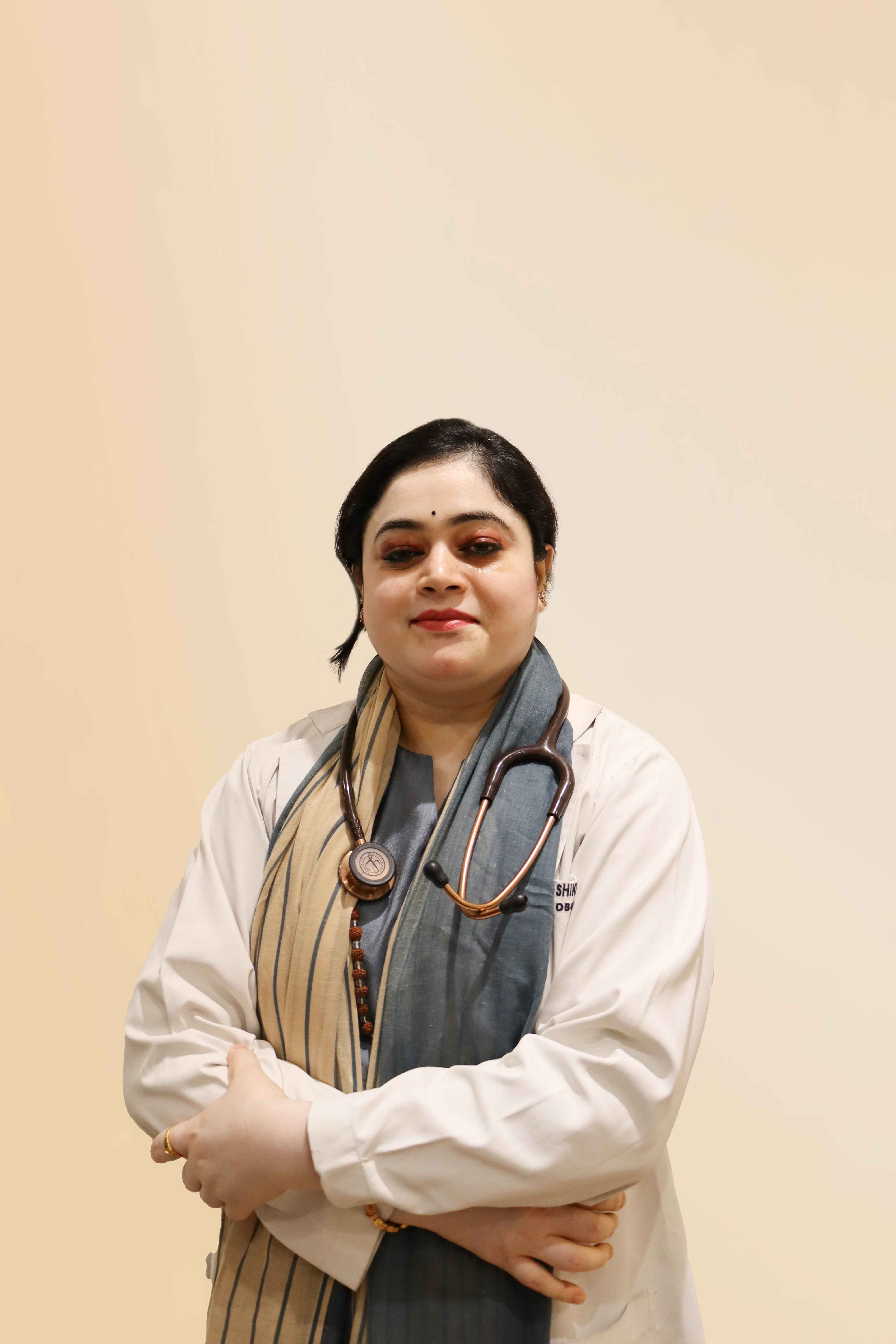
Dr. Priya Shikha Modi
Consultant Gynaecologist
Hysterectomies · Laparoscopic Hysterectomies · Gynecological Pathologies
We offer expert care across key specialties, including Medicine, Cardiology, Orthopaedics, ENT, Gynaecology, and more—delivering trusted treatment under one roof.


Book a consultation with Prakash Hospital's specialists — 24/7 emergency care, 100+ doctors, NABH accredited.

Prakash Hospital Pvt. Ltd. is a 100 bedded NABH NABL accredited multispecialty hospital along with a center of trauma and orthopedics. We are in the service of society since 2001.
OUR SPECIALITIES
Patient Services
PROCEDURES
Contact Us
D – 12A, 12B, Sector-33, G. B. Nagar, Noida, Uttar Pradesh 201301
+91-8826000033


© 2026 All rights reserved.
Designed and Developed by Zarle Infotech


