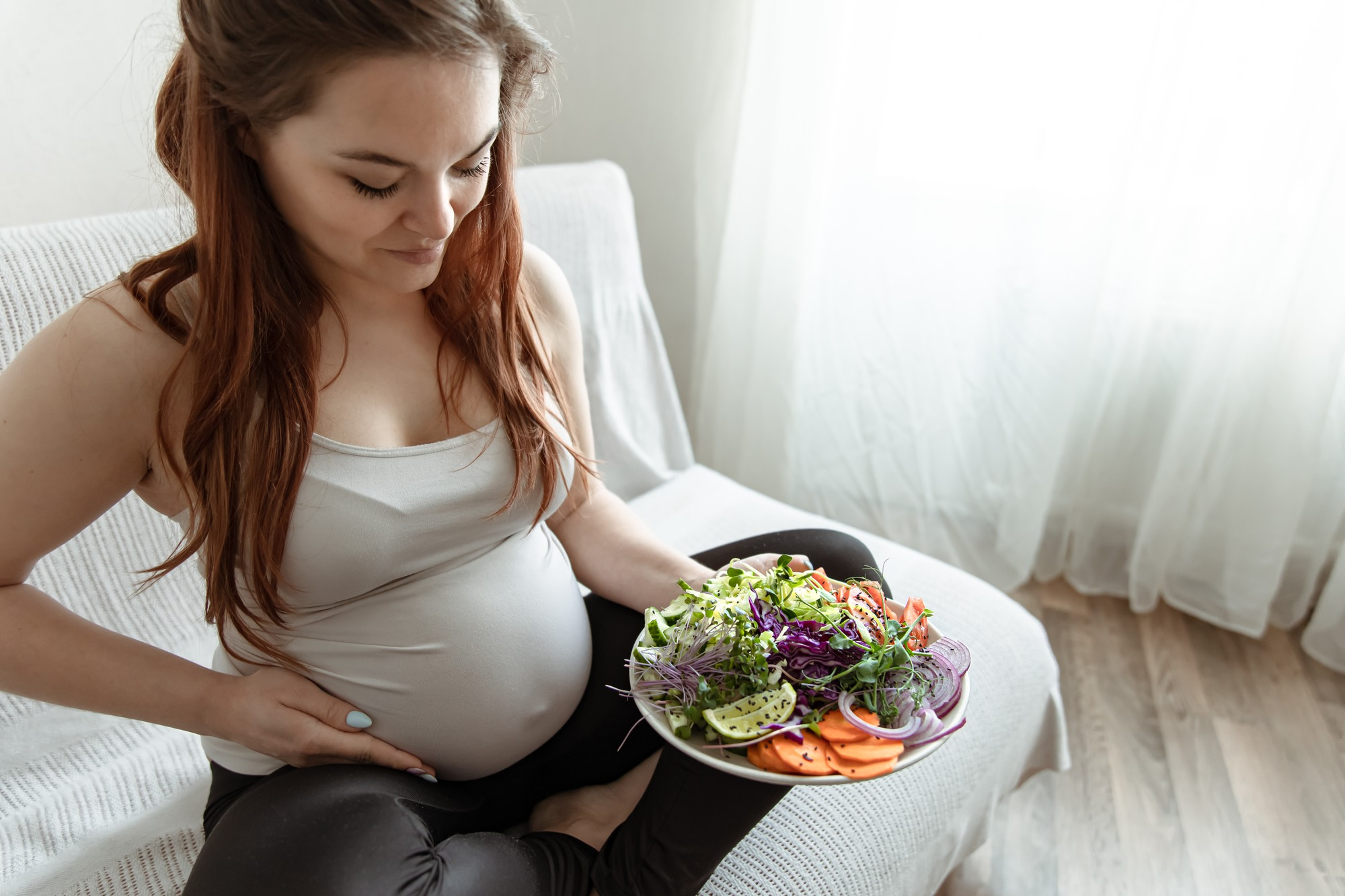
A pregnant woman is lying down on the couch, looking tired and distressed as she holds her forehead.
Back pain is among the most common complaints of pregnancy — affecting anywhere from 50 to 80% of pregnant women at some point during the nine months. For many, it's a minor inconvenience. For others, it's disabling enough to disrupt sleep, make walking difficult, and significantly reduce quality of life in the third trimester.
The encouraging truth is that pregnancy-related back pain is almost always temporary and manageable, and there are several safe, evidence-supported approaches to reduce it.
Several distinct mechanisms contribute, and they often overlap.
As the baby grows, the uterus extends forward and the centre of gravity moves anteriorly. Most pregnant women unconsciously compensate by arching their lower back further inward (increasing the lumbar lordosis) and pulling the shoulders back. This compensatory posture places significant extra load on the lumbar facet joints and erector spinae muscles, which are not designed to sustain this increased demand indefinitely.
The body produces relaxin throughout pregnancy (levels peak in the first trimester). This hormone specifically loosens ligaments — particularly in the pelvis — to allow the pelvis to widen for delivery. While essential for this purpose, loose ligaments throughout the pelvis and lumbar spine reduce the structural support that normally holds these joints stable. The sacroiliac joints (connecting the sacrum to the pelvis) are particularly affected, which is why many pregnant women experience pain in the lower back and buttocks that worsens with single-leg activities.
The combined weight of the baby, placenta, amniotic fluid, and enlarged uterus adds significantly to the load the spine carries. By the third trimester, this can be 10–12 kg of additional weight concentrated in the anterior abdomen.
The two vertical bands of abdominal muscle (rectus abdominis) can separate down the midline as the uterus expands. This reduces the support the abdominal muscles normally provide to the lumbar spine, transferring more load to the back muscles.
The growing uterus can press on the sciatic nerve as it exits the lower spine or passes through the pelvis. This causes sciatica in pregnancy — shooting pain from the lower back or buttock down the back of the leg. More common in the second and third trimesters.
Lumbar pain: in the lower lumbar region (the lower back, above the pelvis). Similar to non-pregnancy lower back pain in character. Worsens with sitting for long periods, standing for long periods, and forward bending.
Posterior pelvic pain (PPP): felt deep in the buttocks, on one or both sides, sometimes extending to the back of the thighs. Caused by the sacroiliac joints. This is actually more common in pregnancy than lumbar pain and more specifically linked to relaxin. Worsens with rolling over in bed, climbing stairs, walking distances, and single-leg activities. Typically felt lower than lumbar pain — at or below the beltline, toward the tailbone.
Sciatica in pregnancy: shooting, burning, or electric pain from the buttock down the back of the leg. May be accompanied by numbness or tingling in the leg. Different from generalised posterior pelvic pain in its radicular (nerve-type) character.
Round ligament pain: sharp, stabbing pain on one or both sides of the lower abdomen and sometimes into the groin, lasting seconds, typically triggered by sudden movements like coughing, sneezing, or rolling over quickly. Caused by stretching of the round ligaments of the uterus. Not truly back pain but often described as such. Typically sharp and brief — distinguishing it from the duller, more sustained aching of true back pain.
Back pain in pregnancy always warrants a mention to your obstetrician. But certain features require urgent same-day assessment:
The options for pain management in pregnancy are more restricted than outside pregnancy, but several effective approaches remain available and safe.
Applying a warm (not hot) pack to the lower back for 15–20 minutes, several times daily. Safe and effective for muscle-related back pain. Avoid hot water bottles, electric heating pads at high temperature, or any heat applied directly to the abdomen — excess heat can be harmful. Warm is the key word.
Specifically designed prenatal yoga is one of the most beneficial practices for pregnancy back pain. Cat-cow (marjariasana-bitilasana), modified child's pose, pelvic tilts, and hip circles are all appropriate and helpful. Several Indian clinical trials have confirmed benefit.
Pelvic tilt on all fours:
Modified child's pose (with bump space):
Pelvic circles:
Water supports the bump, reducing gravitational load on the spine. Swimming and aquanatal classes are among the most universally recommended pregnancy exercise forms, particularly for back pain. Backstroke and side stroke are excellent. Avoid breaststroke if it worsens back pain (the kick strains the sacroiliac joints in some women).
A physiotherapist trained in antenatal care can:
This is the most individualised and effective approach for significant pregnancy back pain.
A maternity support belt wraps around the lower abdomen and provides support to the growing bump and the sacroiliac joints. Many women find significant relief, particularly for posterior pelvic pain. It shouldn't be worn so tightly that it restricts breathing, and prolonged continuous wear isn't recommended — use during activities that trigger most pain.
Available in pharmacies and online.
From the second trimester onwards, sleeping on the back is not recommended because the growing uterus can compress the inferior vena cava (the large vein returning blood to the heart), reducing blood flow. Side sleeping — specifically left side, which optimises blood flow to the placenta — is recommended.
For back pain, the following makes side sleeping more comfortable:
Bend the knees, not the waist. Keep the object close to the body. Avoid twisting while carrying weight. This is particularly important when picking up a toddler while pregnant — bending at the waist with a significant bump in front is extremely straining.
This is where care is essential.
Paracetamol: the only oral pain reliever recommended as safe throughout pregnancy at standard doses (500–1,000 mg, up to three to four times daily). Even paracetamol should be used at the lowest effective dose for the shortest period necessary.
NSAIDs (ibuprofen, naproxen, diclofenac): generally avoided in pregnancy, particularly after 20 weeks. Can affect fetal kidney function and premature closure of the ductus arteriosus. Not recommended without specific medical advice.
Aspirin: not for pain relief in pregnancy (used at specific low doses under medical supervision for other purposes — this is different).
Topical diclofenac gel: limited evidence in pregnancy; generally avoided particularly in the third trimester.
Tramadol and stronger opioids: occasionally used in very severe refractory pain under close medical supervision, but not as a standard approach.
The practical message: paracetamol, warm heat, physiotherapy, yoga, and swimming are the first-line options. Before taking anything else, check with your obstetrician.
For most women, pregnancy-related back pain significantly improves or resolves within a few months of delivery. However:
Postnatal physiotherapy is worth pursuing if back pain persists beyond 6–8 weeks post-delivery.
At Prakash Hospital Noida, our obstetrics team and physiotherapists provide assessment and management of pregnancy-related back pain — including distinguishing lumbar pain from posterior pelvic pain, physiotherapy guidance, ultrasound for any concerning presentations, and coordination with the wider antenatal care team.
Whether you live in Sector 18, Sector 62, Greater Noida West, or anywhere in the NCR, Prakash Hospital Noida is a trusted name for antenatal care, pregnancy back pain management, and women's health in Noida.
Tags: #BackPainPregnancy #PregnancyBackPainRelief #PrakashHospitalNoida
 Copy
CopyWe offer expert care across key specialties, including Medicine, Cardiology, Orthopaedics, ENT, Gynaecology, and more—delivering trusted treatment under one roof.


Book a consultation with Prakash Hospital's specialists — 24/7 emergency care, 100+ doctors, NABH accredited.

Prakash Hospital Pvt. Ltd. is a 100 bedded NABH NABL accredited multispecialty hospital along with a center of trauma and orthopedics. We are in the service of society since 2001.
OUR SPECIALITIES
Patient Services
PROCEDURES
Contact Us
D – 12A, 12B, Sector-33, G. B. Nagar, Noida, Uttar Pradesh 201301
+91-8826000033


© 2026 All rights reserved.
Designed and Developed by Zarle Infotech