


पीसीओएस (PCOS) क्या है?
पीसीओएस यानी Polycystic Ovary Syndrome क्या है, इसके लक्षण, कारण, जांच और इलाज के तरीके हिंदी में जानें।
23 Jan 2026
by Prakash Hospital
by Prakash Hospital

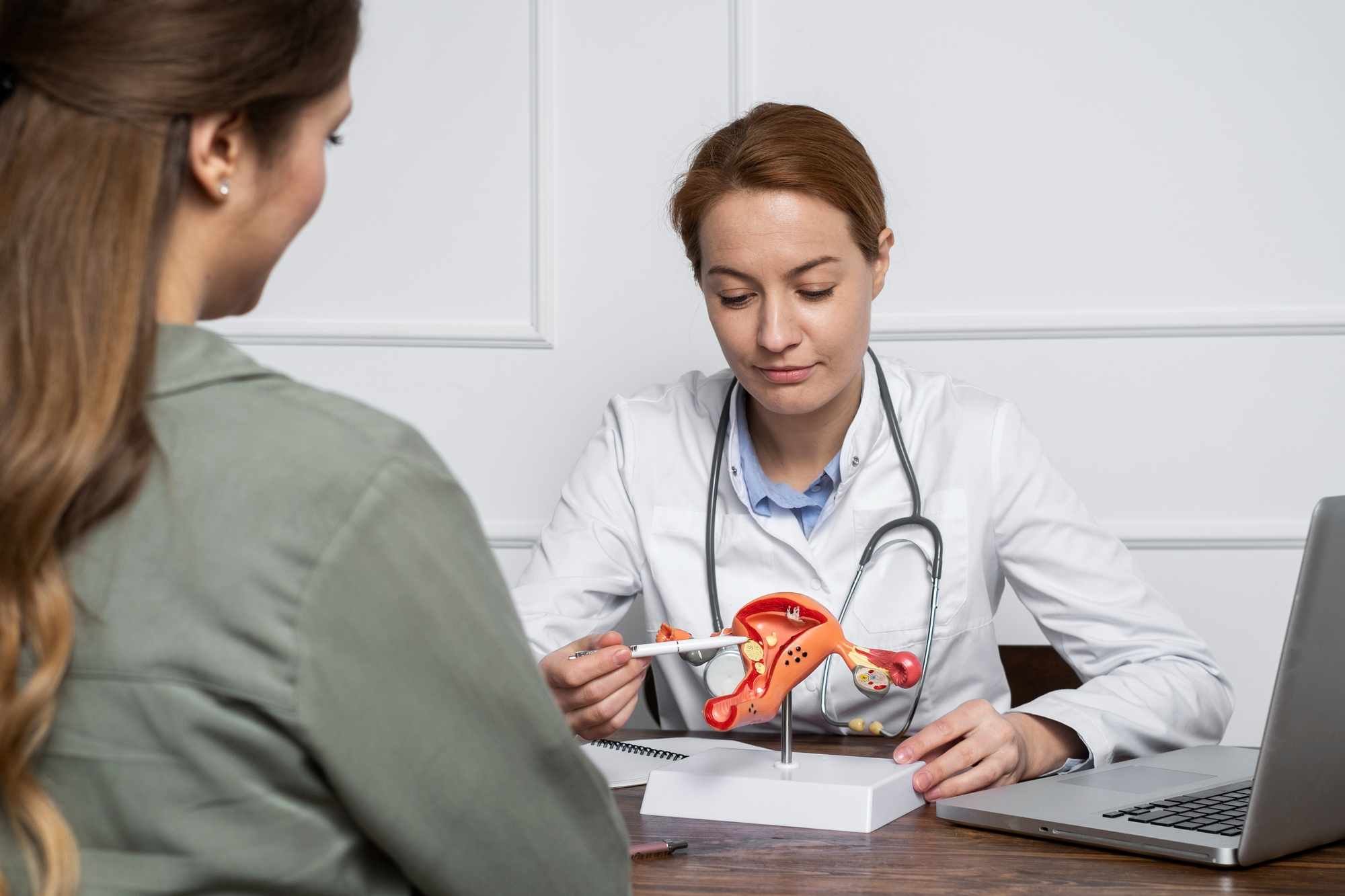
Doctor holding a model of the female reproductive system to explain PCOS.
Polycystic Ovary Syndrome or PCOS is a common endocrine disorder that affects women of childbearing age. It can cause irregular menses, obesity, acne, excessive hair growth and infertility. Though PCOS can’t be entirely prevented due to factors like genetics and hormonal imbalances, following healthy lifestyle practices can help effectively counteract these factors and avoid this condition. This is important to know because it can help ensure that there is an understanding of how to prevent this and regulate female hormones.
PCOS is a hormonal disorder that results from the high production of androgens by the ovaries. The high levels of androgens lead to a hormonal imbalance that affects ovulation. The hormonal imbalance can result in the development of many tiny cysts on the ovaries. It can affect various body functions.
Following early awareness and making lifestyle changes, the effect of PCOS can be reduced.
PCOS cannot always be entirely prevented, especially when there is a strong genetic link. However, with early intervention and making healthy lifestyle choices, one can prevent the development and development-related aggravations and risks associated with PCOS and linked issues like diabetes, heart conditions and infertility.
Being overweight contributes to insulin resistance, which is one of the key factors in PCOS. Having a healthy weight works to balance hormones and correct menstrual problems.
A loss as low as 5 to 10 percent body weight can improve symptoms and ovulation for women who experience PCOS. Rather, emphasize a long-term weight control strategy over a quick weight loss solution.
Diet is a very important factor in preventing PCOS and managing insulin levels. Eating healthy food can help manage sugar in the blood and can treat hormonal imbalance.
Dietary tips include:
Exercise can improve the body's sensitivity to insulin and ensure proper hormonal regulation. Additionally, physical activity can help with weight loss, reduce stress and enhance mood.
It is encouraged to have at least 30 minutes of moderate physical activity several days a week. Exercises like brisk walking, yoga, cycling and weight training help in the prevention of PCOS.
Stress can further lead to hormonal imbalance by increasing levels of cortisol. Stress can trigger or exacerbate symptoms of PCOS.
Natural stress-management methods are:
Stress relief is known to promote hormone regulation.

Woman enjoying proper sleep for better hormonal health.
Poor sleep impacts the regulation of hormones and the sensitivity to insulin. Women who have irregular sleep cycles are vulnerable to developing PCOS symptoms.
Strive for 7-9 hours of quality sleep each night. Regularizing your sleep pattern ensures that your hormones remain well-ordered for effective metabolism.
Smoking can enhance the production of androgens, making the condition prone to complications. Too much consumption of alcohol can also affect the balance of hormonal levels.
Refrain from smoking and restrict your intake of alcohol for better reproduction and metabolism.
Irregular periods may be one manifestation that precedes hormonal imbalances. Recording your cycles may help one recognize any irregularities early.
If your menstrual cycle is often irregular, painful or absent, you should seek advice from a health professional.
Insulin resistance is also intimately associated with PCOS. Controlling the levels of blood sugar in the body through proper food habits and doctor’s advice prevents the progress of PCOS.
Regular health check-ups, particularly for women from families with a history of PCOS and diabetes, can be crucial in picking up the condition early.
Certain environmental compounds can affect hormone function. Minimize contact through:
The above modifications help to promote hormonal regulation.
Early medical advice prevents complications related to PCOS. Personalised advice and if needed, treatments can be obtained from doctors.

Woman consulting a doctor for health check-up.
In the case of Prakash Hospital, women’s health solutions are provided by taking into consideration early detection, hormonal analysis and preventive measures. Experienced professionals at Prakash Hospital also provide customized advice on lifestyle modification, weight and menstrual health issues that help lower the chances of manifestation of PCOS.
If you are having irregular cycles, unexplained gain in weight, too much hair growth, acne or troubles with conceiving, it is best to consult your doctor.
PCOS cannot always be avoided, but through healthy lifestyle habits, it can be decreased.
No, PCOS may affect women irrespective of body type because weight issues can also help relieve the symptoms.
Exercise can be beneficial but works better when done alongside healthy eating habits and managing stress.
Symptoms of PCOS can emerge during adolescence and young adulthood or they can appear at a later age.

This article covers gynaecology concerns. These Prakash Hospital doctors in Noida treat them.

Dr. Priya Shikha Modi
Consultant Gynaecologist
Hysterectomies · Laparoscopic Hysterectomies · Gynecological Pathologies

Dr. Shachi Singh
Consultant Gynaecologist & Obstetrician
Obstetrics & High-Risk Pregnancy · Laparoscopic Surgery · Infertility Treatment
Keyhole removal of an ovarian cyst that keeps the healthy ovary, usually with a stay of one night or less.
A magnified check of the cervix after an abnormal Pap or HPV test, with a small biopsy if needed.
Keyhole surgery on the ovaries to restart ovulation in PCOS when tablets haven't worked, without raising the twin risk.
Free tools to check your weight, plan a pregnancy, track calories and more.
We offer expert care across key specialties, including Medicine, Cardiology, Orthopaedics, ENT, Gynaecology, and more—delivering trusted treatment under one roof.
पीसीओएस यानी Polycystic Ovary Syndrome क्या है, इसके लक्षण, कारण, जांच और इलाज के तरीके हिंदी में जानें।
23 Jan 2026
by Prakash Hospital
PCOD vs PCOS — what is the difference, which is more serious, and how each is diagnosed and treated. Visit Prakash Hospital Noida for women's health care.
26 May 2026
by Prakash Hospital

जानिए PCOD और PCOS क्या हैं, दोनों में क्या अंतर है, इनके लक्षण, कारण और इलाज के बारे में विस्तार से।
30 Mar 2026
by Prakash Hospital

Discover what causes insulin resistance and how diet, exercise, sleep, and lifestyle changes can help you take control of your health
9 Apr 2026
by Prakash Hospital

Learn the early symptoms of thyroid problems in women, common causes, and when to seek medical advice for timely diagnosis and treatment.
13 May 2026
by Prakash Hospital

Low testosterone symptoms — fatigue, low libido, mood changes and more. Causes, when to get a morning blood test, and treatment. Prakash Hospital Noida.
6 Oct 2026
by Prakash Hospital
Learn about PCOS, its causes, symptoms and effective treatment options. Discover lifestyle tips to manage hormonal imbalance and improve women’s health.
28 Oct 2025
by Prakash Hospital

Irregular periods can have many causes including PCOD, stress, and thyroid issues. Know when to see a doctor. Visit Prakash Hospital Noida.
1 Jul 2026
by Prakash Hospital

जानिए ओवेरियन सिस्ट के कारण, लक्षण और उपचार के तरीके। समय पर जांच, सही इलाज और देखभाल से इस समस्या को कैसे नियंत्रित किया जा सकता है, समझें।
12 May 2026
by Prakash Hospital


Book a consultation with Prakash Hospital's specialists — 24/7 emergency care, 100+ doctors, NABH accredited.
View All Departments