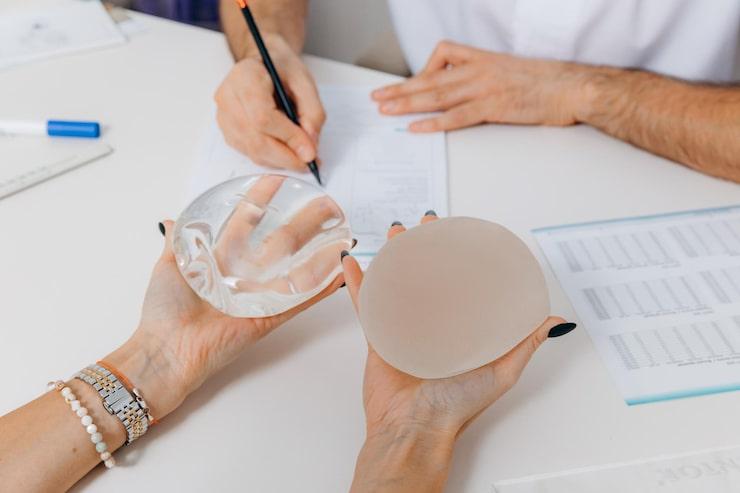
silicone implants
Silicone implants are widely used in cosmetic and reconstructive surgery to make breasts bigger, repair breasts, or change the form of the body. They are designed to appear natural and last a long time, which helps many patients feel more confident about their bodies and boosts their self-esteem.
Silicone implants, like any other medical operation, could cause problems. As time passes, the area around the implant may experience difficulties, including discomfort, swelling, leakage, infection, or changes in shape. It's essential to identify these issues promptly and seek medical attention as soon as possible to prevent long-term complications.
Our skilled plastic and reconstructive surgeons at Prakash Hospital in Noida are experts in identifying and correcting issues with implants. This ensures our patients' safety and ensures they are satisfied with their appearance.
In this post, we'll discuss the most common issues associated with silicone implants. We'll also discuss the causes, symptoms, available treatments, and when to consult a doctor.
Silicone implants are medical-grade bags filled with gel that are inserted into the body to change or improve its shape. They are most commonly used in the breasts, buttocks, or face. Silicone forms the outer layer of these implants, and a thick silicone gel that mimics the feel of real tissue fills the interior.
People choose silicone implants because they feel soft and natural and last a long time. But the body can react differently to things that aren't its own, which can be a problem for some people.
Better implant designs and surgical methods have significantly reduced the dangers over the years. There may still be some problems, either just after the surgery or years after.
These are the complications that happen most often with silicone implants:
1. Capsular Contracture
This is one of the most common problems
The body naturally produces a thin layer of scar tissue surrounding an implant after it is put in. Sometimes, this capsule becomes thicker and tighter, which puts pressure on the implant and causes it to hurt and change shape.
Signs include breasts that are firm, tight, or have changed shape, which can be observed.
Sometimes, surgery (capsulectomy) is the only method to fix the problem.
2. The implant ruptured or leaked.
If the outer shell is split or torn, the implant is broken.
When silicone implants leak and it doesn't show up right away, it's called a "silent rupture."
Some of the indications are lumps, discomfort, swelling, or changes in shape.
An MRI or ultrasound scan can help determine if something has broken. You might need to have surgery to replace the part.
3. Moving or putting the implant in the wrong spot
The implant can shift from its original position, which may cause pain or make it appear uneven.
This could develop because of trauma, capsular contracture, or making the surgical pocket wrong.
Revision surgery may relocate the implant to a different site or implant a new one.
4. Infection close to the implants
After surgery, you may develop an infection immediately or even months later.
Some signs are redness, swelling, warmth, fever, and pain.
You need to get antibiotics right away. Sometimes, the implant may need to be removed for a short time.
5. Hematoma or Seroma: A seroma is a collection of clear fluid that forms around the implant.
Hematoma: A collection of blood that forms near the implant following surgery or an accident.
They both ache and grow larger, and they may need to be drained.
6. Ripping or Wrinkling
People who are thin or have little tissue around the implant may notice folds or ripples in it.
It can be fixed by moving, replacing, or grafting fat.
7. Bleeding from silicone gel
Over time, tiny silicone molecules can leak through the implant shell and cause inflammation in adjacent tissues.
This could cause you to experience pain, swelling, or stiffness for an extended period.
8. Breast implants can cause Anaplastic Large Cell Lymphoma (BIA-ALCL).
A rare type of cancer that can grow in the scar tissue around breast implants, especially textured ones
Some indicators are swelling that doesn't go away, fluid buildup, or lumps surrounding the implant.
Identifying the implant and capsule early and removing them through surgery leads to favorable outcomes.
9. Changes in how things feel. The operation can cause nerve damage, which may result in the area around the procedure feeling numb, tingly, or overly sensitive.
10. Not satisfied with the way things are going
Some patients develop asymmetry, an unusual form, or drooping over time, which may necessitate corrective surgery.
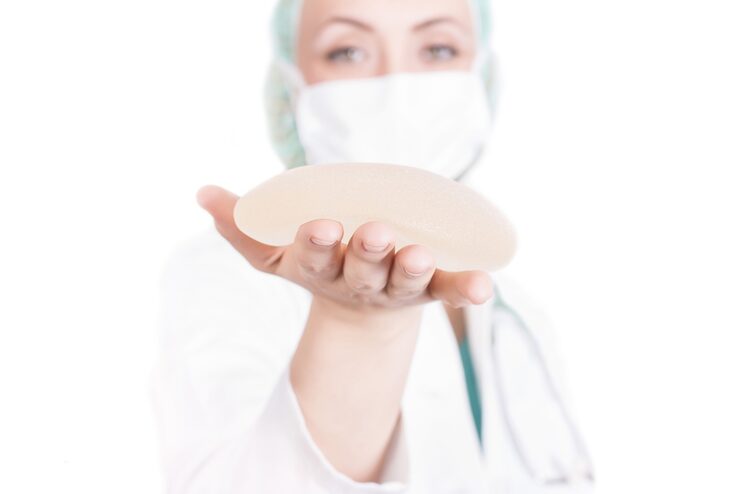
doctor holding a silicone implant
There are a lot of things that can go wrong with implants:
You should watch out for any of the following signs, especially if they come on suddenly or develop worse over time:
At Prakash Hospital, our team utilizes advanced imaging and clinical exams to determine the cause of implant-related problems and assess their severity.
1. Looking at the body
Looking for swelling, discomfort, stiffness, or an unusual shape.
2. Tests that use images
Ultrasound: Finds fluid buildup, fractures, or thickening of the capsule.
The best approach to identify "silent" silicone implant ruptures is via an MRI (Magnetic Resonance Imaging).
Mammograms or CT scans can be used to look at tissues that are deeper.
3. A biopsy or examination of the fluid
The lab may check the fluid or tissue for signs of an infection or a rare case of lymphoma.
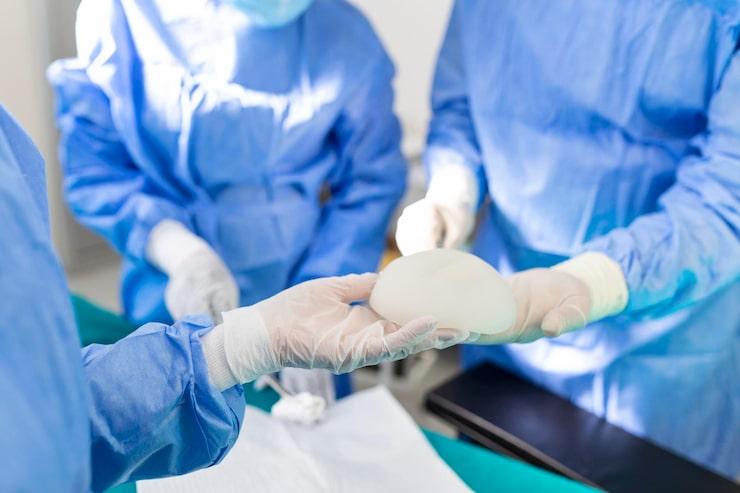
doctors in surgery for silicone implant problem
The treatment will depend on the kind and severity of the problem. Our doctors and surgeons at Prakash Hospital in Noida collaborate to deliver the finest medical and surgical care to each patient.
1. Management without surgery (conservative)
For minor concerns, such as early seroma or edema, antibiotics can help prevent infection.
Anti-inflammatory medicines can help with pain and swelling.
Ultrasound-guided aspiration to get rid of excess fluid.
Regular imaging follow-ups are recommended to monitor for any breaks.
2. Surgery as a way to manage
When conservative management isn't enough, surgery is sometimes necessary:
Capsulectomy: Taking off the hardened scar tissue that has formed around the implant (for capsular contracture).
Putting in fresh implants to replace those that are broken or damaged.
Implant Removal (Explant Surgery): When the problems keep coming back, or the patient asks for it to be done.
Reconstruction: correcting cosmetic faults by moving things around or adding fat.
Our surgeons at Prakash Hospital are quite good at doing safe revision and correction surgeries. They utilize the latest techniques to enhance both the functionality and appearance of their products.
The amount of surgery or other treatment someone has will affect how well they recover after therapy. Most patients experience improvement within a few weeks, accompanied by reduced discomfort and swelling over time.
Our caregivers offer:
To make it less likely that there will be complications with implants:
We make sure that all cosmetic and reconstructive procedures go as smoothly as possible at Prakash Hospital in Noida by using our experience, cutting-edge tools, and compassionate team. Your safety and happiness are the most important things to us. If you suspect your silicone implant could be broken or you want to have surgery to fix or replace it, call the specialists at Prakash Hospital in Noida for dependable advice and care.
 Copy
CopyWe offer expert care across key specialties, including Medicine, Cardiology, Orthopaedics, ENT, Gynaecology, and more—delivering trusted treatment under one roof.

Prakash Hospital Pvt. Ltd. is a 100 bedded NABH NABL accredited multispecialty hospital along with a center of trauma and orthopedics. We are in the service of society since 2001.
OUR SPECIALITIES
Patient Services
PROCEDURES
Contact Us
D – 12A, 12B, Sector-33, G. B. Nagar, Noida, Uttar Pradesh 201301
+91-8826000033


© 2026 All rights reserved.
Designed and Developed by Zarle Infotech