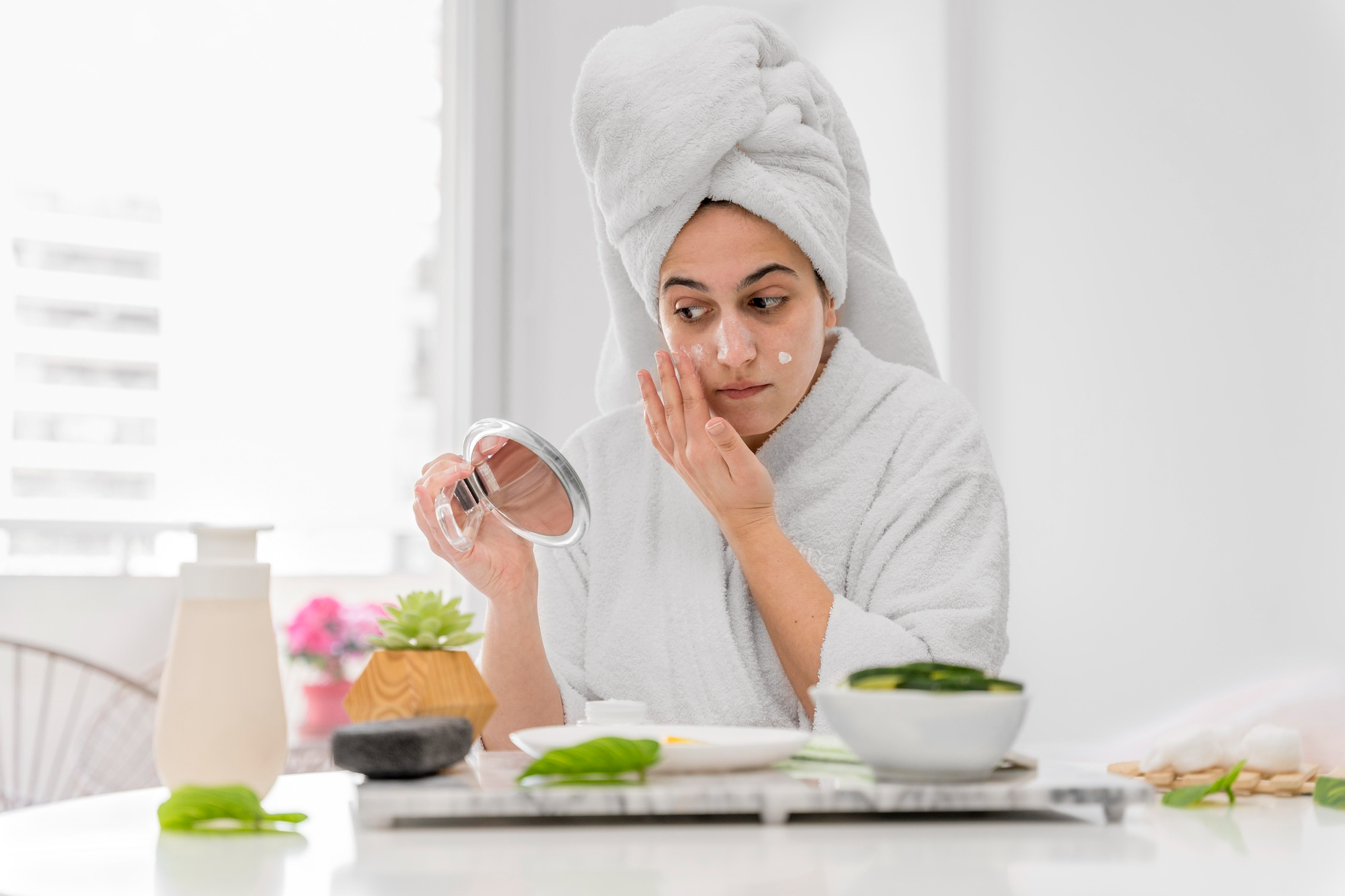
Woman examining facial white patches in a mirror.
You notice a patch of skin that is lighter than the surrounding area. Maybe round, maybe irregular. Maybe one patch, maybe several. The colour difference becomes more visible when you tan or when seasons change. You wonder — is this just a temporary skin issue, or is it something to take seriously?
White patches on the face have several possible causes, ranging from harmless temporary discoloration to chronic conditions like vitiligo. Some need only basic skin care. Others need dermatologist evaluation. A few have important medical implications worth understanding.
This article walks through the common causes of white patches on the face, how to distinguish between them, and when to consult a dermatologist.
The colour of skin comes from a pigment called melanin, produced by cells called melanocytes. When melanin production reduces or melanocytes are damaged, skin becomes lighter than surrounding areas.
White patches can develop because:
The cause determines the appearance, behaviour, and treatment.
One of the most common causes of white patches on the face, especially in children and teenagers.
Appearance: Round or oval, slightly lighter patches with mild scaling. Often on cheeks, around mouth, on arms.
Common in: Children and adolescents, especially those with eczema or allergic conditions.
Why it happens: Mild form of eczema. The inflammation temporarily disrupts pigment production.
Outlook: Usually fades on its own over months. Not serious. Often improves with simple moisturisation and mild treatment of underlying skin conditions.
Fungal infection caused by a yeast called Malassezia (same yeast involved in dandruff).
Appearance: Multiple small patches of varying colours — sometimes white, sometimes pink, sometimes brown. Mild scaling. More visible after sun exposure because the affected areas do not tan.
Common in: Adults, particularly with oily skin, sweating, hot and humid climates.
Why it happens: The yeast produces a substance that interferes with normal pigmentation.
Outlook: Treatable with antifungal creams or shampoos. Tends to recur in susceptible individuals.
A more significant condition where melanocytes are destroyed.
Appearance: Well-defined, completely white patches without scaling. Often symmetrical. Common on face, hands, wrists, feet, areas around body openings (eyes, mouth, nose).
Cause: Autoimmune condition where the body attacks its own melanocytes. Sometimes triggered by stress, trauma, or other factors.
Outlook: Chronic condition. May spread, stabilise, or rarely repigment. Various treatments can help, though no permanent cure exists. Treatment is most effective when started early.
Loss of pigment after skin inflammation.
Common after: Acne, eczema, burns, infections, skin treatments.
Appearance: Patches in the locations of previous skin problems.
Outlook: Usually fades over months as melanocytes recover. Treatment of any ongoing inflammation helps.
Atopic dermatitis can cause temporary lightening, especially during inflammation or after treatment.
Appearance: Often with redness, scaling, or itching during active phases. Lightening after the inflammation resolves.
Outlook: Pigmentation usually returns over months. Managing the eczema helps.
Some deficiencies affect skin pigmentation.
Vitamin B12 deficiency can cause hypopigmentation in some cases.
Vitamin D deficiency is associated with various skin changes.
Folate deficiency in extreme cases.
Copper deficiency affects melanin production.
Long-term sun damage can paradoxically cause both dark spots and lighter areas as melanocyte function becomes uneven.
Small white spots that develop in middle and older age.
Appearance: Multiple small (2 to 5 mm) white spots, mostly on sun-exposed areas.
Cause: Sun damage and ageing-related melanocyte changes.
Outlook: Cosmetic concern only. Usually permanent but harmless.
Rare in modern India but still relevant. Causes white patches with loss of sensation.
Appearance: Single or multiple white patches with reduced sensation to touch, pain, or temperature.
Outlook: Curable with multi-drug therapy. Early diagnosis prevents complications.
A rare genetic condition causing very little or no melanin throughout the body.
Appearance: Very fair skin, white hair, light-coloured eyes. Present from birth.
Outlook: Lifelong genetic condition. Sun protection is critical.
A mole surrounded by a white halo of depigmented skin. Usually benign but warrants dermatological evaluation.
Exposure to certain chemicals causes pigment loss.
Common culprits: Some hair dyes, leather products, rubber, bleaching agents, cosmetic ingredients.
Some key features help:
Pityriasis alba: Mild scaling, lighter rather than white, common in children, fades on its own.
Tinea versicolor: Multiple patches with mild scaling, often on chest and shoulders too, more visible after sun.
Vitiligo: Completely white, sharply defined, can spread, often symmetrical.
Post-inflammatory hypopigmentation: Located where previous skin problems occurred.
Leprosy: Loss of sensation in the patch is a hallmark.
A dermatologist examines the skin and sometimes uses a Wood's lamp (UV light) that highlights different types of pigmentation issues.
A consultation makes sense when:
Early evaluation often produces better outcomes, particularly for conditions that respond best to early treatment.

Fresh fruits and green vegetables on table.
Sunscreen — important for all white patch conditions. Protects unaffected skin from tanning more than affected areas, reducing visible contrast.
Gentle cleansing — avoid harsh soaps and scrubs.
Moisturisation — especially for pityriasis alba and dry conditions.
Identify and avoid triggers — for chemical-induced cases.
Treat underlying conditions — eczema, fungal infections, deficiencies.
Stress management — particularly important for vitiligo.
Balanced nutrition — supports skin health overall.
For those diagnosed with vitiligo, some practical considerations:
Sun protection is critical. Affected skin has no natural sun protection.
Cosmetic camouflage can help with visible patches when desired.
Counselling and support — vitiligo has psychological impact for many people.
Connection with others — support groups and online communities help.
Acceptance alongside treatment — many people with vitiligo lead full lives with or without treatment.
Research advances — newer treatments are emerging.
Associated conditions — vitiligo can be associated with thyroid disorders and other autoimmune conditions. Periodic screening is reasonable.
Many causes exist. Most are not vitiligo.
It is not. It is an autoimmune condition.
It can affect quality of life significantly and is associated with other autoimmune conditions.
No relationship.
Not effective.
Many types respond to treatment, even vitiligo can be partially repigmented.
Leprosy is rare in modern urban India. Most white patches have other causes.
It can affect anyone.
Many people choose visible acceptance. Treatment is a choice, not an obligation.
Pityriasis alba is the most common cause. Usually resolves. Identify and treat any underlying eczema or skin conditions.
Pityriasis alba and tinea versicolor are common. Vitiligo can also start in adolescence.
Most treatments are conservative during pregnancy. Discuss any new patches with your doctor. Hormonal changes can affect existing pigmentation.
Skin pigmentation can change after delivery. New patches deserve evaluation.
People with diabetes have higher rates of certain skin conditions. Good blood sugar control supports skin health.
Urgent attention is rarely needed for white patches themselves. See a doctor promptly if:
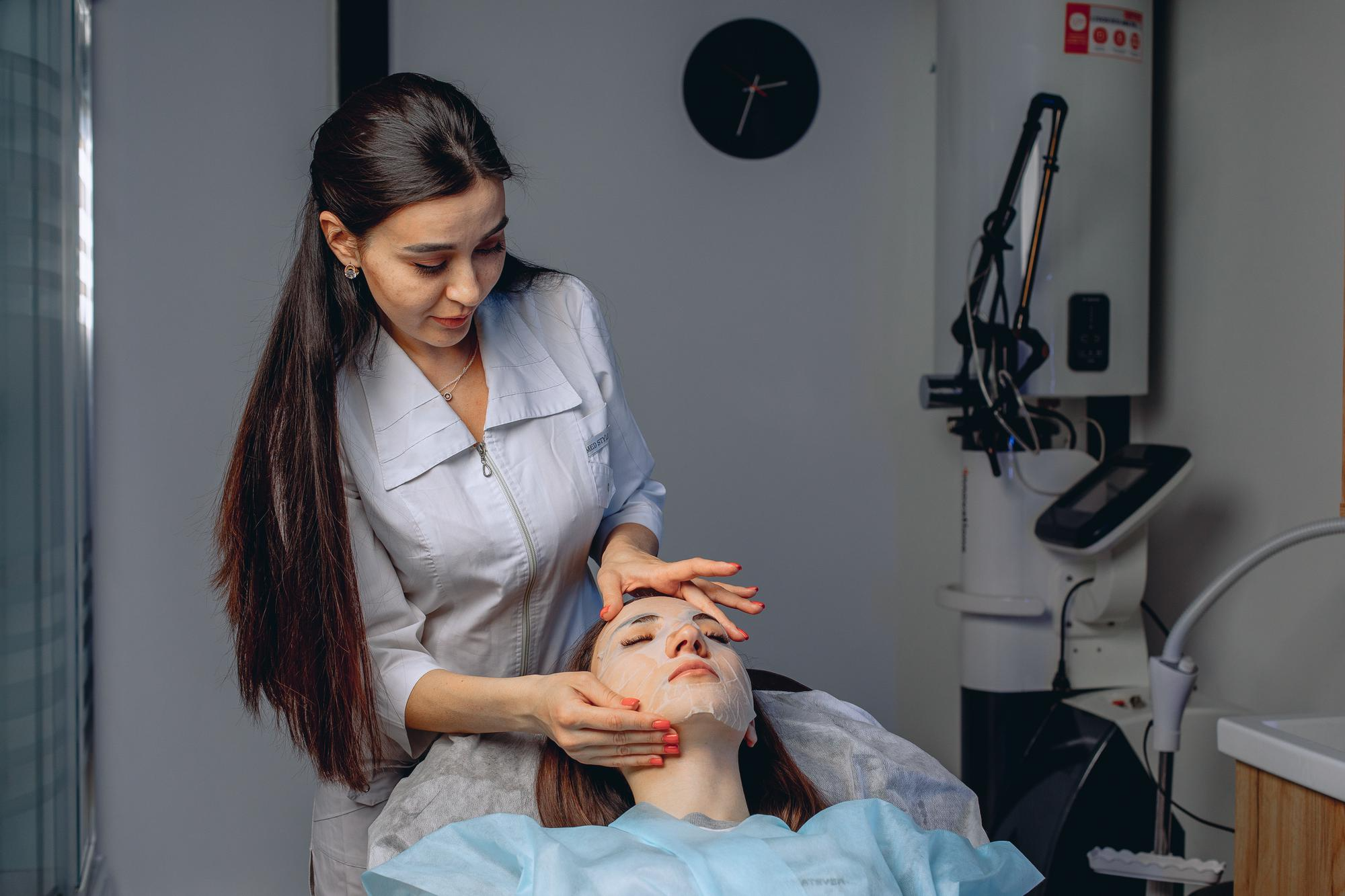
A woman at a dermatologist’s clinic while the doctor examines her facial skin and puts on a face mask.
Working professionals in Noida and Greater Noida deal with multiple skin stressors that can contribute to or worsen white patches — pollution, stress, irregular hygiene, and varied sun exposure patterns. Tinea versicolor is more common in hot and humid weather.
Practical adaptations include consistent skincare routines, sun protection, addressing underlying skin conditions like eczema, treating fungal infections promptly, and dermatology consultation for evaluation of any unexplained white patches.
At Prakash Hospital, Noida, experienced dermatologists offer thorough evaluation of white patches including Wood's lamp examination, biopsy when needed, blood tests for associated conditions, and personalised treatment plans.
Whether you are in Sector 18, Sector 62, Greater Noida West, or anywhere nearby, Prakash Hospital Noida is a trusted name for dermatology consultation.
White patches on the face can have several causes, ranging from harmless temporary conditions like pityriasis alba to chronic conditions like vitiligo. The treatments vary significantly based on the cause.
The reliable approach is professional evaluation. A dermatologist can identify the specific type, rule out unusual causes, and recommend appropriate treatment. Self-diagnosis often leads to wrong treatments and frustration.
For most causes, treatment exists and works. Pityriasis alba resolves with time and gentle care. Tinea versicolor responds to antifungal treatment. Post-inflammatory hypopigmentation fades over months. Vitiligo has multiple treatment options, and newer approaches continue to improve outcomes.
If you notice white patches on your face, do not panic. Most causes are manageable. See a dermatologist for accurate diagnosis. Follow the treatment plan consistently. Practice daily sun protection and gentle skincare. Address underlying conditions when relevant.
The path from concern to clarity is straightforward — accurate diagnosis followed by appropriate treatment.
 Copy
CopyWe offer expert care across key specialties, including Medicine, Cardiology, Orthopaedics, ENT, Gynaecology, and more—delivering trusted treatment under one roof.


Book a consultation with Prakash Hospital's specialists — 24/7 emergency care, 100+ doctors, NABH accredited.

Prakash Hospital Pvt. Ltd. is a 100 bedded NABH NABL accredited multispecialty hospital along with a center of trauma and orthopedics. We are in the service of society since 2001.
OUR SPECIALITIES
Patient Services
PROCEDURES
Contact Us
D – 12A, 12B, Sector-33, G. B. Nagar, Noida, Uttar Pradesh 201301
+91-8826000033


© 2026 All rights reserved.
Designed and Developed by Zarle Infotech