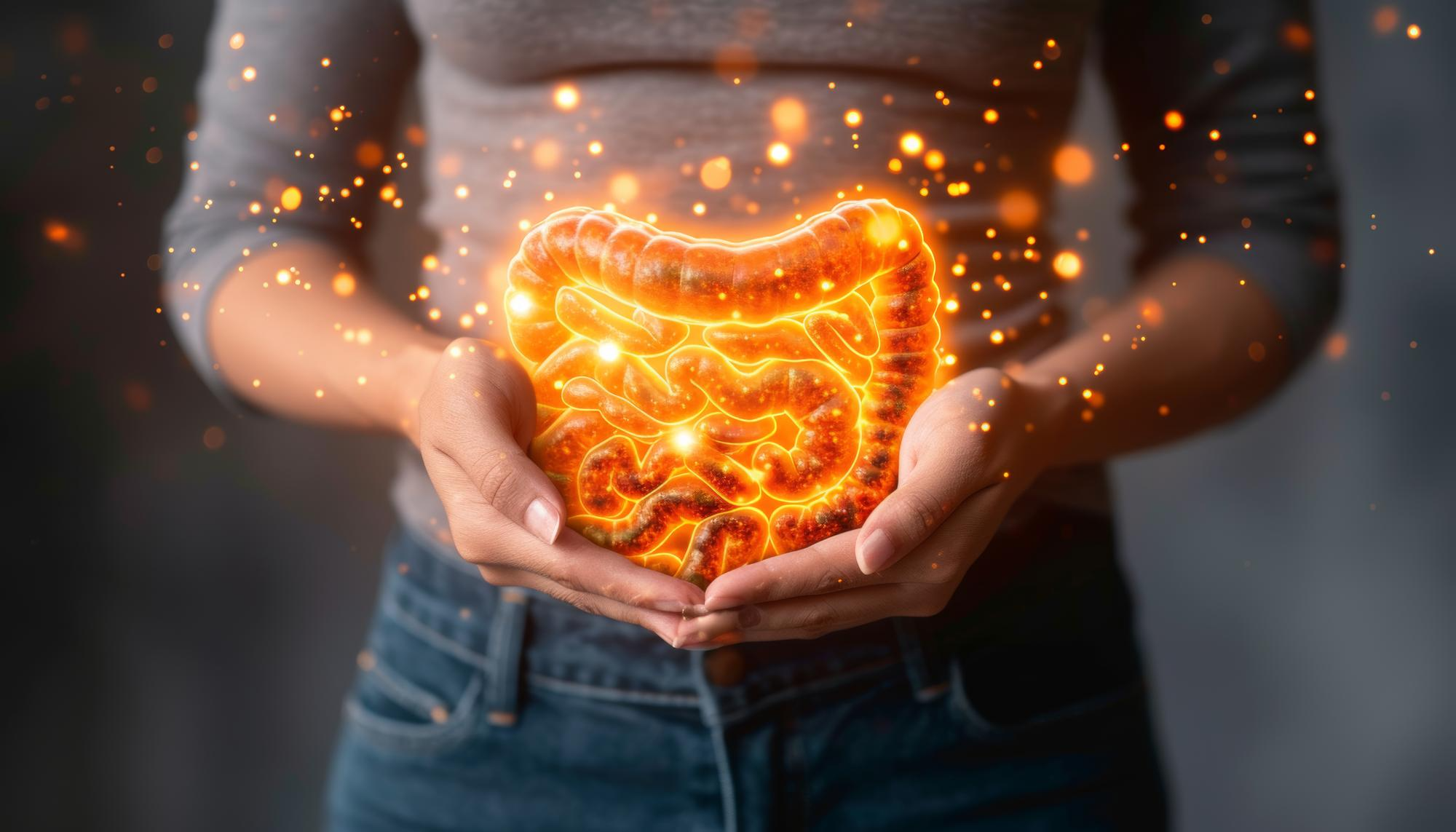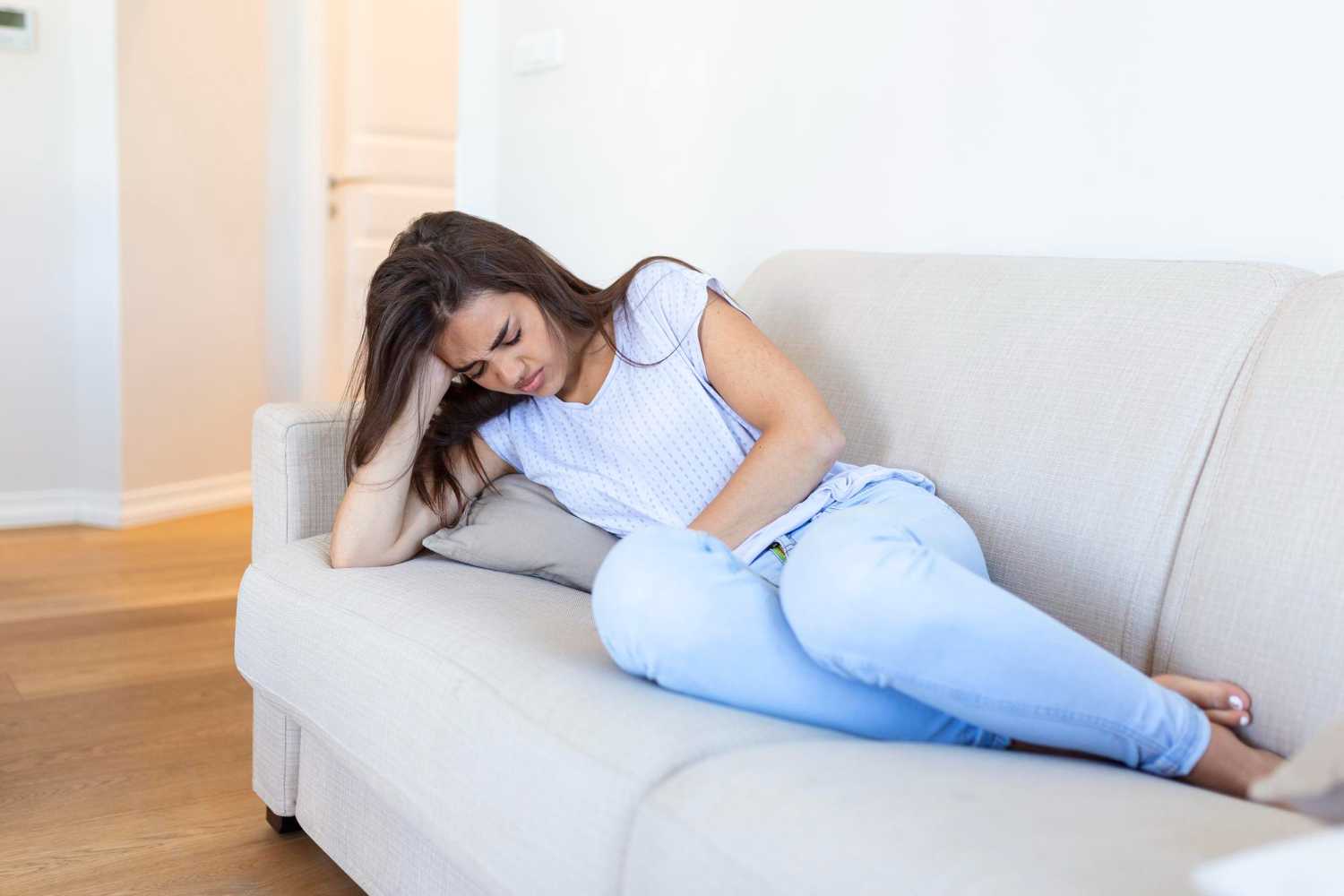
A woman holding her lower belly, looking mildly uncomfortable yet calm
Almost everyone experiences bloating at some point — that uncomfortable sensation of a full, distended abdomen, like a balloon inflating after a meal. For many Indians, it happens so frequently that it's accepted as normal, and managed with repeated doses of antacids or antispasmodics that address the symptom without fixing the cause.
Bloating is a symptom, not a diagnosis. The cause determines the solution. And there are many causes.
Gas production: most abdominal bloating involves excess gas in the digestive tract. Gas comes from:
Gut motility problems: when the gut moves food along too slowly (or too fast), gas accumulates differently. Slow transit allows more time for bacterial fermentation.
Visceral hypersensitivity: people with IBS experience normal amounts of gas as intensely uncomfortable — their gut is more sensitive to distension than the average person.
Weak or impaired digestion: insufficient digestive enzymes, low stomach acid, or impaired gut lining reduce the thoroughness of digestion, leaving more substrate for bacterial fermentation.
Dal, rajma, chana, and other pulses contain oligosaccharides (raffinose, stachyose) that the human body cannot fully digest. These pass to the large intestine where bacteria ferment them, producing gas. This is why dal-eating is associated with bloating in many people.
How to reduce it:
Cauliflower (gobi), cabbage, and to a lesser extent broccoli and Brussels sprouts contain similar fermentable carbohydrates. Cooking them thoroughly reduces but doesn't eliminate the gas-producing compounds.
Lactose intolerance — reduced lactase enzyme — is extremely common in South Asians. Without adequate lactase, lactose passes to the large intestine where bacteria ferment it, producing gas, bloating, and diarrhoea. The bloating typically occurs 30 minutes to 2 hours after dairy consumption.
Many people who are lactose intolerant can tolerate curd (the bacteria partially break down lactose in fermentation) but not milk. Identifying this through a 2-week dairy-free trial is the simplest diagnostic approach.
Eating quickly, talking while eating, chewing with the mouth open, drinking through straws, or carbonated drinks all increase swallowed air. Swallowed air contributes to upper GI bloating and belching.
Solution: eat slowly, chew thoroughly, avoid talking while eating, use a glass rather than a straw, avoid carbonated drinks.
As described in the IBS blog — fermentable carbohydrates that some people's guts don't absorb well. Key Indian sources: onion (very high FODMAP), garlic (very high FODMAP), apple, mango in large quantities, wheat in some people.
For people with IBS or persistent bloating without clear cause, a low-FODMAP trial (eliminating these foods for 4 weeks) is diagnostic and often therapeutic.
Large meals distend the stomach more than it's comfortable with, causing post-meal fullness and the sensation of bloating. Eating smaller, more frequent meals is one of the most consistently effective approaches.
Stool backing up in the large intestine causes distension and bloating, particularly in the left lower abdomen. The bloating from constipation is worst in the evening and morning. Treating the constipation with fibre, hydration, and exercise resolves it.
Found in sugar-free chewing gum, many sugar-free packaged foods, and some medications. These polyols are poorly absorbed and fermented by gut bacteria, causing gas and bloating. Check labels of "diet" or "sugar-free" products.
Gluten (in wheat, rye, barley) triggers an immune response in the gut in people with celiac disease — causing bloating, gas, diarrhoea, and malabsorption. Less common than often self-diagnosed, but a legitimate cause of persistent bloating. Diagnosed with blood tests (anti-tTG antibodies) and confirmation by biopsy or gluten elimination trial.
Digestive spices in cooking: jeera (cumin), hing (asafoetida), ajwain (carom seeds), and ginger all have carminative effects. Adding these to dal, sabzi, and tadka is both traditional and evidenced.
Post-meal walk: 10–15 minutes of gentle walking after meals stimulates gut motility and moves gas through the digestive tract more quickly.
Saunf (fennel seeds) after meals: traditional Indian post-meal digestive. Fennel has antispasmodic effects and reduces intestinal gas. The practice of eating saunf after a meal is genuinely functional.
Jeera water: boil cumin seeds in water for 5 minutes; drink warm. Traditional digestive with real carminative effect.
Peppermint oil (enteric-coated capsule): the most evidence-based treatment for IBS bloating specifically. Peppermint oil relaxes smooth muscle in the gut, reducing spasm and facilitating gas passage. Must be enteric-coated to avoid heartburn from capsule dissolving in the stomach.
Simethicone (Gas-O Fast, Gelusil): over-the-counter. Reduces surface tension of gas bubbles, facilitating their coalescence and expulsion. Effective for symptomatic relief of trapped gas.
Probiotics: specific strains (Bifidobacterium, Lactobacillus) reduce bloating by improving the fermentation environment in the gut. Plain curd and dedicated probiotic supplements both contribute.
Reducing fibre and FODMAP temporarily if recently increased fibre sharply — high-fibre eating takes weeks for gut bacteria to adapt; starting with a smaller increase and building up reduces the initial bloating.
See a doctor if bloating:
These features suggest structural disease rather than functional bloating.
Whether you live in Sector 18, Sector 62, Greater Noida West, or anywhere in the NCR, Prakash Hospital Noida is a trusted name for bloating, digestive health, gastroenterology, and general medicine in Noida.
Tags: #StomachBloatingCauses #BloatingAfterEating #PrakashHospitalNoida
 Copy
CopyWe offer expert care across key specialties, including Medicine, Cardiology, Orthopaedics, ENT, Gynaecology, and more—delivering trusted treatment under one roof.


Book a consultation with Prakash Hospital's specialists — 24/7 emergency care, 100+ doctors, NABH accredited.

Prakash Hospital Pvt. Ltd. is a 100 bedded NABH NABL accredited multispecialty hospital along with a center of trauma and orthopedics. We are in the service of society since 2001.
OUR SPECIALITIES
Patient Services
PROCEDURES
Contact Us
D – 12A, 12B, Sector-33, G. B. Nagar, Noida, Uttar Pradesh 201301
+91-8826000033


© 2026 All rights reserved.
Designed and Developed by Zarle Infotech