



A Full Guide for Patients on Shoulder Replacement Surgery
Discover important pre-surgery tips to ensure safe preparation and better recovery outcomes with expert advice from Prakash Hospital.
9 Sept 2025
by Prakash Hospital
Replaces a worn or shattered shoulder joint to stop the ache that keeps you awake and make reaching and dressing easier again.

Shoulder arthritis often shows itself at night. No position stops the ache, and lying on the bad side is out of the question. By day, reaching a kitchen shelf, fastening a blouse or combing your hair turns into a two-handed job.
In shoulder replacement surgery (shoulder arthroplasty), the worn surfaces of the joint are replaced with smooth artificial parts. The ball sits at the top of the upper arm bone (humerus), and the shallow socket, the glenoid, belongs to the shoulder blade. Which replacement you get depends mostly on the rotator cuff, the ring of tendons that holds the ball in place and helps lift the arm. If the cuff is healthy, the new parts copy your natural anatomy. If it's badly torn, a reverse design swaps the ball and socket around so the big deltoid muscle can do the lifting.
Pain relief is the most reliable result, usually within a few weeks. Movement returns more slowly, and how high you can eventually lift the arm depends on the type of replacement and the state of your muscles.
At Prakash Hospital, shoulder arthritis is treated with medicines, injections and physiotherapy first, and our orthopaedics team moves to replacement once those stop working. Rehab afterwards is run by our physiotherapy department, which regularly treats rotator cuff and frozen shoulder problems.
Most people have been through months of physiotherapy, medicines and injections before replacement comes up. For some fractures in older people, it's the first choice.
The ball is replaced with a polished metal head on a stem in the arm bone, and the socket is resurfaced with plastic. It needs an intact, working rotator cuff and usually gives the most natural movement.
A metal ball is fixed to the shoulder blade and a plastic cup to the arm bone, so the deltoid does the lifting. It works even when the cuff can't be repaired, and is mostly used in older adults and for some complex fractures.
A hemiarthroplasty replaces the ball and keeps your own socket. It's used less often now, mainly when the socket is still healthy.
A general anaesthetic, usually with a nerve block at the side of the neck that keeps the arm numb for up to a day. You're positioned half sitting up.
The surgeon makes a 10 to 15 cm cut at the front of the shoulder and often detaches a tendon at the front of the cuff to open the joint.
The worn ball is removed and the top of the humerus is shaped to take the stem.
The glenoid is smoothed and fitted with a plastic cup for an anatomic replacement, or a metal base plate and ball for a reverse one.
Trial parts are fitted and the shoulder is moved in every direction to check it's stable and not too tight. The final parts go in, the tendon is repaired and the wound is closed.
Shoulders recover more slowly than hips or knees, because the tendons must heal before they're asked to lift. Pain usually settles well before movement and strength return.
The arm rests in a sling. A physiotherapist shows you how to take it out to bend your elbow, wrist and fingers, and starts moving the shoulder for you.
The sling stays on most of the day and at night. The arm isn't lifted by its own muscles yet, but assisted exercises continue several times a day. After a reverse replacement, don't push up from a chair with that arm or reach behind your back.
The sling comes off. You start raising the arm yourself, then take on light tasks such as eating and brushing your hair. Most people can drive at around 6 to 8 weeks.
Strengthening with bands and light weights. Improvement continues for up to a year.
Call us on +91-8826000033 or come straight to our 24/7 emergency department.
Exercises for the shoulder blade and cuff muscles, anti-inflammatory medicines (if your stomach and kidneys allow) and a steroid injection can keep milder arthritis manageable for years.
If the cartilage is still in reasonable shape, shoulder arthroscopy can repair a torn rotator cuff or clear inflamed tissue. Once arthritis has set in, keyhole surgery rarely helps for long.
Many shoulder fractures heal in a sling or can be held with a plate and screws, especially in younger people. Replacement is kept for breaks too shattered to fix.
Talk to our Orthopedics & Joint Replacement team
Ask about your options, the cost and your insurance before you decide. See the insurance and TPA panels we work with.
This page explains Shoulder Replacement Surgery in general terms. Your own plan depends on your health, your test results and your doctor's advice. Please read our medical disclaimer.
Shoulder Replacement Surgery is led by our Orthopedics & Joint Replacement team, with other departments stepping in at each stage of your care.
At Prakash Hospital, our Orthopedics and Traumatology Department offers expert diagnosis, surgical and non-surgical treatments, and rehabilitation for bone, joint, and musculoskeletal injuries.
What the department treats
Total Knee Replacement
Total Hip Replacement
Arthroscopic Surgery
Spine Surgery
Trauma and Fracture Care
Sports Medicine
Starts assisted arm movements in hospital and takes you through the strengthening programme over the following months.
Does the X-rays and CT scan used to plan implant size and angle, and your follow-up X-rays.
Gets diabetes, blood pressure and heart conditions under control before surgery.
Procedures often considered alongside Shoulder Replacement Surgery, or that treat related conditions.
Keyhole surgery using a thin camera to diagnose and repair problems inside the knee or shoulder.
Realigns broken bones and holds them with plates, screws, rods or frames so they heal in the right position.
Replaces a worn or collapsed hip ball and socket with an artificial joint to end groin pain and restore walking.
Realigns and rebuilds a joint damaged by injury, deformity or earlier surgery, keeping your own joint.
Other procedures our Orthopedics & Joint Replacement team performs.
Replaces a knee worn out by arthritis with a metal and plastic joint to relieve pain and get you walking again.
Rebuilds a torn ACL with a tendon graft through keyhole surgery to stop the knee giving way.
Reattaches or rebuilds torn ligaments in the knee, ankle, elbow or thumb to steady an unstable joint.
Frees a trapped spinal nerve by removing slipped disc or bone, easing sciatica and leg pain.
Replaces a failed knee implant that is loose, worn, infected or unstable with new revision parts.
Replaces only the worn part of an arthritic knee, keeping the healthy cartilage and ligaments.
We offer expert care across key specialties, including Medicine, Cardiology, Orthopaedics, ENT, Gynaecology, and more—delivering trusted treatment under one roof.
Free tools to check your weight, plan a pregnancy, track calories and more.
Discover important pre-surgery tips to ensure safe preparation and better recovery outcomes with expert advice from Prakash Hospital.
9 Sept 2025
by Prakash Hospital
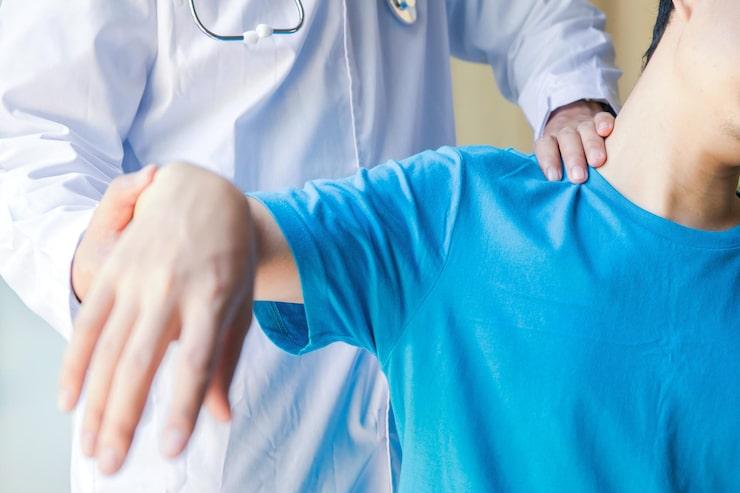
रोटेटर कफ इंजरी के लक्षण, कारण और इलाज जानें। कंधे में दर्द और कमजोरी को नजरअंदाज न करें। Prakash Hospital में पाएं एडवांस ऑर्थोपेडिक और फिजियोथेरेपी उपचार।
15 Jun 2026
by Prakash Hospital

कंधे का दर्द क्यों होता है? जानिए इसके मुख्य कारण, फ्रोज़न शोल्डर, रोटेटर कफ इंजरी, जांच और इलाज के विकल्प। Prakash Hospital से संपर्क करें।
5 Mar 2026
by Prakash Hospital

Discover effective natural remedies for period pain relief, including lifestyle tips, home treatments, and ways to ease menstrual cramps safely.
28 Apr 2026
by Prakash Hospital

जानिए PCOD और PCOS क्या हैं, दोनों में क्या अंतर है, इनके लक्षण, कारण और इलाज के बारे में विस्तार से।
30 Mar 2026
by Prakash Hospital

बार-बार गर्भपात क्यों होता है? जानिए recurrent miscarriage के कारण, जरूरी जांच, इलाज और स्वस्थ प्रेगनेंसी के लिए महत्वपूर्ण सलाह।
19 Mar 2026
by Prakash Hospital

Discover the best calcium-rich foods to strengthen bones, improve bone density, and support overall health with simple dietary choices.
23 Apr 2026
by Prakash Hospital
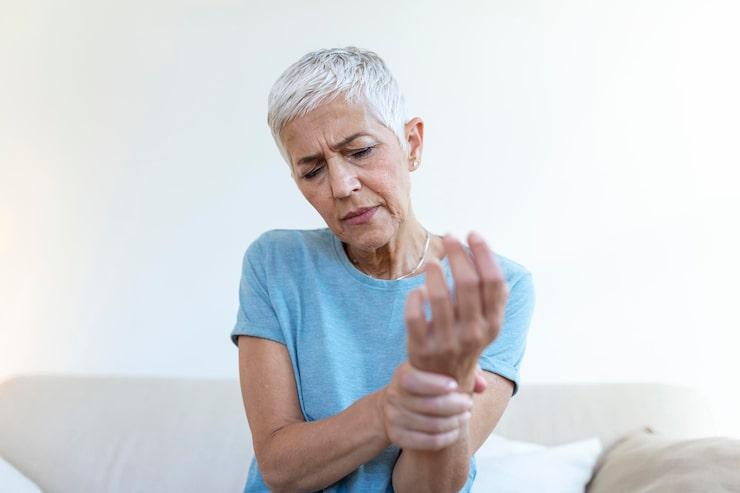
Learn the signs of weak bones and how to fix them with advice from the learned doctors at Prakash Hospital, Noida.
15 Oct 2025
by Prakash Hospital

Best Indian foods for strong bones — calcium-rich foods, vitamin D sources, and lifestyle habits to prevent bone loss. Prakash Hospital Noida.
31 Aug 2026
by Prakash Hospital
Answers to common questions about Shoulder Replacement Surgery at Prakash Hospital, Noida.


Book a consultation with Prakash Hospital's specialists — 24/7 emergency care, 100+ doctors, NABH accredited.
View All Departments