

ACL Reconstruction Surgery
Replaces a torn anterior cruciate ligament with a tendon graft so your knee stops giving way when you turn, twist or land.

- Surgery duration
- 1 to 2 hours
- Anaesthesia
- Spinal or general, with a nerve block
- Hospital stay
- Same day to 2 days
- Recovery
- 9 to 12 months for pivoting sports
On this page
Overview
An ACL tear usually happens in a moment you remember: landing from a jump, stopping hard on a football pitch, turning sharply on a badminton court. Many people feel a pop, and the knee swells within hours. Once the swelling settles, the knee may be fine for walking but gives way when you change direction, and each of those episodes can damage the meniscus and cartilage.
The anterior cruciate ligament (ACL) runs through the middle of the knee and stops the shin bone sliding forward and twisting under the thigh bone. A completely torn ACL doesn't heal back together, so it isn't stitched. In ACL reconstruction, the surgeon replaces it with a graft, usually a piece of your own tendon, passed through tunnels in the thigh and shin bones and fixed at both ends, all through small keyhole cuts.
The operation gives you a stable knee, but the graft takes months to grow into the bone, and it's the rehab that gets you back on the field. Most people return to pivoting sports at 9 to 12 months. Going back earlier raises the chance of a re-tear.
ACL reconstruction is done by our orthopaedics team, and our physiotherapy department runs the structured rehab afterwards.
Why it's done
Not every torn ACL needs surgery. It depends on how unstable the knee is, what you want to get back to, and whether other parts of the knee are damaged. An MRI confirms the tear and shows the meniscus and cartilage.
- You want to return to sports with jumping, cutting or pivoting, such as football, basketball, kabaddi or badminton
- The knee gives way in daily life, on stairs or when turning, despite physiotherapy
- A meniscus tear that can be repaired in the same operation
- Other knee ligaments torn at the same time
- A job that involves climbing, carrying loads or rough ground, such as police, army or construction work
- A teenager or young adult with a complete tear who plans to keep playing sport
Is it right for you?
Usually a good fit
- MRI confirms a complete ACL tear and the knee feels unstable
- The swelling has settled and you can fully straighten the knee
- You can commit to 9 to 12 months of rehab before returning to sport
May not be suitable
- A swollen, stiff knee soon after the injury. Surgery usually waits until movement returns, which lowers the risk of stiffness
- A less active lifestyle without episodes of giving way, where physiotherapy alone may be enough
- Advanced arthritis in the knee, where a new ligament won't relieve the pain
- An infection in the skin around the knee or elsewhere, until treated
Types and techniques
Choosing the graft
The hamstring tendons from the back of the thigh are the most common choice. A strip of the patellar tendon, with a piece of bone at each end, heals firmly into the bone tunnels but can leave pain when kneeling, which matters if you pray, work or sit on your knees. The quadriceps tendon above the kneecap is another option, and donor tissue is occasionally used for repeat surgery.
Fixing the graft
The graft is held in the tunnels with screws, small buttons that sit on the outside of the bone, or both. They hold it while it grows into the bone over the next few months, and are usually left in for life.
Treating the meniscus at the same time
Roughly half of ACL tears come with a meniscus tear. A repairable tear is stitched in the same operation, which protects the knee in the long run but slows early rehab, with limits on bending and weight for about 4 to 6 weeks.
Preparing for surgery
- Work with your physiotherapist before surgery to get the knee fully straight, the swelling down and the thigh muscle working. People who start in better shape tend to recover faster
- Tell us about blood thinners, diabetes medicines or hormonal pills. The combined contraceptive pill raises clot risk, and your doctor will advise whether to pause it
- Stop smoking. It slows the healing of both the graft and the wound
- Fast for about 6 hours before surgery, or as the anaesthetist instructs
- Get crutches and practise with them beforehand. Keep ice packs ready, and a knee brace if one is prescribed
- Plan time off: about 1 to 2 weeks for desk work, and 3 months or more for physical jobs
The procedure, step by step
- 01
Anaesthesia and examination
Under spinal or general anaesthesia, with a nerve block, the surgeon first tests how loose the knee is while your muscles are fully relaxed.
- 02
Taking the graft
The chosen tendon is taken through a small cut, trimmed to the right thickness and prepared with strong stitches.
- 03
Looking inside the knee
The arthroscope goes in at the front. The torn ACL stump is cleared, and the meniscus and cartilage are checked and treated if needed.
- 04
Drilling the tunnels
Tunnels are drilled in the thigh and shin bones where the original ACL attached. Their exact position has a big effect on how well the new ligament works.
- 05
Passing and fixing the graft
The graft is pulled through, tensioned and fixed at both ends, and the knee is checked for stability and free movement.
- 06
Closing
The small cuts are stitched and the knee is bandaged, sometimes in a brace. The operation usually takes 1 to 2 hours.
Benefits and risks
Benefits
- A knee that no longer gives way when you turn or land
- A realistic chance of returning to pivoting sports after full rehab
- Protection for the meniscus and cartilage from repeated twisting injuries
- Confidence on stairs, slopes and uneven roads
- Keyhole surgery with small scars
Possible risks
- The graft tearing again, in roughly 1 in 20 people overall, and more often in teenagers and athletes who return to sport early
- Stiffness, especially trouble getting the knee fully straight, reduced by early physiotherapy
- A numb patch on the outer side of the knee or shin near the graft cut, which often shrinks but may stay
- Pain at the front of the knee or when kneeling, more common with a patellar tendon graft
- Infection, under 1 in 100, which may mean washing out or removing the graft
- Blood clots in the leg, uncommon, reduced by early walking and ankle exercises
Recovery timeline
ACL rehab goes in stages. Each has goals to meet, such as a fully straight knee or a passed hop test, before you move on to the next.
- 01
Weeks 0 to 2
Get the knee fully straight, control swelling with ice and elevation, and wake up the thigh muscle. You walk with crutches, taking weight as comfort allows unless a meniscus was repaired.
- 02
Weeks 2 to 6
You come off crutches once you can walk without a limp. Bending improves towards 120 degrees, and you start a stationary cycle, step-ups and balance work. Desk workers are usually back at work.
- 03
Months 2 to 4
Strength training takes over. Straight-line jogging usually starts at around 3 months, once your physiotherapist is happy with your strength and the knee isn't swelling.
- 04
Months 4 to 9
Running, hopping, landing and change-of-direction drills, building up to training for your own sport.
- 05
9 to 12 months
Return to competitive pivoting sport, once you pass strength and hop tests that compare the operated leg with the other one.
When to call your doctor
- Fever, or redness, warmth or discharge around the cuts
- A knee that gets more swollen, hot and painful after the first few days
- Pain, swelling or tenderness in the calf
- Chest pain or sudden trouble breathing, which needs emergency help
- A new pop with swelling, or the knee giving way during rehab
Call us on +91-8826000033 or come straight to our 24/7 emergency department.
Alternatives to surgery
Rehabilitation without surgery
Three to six months of strength, balance and agility work lets many people with a torn ACL live normally and do straight-line sports such as running or cycling. In a trial of young active adults, many who tried rehab first never needed surgery, and those who had it later did about as well. If the knee keeps giving way, surgery is still possible.
Changing sport, with a brace
Some people give up pivoting sports and wear a brace for occasional activity. This avoids an operation, but each time the knee gives way, the meniscus is at risk.
Talk to our Orthopedics & Joint Replacement team
Ask about your options, the cost and your insurance before you decide. See the insurance and TPA panels we work with.
This page explains ACL Reconstruction Surgery in general terms. Your own plan depends on your health, your test results and your doctor's advice. Please read our medical disclaimer.
Your care team
ACL Reconstruction Surgery is led by our Orthopedics & Joint Replacement team, with other departments stepping in at each stage of your care.
Orthopedics and Traumatology Department
At Prakash Hospital, our Orthopedics and Traumatology Department offers expert diagnosis, surgical and non-surgical treatments, and rehabilitation for bone, joint, and musculoskeletal injuries.
What the department treats
Total Knee Replacement
Total Hip Replacement
Arthroscopic Surgery
Spine Surgery
Trauma and Fracture Care
Sports Medicine
Other departments involved
Physiotherapy
Prepares the knee before surgery and runs the staged rehab afterwards, including the tests before you return to sport.
Visit departmentDiagnostic
Does the MRI that confirms the tear and checks the meniscus and cartilage.
Visit departmentEmergency
Sees you on the day of the injury, splints the knee and rules out a fracture with X-rays.
Visit department
Related procedures
Procedures often considered alongside ACL Reconstruction Surgery, or that treat related conditions.
Ligament Repair Surgery
Reattaches or rebuilds torn ligaments in the knee, ankle, elbow or thumb to steady an unstable joint.
Learn moreArthroscopy (Knee/Shoulder)
Keyhole surgery using a thin camera to diagnose and repair problems inside the knee or shoulder.
Learn moreFracture Fixation Surgery
Realigns broken bones and holds them with plates, screws, rods or frames so they heal in the right position.
Learn moreMore in Orthopedics & Joint Replacement
Other procedures our Orthopedics & Joint Replacement team performs.
Total Knee Replacement
Replaces a knee worn out by arthritis with a metal and plastic joint to relieve pain and get you walking again.
Learn moreTotal Hip Replacement
Replaces a worn or collapsed hip ball and socket with an artificial joint to end groin pain and restore walking.
Learn moreShoulder Replacement
Replaces a damaged shoulder ball and socket to relieve arthritis pain and help you use your arm again.
Learn moreSpine Surgery (Discectomy)
Frees a trapped spinal nerve by removing slipped disc or bone, easing sciatica and leg pain.
Learn moreJoint Reconstruction
Realigns and rebuilds a joint damaged by injury, deformity or earlier surgery, keeping your own joint.
Learn moreRevision Knee Replacement
Replaces a failed knee implant that is loose, worn, infected or unstable with new revision parts.
Learn morePartial Knee Replacement
Replaces only the worn part of an arthritic knee, keeping the healthy cartilage and ligaments.
Learn moreRelated articles
Guides from our doctors on ACL Reconstruction Surgery and the conditions it treats.

लिगामेंट इंजरी क्या है? (Ligament Tear): कारण, लक्षण और इलाज
जानिए लिगामेंट टियर के कारण, लक्षण और इलाज के तरीके। सही देखभाल, फिजियोथेरेपी और आराम से रिकवरी कैसे तेजी से हो सकती है, समझें।
14 May 2026
by Prakash Hospital
Meniscus Tears: Symptoms, Treatment and more
Learn all about Meniscus tears and their treatment from advise by the seasoned professionals at Prakash Hospital, Noida.
23 Sept 2025
by Prakash Hospital
Common Knee Injuries in Sports: Warning Signs and Recovery Tips
Learn about the most common knee injuries in sports, their symptoms, and effective treatment methods to ensure a safe return to activity.
5 May 2025
by Prakash Hospital

स्पोर्ट्स इंजरी से कैसे बचें?
जानिए स्पोर्ट्स इंजरी क्यों होती है, इससे कैसे बचा जा सकता है और चोट लगने पर क्या करना चाहिए।
6 Apr 2026
by Prakash Hospital
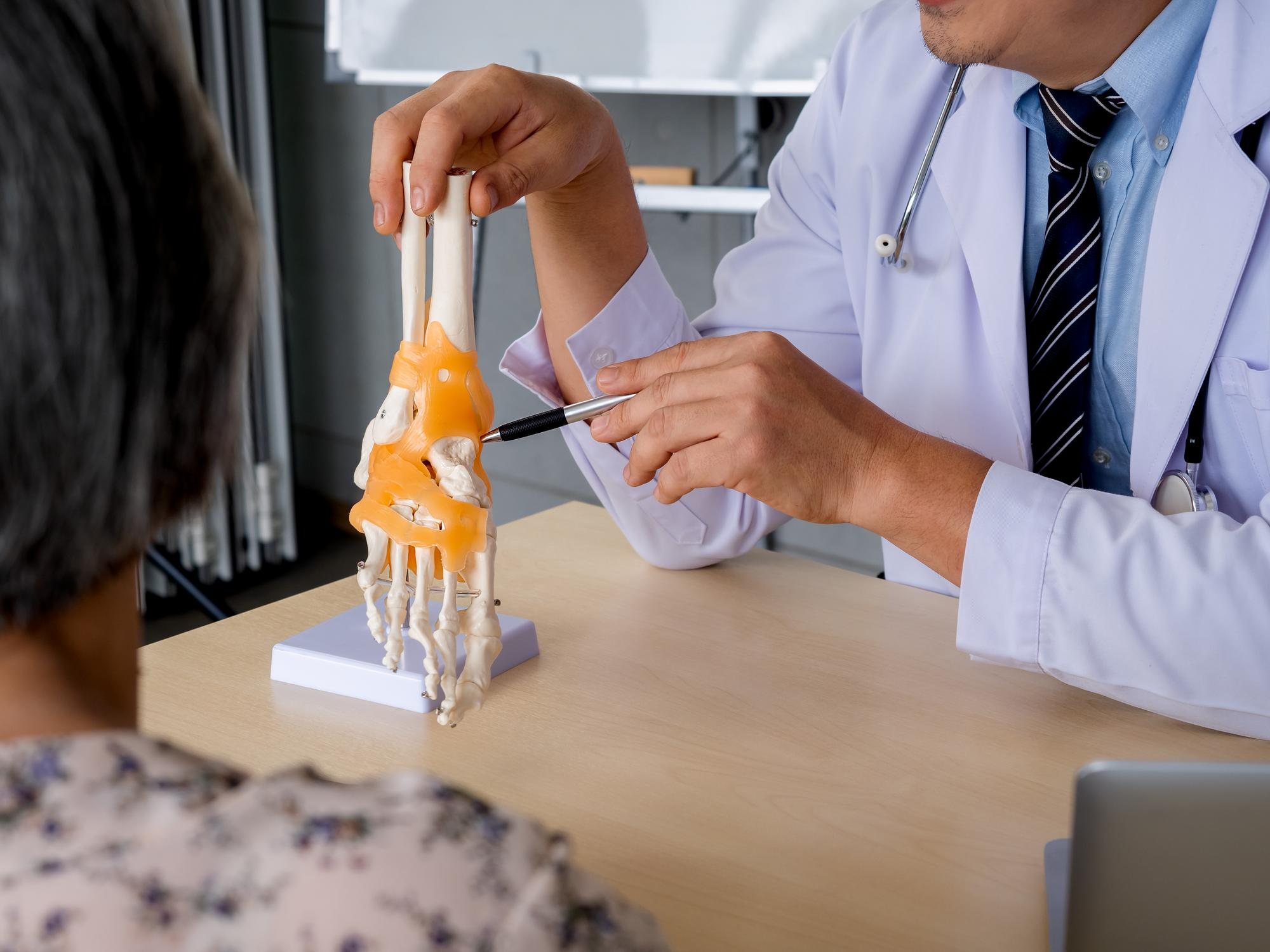
हड्डियों में सूजन (Bone Inflammation) क्यों होती है?
हड्डियों में सूजन के कारण, लक्षण और इलाज जानें। ऑस्टियोमाइलाइटिस, आर्थराइटिस और हड्डी के दर्द को नजरअंदाज न करें। Prakash Hospital में पाएं एडवांस ऑर्थोपेडिक उपचार।
9 Jun 2026
by Prakash Hospital
Orthopedic Fitness: Safe Exercise Tips for Joint Support
Discover expert-approved orthopedic fitness strategies with safe exercises to support your joints, reduce pain, and improve mobility. Ideal for all age groups.
25 Jun 2025
by Prakash Hospital
Frequently Asked Questions
Answers to common questions about ACL Reconstruction Surgery at Prakash Hospital, Noida.
Do I have to have surgery if I tear my ACL?
When can I go back to playing sport?
When can I drive or ride a scooter?
Will I be able to squat, kneel or sit cross-legged?
My 14-year-old has torn their ACL. Can children have this surgery?
Can the new ligament tear again?


Looking for the Best Hospital in Noida? Talk to Our Experts
Book a consultation with Prakash Hospital's specialists — 24/7 emergency care, 100+ doctors, NABH accredited.

Prakash Hospital Pvt. Ltd. is a 100 bedded NABH NABL accredited multispecialty hospital along with a center of trauma and orthopedics. We are in the service of society since 2001.
OUR SPECIALITIES
Patient Services
PROCEDURES
Contact Us
D – 12A, 12B, Sector-33, G. B. Nagar, Noida, Uttar Pradesh 201301
+91-8826000033


© 2026 All rights reserved.
Designed and Developed by Zarle Infotech


