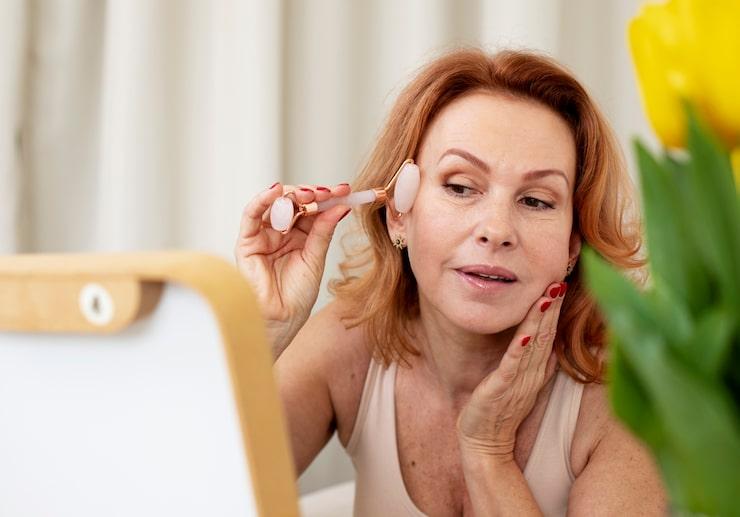
woman admiring her naturally glowing skin.
"Glowing skin" is the most searched beauty outcome in India — and the most oversold. Serums that promise to change your skin in 7 days. Drinks that claim to detox from the inside out. Ubtan recipes that promise centuries-old luminosity. Almost none of these deliver what they promise without the foundations.
Skin glow — that quality of luminous, even-toned, healthy-looking skin — is mostly the result of skin that is hydrated, has a functioning barrier, is well-nourished, and is minimally damaged. None of those things come in a single product.
Here is what the skin needs, and how to give it.
Skin looks radiant when:
Each of these factors has something you can do about it.
Dehydrated skin is dull, crepe-textured, and shows lines more prominently. Skin cells that are plumped with adequate water reflect light more evenly — the literal mechanism of hydration-related glow.
The target: 2.5–3 litres of total fluid daily. This includes water, chaas, coconut water, dal, sabzi, and fruit. Urine colour is the practical guide — pale yellow means adequate; dark yellow means drink more.
Coconut water: an ideal hydrating drink. Natural electrolytes maintain fluid balance better than plain water. One to two glasses daily.
Avoid: alcohol and excess caffeine, both of which are diuretic and dehydrate skin.
Moisturiser: apply immediately after washing the face, while skin is still slightly damp, to seal water into the skin. For Indian climate, a lightweight gel or gel-cream is typically appropriate rather than heavy creams.
Hyaluronic acid serum: applied under moisturiser. HA holds water molecules in the skin (1g of HA can hold 6 litres of water). Effective at plumping skin and reducing the appearance of fine lines from dehydration.
Oxidative stress from UV, pollution, stress, and poor diet damages skin cells and produces the uneven pigmentation and dullness that characterise unhealthy-looking skin. Antioxidants neutralise free radicals and protect skin cell integrity.
Amla: the most antioxidant-dense Indian food. Its vitamin C, polyphenols, and gallic acid protect skin cells from UV damage and support collagen synthesis. Daily amla — fresh, powder, or in food — is the single best internal skin investment.
Tomatoes: rich in lycopene — an antioxidant with specific evidence for reducing UV-induced skin damage. Cooked tomatoes have more bioavailable lycopene than raw (cooking breaks down the cell walls, releasing more lycopene). Tomato-based sabzi, soups, and chutneys.
Pomegranate: contains punicalagin and ellagic acid — antioxidants that protect collagen fibres and reduce melanin production. Research shows pomegranate polyphenols reduce UV-induced pigmentation and improve skin texture.
Turmeric: curcumin reduces skin inflammation and has mild anti-melanin effects when consumed regularly.
Green tea: EGCG protects skin from UV damage and has mild skin-lightening effects when consumed regularly (2–3 cups daily).
Carrots, pumpkin, sweet potato: beta-carotene (vitamin A precursor) maintains skin cell renewal and a healthy skin tone. Truly deficient vitamin A causes dry, rough skin; adequate intake supports smooth skin texture.
Collagen is the structural protein that keeps skin firm, smooth, and elastic. Its production declines with age, sun damage, smoking, and high sugar intake. Supporting collagen synthesis:
Vitamin C is essential for collagen synthesis — collagen requires vitamin C as a cofactor in its manufacture. Without adequate vitamin C, collagen fibres are weak and irregularly formed. Amla daily, citrus fruits, guava, capsicum.
Protein: collagen is made from amino acids — specifically glycine, proline, and hydroxyproline. Adequate dietary protein (dal, eggs, paneer, chicken) ensures the raw materials are available.
Avoid excess sugar: advanced glycation end products (AGEs) from sugar bind to collagen fibres and make them stiff, brittle, and prone to discolouration — contributing to the yellowing and wrinkling of skin with age.
The skin barrier — the outer layer of interlocking skin cells held together by lipids — depends on dietary fat for its integrity. Omega-3 fatty acids specifically maintain the skin barrier, reduce transepidermal water loss, and have anti-inflammatory effects that reduce redness and uneven tone.
Sources: walnuts, ground flaxseed, fatty fish (hilsa, sardines). One tablespoon of flaxseed in curd daily; a small handful of walnuts.
Zinc is required for wound healing, skin cell renewal, and the functioning of sebaceous glands. Deficiency causes slow healing, rough skin texture, and increased acne. Sources: pumpkin seeds, sesame, eggs, rajma.
Skin cell repair and regeneration happens primarily during sleep. Growth hormone (released in deep sleep) stimulates collagen production. Blood flow to the skin increases during sleep, delivering nutrients and removing waste products. Cortisol (which damages collagen and promotes inflammation) drops to its lowest levels during good sleep.
Consistently poor sleep is visible on skin — dullness, pallor, puffiness, accelerated skin ageing. 7–8 hours of quality sleep is a beauty intervention as much as a health one.
This seems counterintuitive — sunscreen doesn't make you glow. But UV exposure is the leading external cause of:
In India, sun exposure is intense and year-round. Most people significantly underestimate the UV damage they accumulate. A broad-spectrum SPF 30–50 applied every morning — and reapplied every 2 hours during outdoor exposure — prevents the cumulative damage that produces the uneven, pigmented skin that makes it impossible to "glow" despite every other intervention.
Indian skin consideration: for Indian skin tones, vitamin D synthesis happens efficiently with 15–20 minutes of UV exposure. There's no health reason to allow more than this — beyond that, UV is damaging without further vitamin D benefit.
The traditional Indian ubtan — a face mask of gram flour (besan), turmeric, milk, and sometimes sandalwood or rose water — has genuine skincare merit:
Applied once or twice weekly, rinsed gently, and followed by moisturiser, ubtan is a gentle, culturally resonant skin care practice with a reasonable evidence basis for maintaining skin clarity. It's not a medical treatment — it won't remove significant pigmentation or treat acne — but as a maintenance ritual for otherwise healthy skin, it has value.
Stop smoking: smoking causes dramatic premature ageing — it reduces skin blood flow, damages collagen, increases oxidative stress, and produces the characteristic "smoker's skin" (yellow-grey tone, deep lines).
Reduce alcohol: dehydrating, inflammatory, depletes vitamin C and zinc.
Manage stress: cortisol damages collagen, promotes inflammation, worsens acne and eczema, and impairs sleep — all showing on skin.
Exercise: increases skin blood flow, reduces stress hormones, and promotes growth hormone release during recovery. The "glow" after exercise is real blood flow — building this into a daily habit maintains the skin benefits over time.
At Prakash Hospital Noida, our physicians assess the medical contributors to skin health — nutritional status, thyroid function, and hormonal assessment — alongside dermatology referral for specific skin concerns.
Whether you live in Sector 18, Sector 62, Greater Noida West, or anywhere in the NCR, Prakash Hospital Noida is a trusted name for skin health, dermatology, and general wellness in Noida.
 Copy
CopyWe offer expert care across key specialties, including Medicine, Cardiology, Orthopaedics, ENT, Gynaecology, and more—delivering trusted treatment under one roof.


Book a consultation with Prakash Hospital's specialists — 24/7 emergency care, 100+ doctors, NABH accredited.

Prakash Hospital Pvt. Ltd. is a 100 bedded NABH NABL accredited multispecialty hospital along with a center of trauma and orthopedics. We are in the service of society since 2001.
OUR SPECIALITIES
Patient Services
PROCEDURES
Contact Us
D – 12A, 12B, Sector-33, G. B. Nagar, Noida, Uttar Pradesh 201301
+91-8826000033


© 2026 All rights reserved.
Designed and Developed by Zarle Infotech