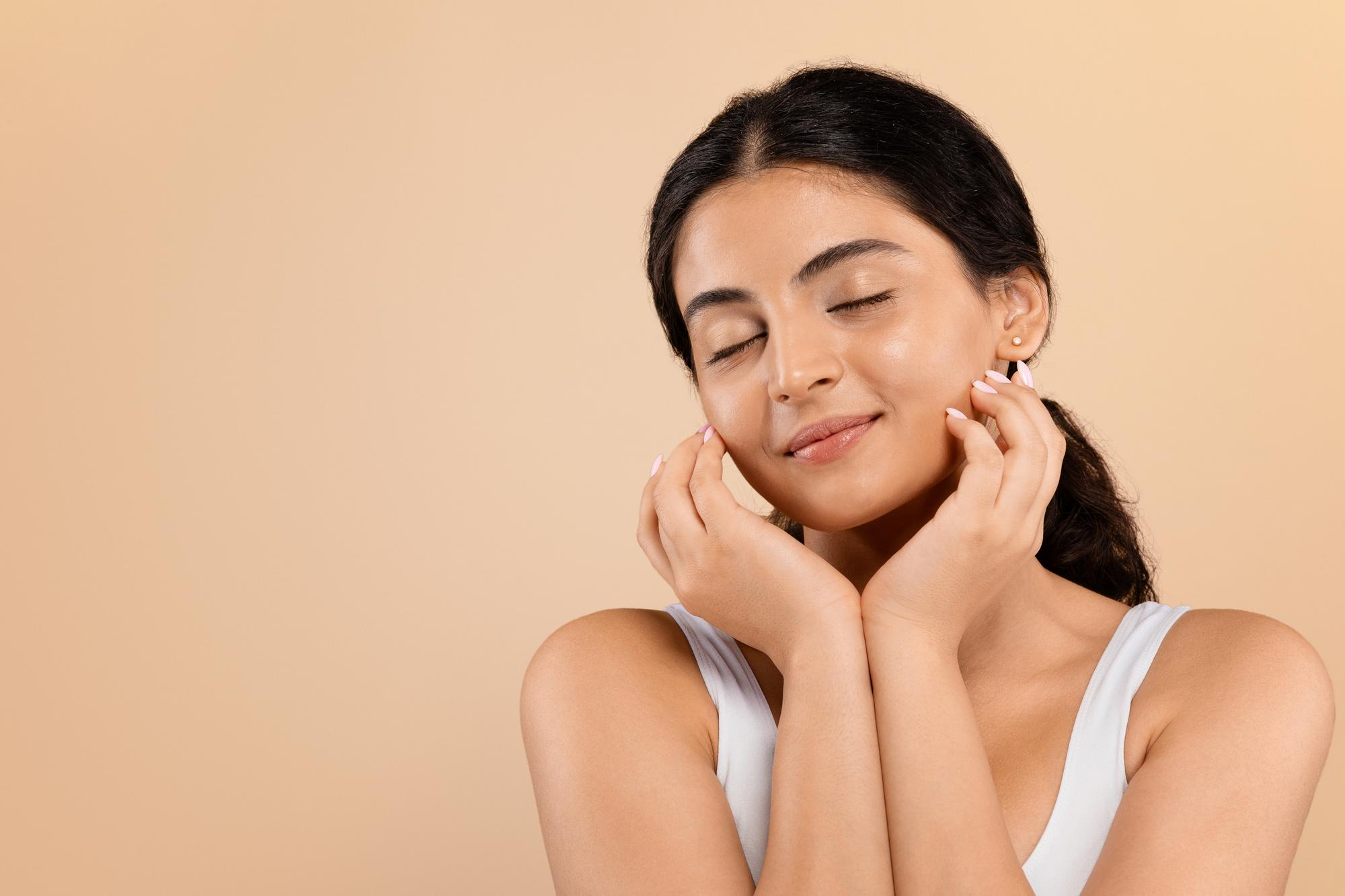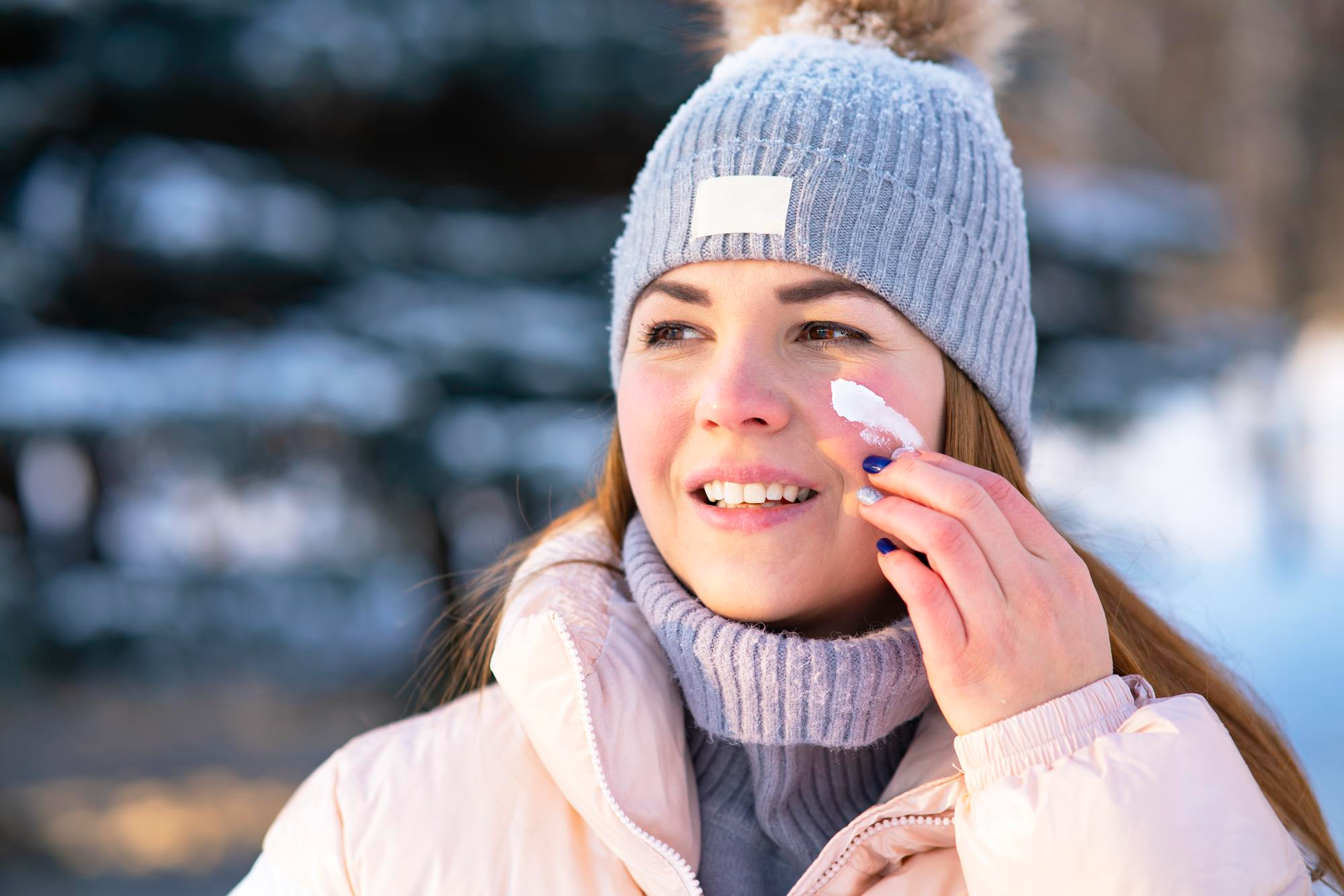
A woman applying sunscreen on her face while standing outdoors in snowy winter weather.
A sun tan in India isn't just a cosmetic concern — it's a UV damage signal. The darkening happens because melanocytes (pigment cells) produce more melanin in response to UV radiation, as a protective mechanism. The tan itself is evidence of UV-triggered melanin production and associated DNA damage in skin cells.
Removing a tan is possible; preventing new ones is simpler and more protective.
A sun tan fades naturally as tanned skin cells shed in the normal cycle of skin cell renewal (every 2–4 weeks). A mild tan can fade within 2–4 weeks without any intervention. A deeper or more prolonged tan takes longer, and may not fully reverse in areas of repeated cumulative UV exposure — these become more permanent sun-induced pigmentation changes over time.
Exfoliation: the most directly effective approach for a surface tan. Regular, gentle exfoliation removes the outermost layer of tanned skin cells and accelerates natural shedding.
Lemon juice — with important caveats: lemon contains citric acid (a mild AHA) and vitamin C, both of which have mild brightening effects. However, applying lemon juice to skin and going in the sun causes severe photosensitisation reactions — chemical burns and hyperpigmentation. If using: apply in the evening only, wash off after 10 minutes, never before sun exposure. Not appropriate for sensitive skin.
Aloe vera gel: applied after sun exposure, aloe vera reduces inflammation from UV exposure (the burn component) and has mild soothing effect. Doesn't actively remove tan but limits further damage from inflammation.
Tomato pulp: lycopene in tomato has mild UV-protective and antioxidant effects on skin. Applied as a face mask (10–15 minutes, wash off), it has a traditional use with a plausible mechanism. Gentle enough for most skin types.
Curd (yoghurt) mask: lactic acid in curd is a natural AHA with gentle exfoliating and brightening effects. Apply to tan-affected areas, leave 15–20 minutes, wash off. Safe and accessible.
Besan (gram flour) scrub: traditional Indian skin scrub. Mild exfoliation, oil absorption, protein coating effect. Mix with curd and a pinch of turmeric for a classic ubtan with combined brightening effect.
Papaya: contains papain enzyme with mild exfoliating properties. Applied as a mashed pulp mask.
These work gradually — over 4–8 weeks of consistent use rather than overnight.
Preventing new tan is far more effective than reversing an existing one.
Sunscreen: SPF 30–50 applied every morning to all exposed skin. Reapplied every 2 hours during outdoor exposure. This is the single most effective and evidence-based approach.
Sun avoidance during peak hours: 10 am to 4 pm is the peak UV period. Use shade, umbrellas, and sun-protective clothing.
Full coverage clothing: long sleeves, wide-brimmed hats, UV-protective fabric — particularly for two-wheeler riders who have significant sun exposure daily.
Sunglasses: protect the periorbital area (a common tan zone).
Whether you live in Sector 18, Sector 62, Greater Noida West, or anywhere in the NCR, Prakash Hospital Noida is a trusted name for skin care, tan removal, and dermatology in Noida.
Tags: #HowToRemoveTan #TanRemovalIndia #PrakashHospitalNoida
 Copy
CopyWe offer expert care across key specialties, including Medicine, Cardiology, Orthopaedics, ENT, Gynaecology, and more—delivering trusted treatment under one roof.


Book a consultation with Prakash Hospital's specialists — 24/7 emergency care, 100+ doctors, NABH accredited.

Prakash Hospital Pvt. Ltd. is a 100 bedded NABH NABL accredited multispecialty hospital along with a center of trauma and orthopedics. We are in the service of society since 2001.
OUR SPECIALITIES
Patient Services
PROCEDURES
Contact Us
D – 12A, 12B, Sector-33, G. B. Nagar, Noida, Uttar Pradesh 201301
+91-8826000033


© 2026 All rights reserved.
Designed and Developed by Zarle Infotech