


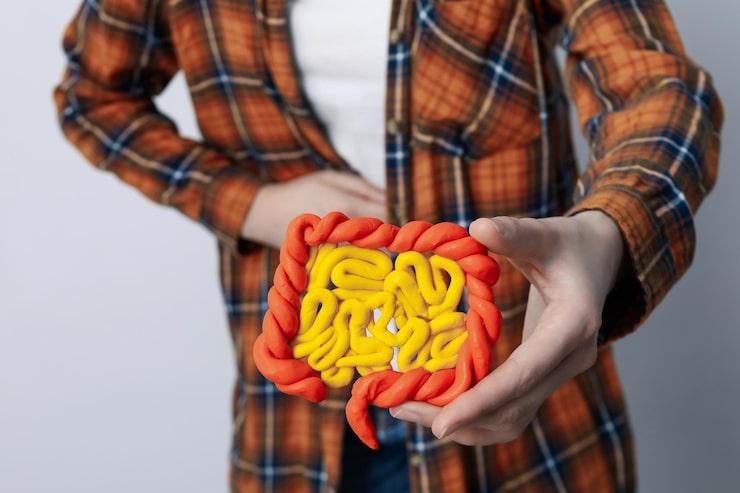
Colon Polyps and How They Can Lead to Colon Cancer
Learn all you need to know about colon polyps and the risk they carry with advise from the best doctors at Prakash Hospital, Noida.
22 Sept 2025
by Prakash Hospital
A camera test of the large bowel that finds the cause of bleeding or changed bowel habits, and removes polyps before they can turn into cancer.

Blood on the toilet paper that you've been blaming on piles. Loose motions that have gone on for a month, or constipation that's new at 50. A low haemoglobin nobody can explain. Or no symptoms at all, just a parent who had bowel cancer. Any one of them is a good reason to look inside the large bowel.
In colonoscopy, a gastroenterologist passes a long, flexible tube with a camera at its tip through the back passage and steers it around the whole of the large bowel (colon). You're usually sedated. Through the tube, the doctor can take biopsies and remove polyps, small growths on the lining that can slowly turn into cancer over years.
The test itself is usually the easy part. The bowel preparation the day before is what most people remember, and it matters: the lining can only be checked properly if the bowel is completely clean. Get the prep right, and a normal colonoscopy in someone at average risk usually means no repeat for about 10 years.
Our gastroenterology team uses high-definition video endoscopes and removes polyps during the same colonoscopy, so most people need only one test. We recommend screening for colon polyps and bowel cancer from age 45 for people at average risk, and earlier if cancer or polyps run in your family.
Colonoscopy is used both to find the cause of symptoms and to screen people who have none.
A nurse confirms your prep has worked, checks your medicines and places a cannula.
You lie on your left side with your knees bent. Sedation goes into the vein, and your breathing, oxygen and pulse are monitored throughout.
The doctor passes the lubricated scope into the back passage and steers it around the colon. Air or carbon dioxide opens up the bowel, which can cause cramping and a need to pass wind.
Once the scope reaches the start of the colon, it's withdrawn slowly while the doctor inspects every fold of the lining. This is when polyps are removed and biopsies taken, neither of which you'll feel.
The test takes 20 to 45 minutes, longer if several polyps are removed.
Your gastroenterologist usually tells you what was seen before you go home. Sedation blurs memory, so bring someone to listen with you. The report describes how clean the bowel was, whether the whole colon was seen, and anything found, often with photographs.
Polyps become more common with age, and most are harmless or slow-growing. Removed polyps go to the laboratory, and their type, size and number decide when your next colonoscopy should be, often after 3, 5 or 10 years.
Biopsies may confirm inflammatory bowel disease, an infection or, less often, cancer. Results take several days to about a week. If the prep wasn't good enough to see the whole lining, you may need to repeat the test sooner.
You rest while the sedation wears off. Passing wind is normal and helps the cramps settle.
You can usually eat straight away. Start with something light such as dal-chawal, khichdi, curd rice or toast, and drink plenty to replace what the prep took out.
Don't drive, ride a two-wheeler or sign important documents until the next day. Most people are back to normal activity and work the next morning.
If a large polyp was removed, avoid heavy lifting and long trips for a few days, and ask when to restart blood thinners. A streak of blood in the first stool is common.
Call us on +91-8826000033 or come straight to our 24/7 emergency department.
A simple home stool test used for screening in many countries. A positive result still needs a colonoscopy, and the test can miss polyps.
A shorter scope that examines only the last part of the bowel, after a simple enema. It suits some younger people with fresh bleeding, but misses the rest of the colon.
A CT scan after bowel prep that builds 3D pictures of the colon. It needs the same clean-out, can't take biopsies, and anything it finds still needs a colonoscopy.
Talk to our Gastroenterology team
Ask about your options, the cost and your insurance before you decide. See the insurance and TPA panels we work with.
This page explains Colonoscopy in general terms. Your own plan depends on your health, your test results and your doctor's advice. Please read our medical disclaimer.
Colonoscopy is led by our Gastroenterology team, with other departments stepping in at each stage of your care.
At Prakash Hospital, our Gastroenterology Department offers specialized care for digestive system disorders, ensuring accurate diagnosis, advanced treatments, and compassionate support for your gastrointestinal health.
What the department treats
Diagnostic and Therapeutic Endoscopy
Colonoscopy
ERCP
Liver Disease Management
IBD Management
GI Cancer Screening
Treats piles and fissures found during the test, and operates when a tumour or large polyp can't be removed through the scope.
Runs blood tests such as haemoglobin and kidney function, and examines removed polyps and biopsies.
Helps adjust diabetes, heart and kidney medicines around the bowel prep.
Procedures often considered alongside Colonoscopy, or that treat related conditions.
A camera test of the food pipe, stomach and duodenum for acidity, ulcers, bleeding and swallowing problems.
A swallowed pill camera that photographs the small intestine to find hidden bleeding or Crohn's disease.
Removes large or prolapsing piles that haven't settled with diet, medicines or banding.
Endoscopic treatment through the mouth that removes bile duct stones and opens blockages causing jaundice.
Other procedures our Gastroenterology team performs.
We offer expert care across key specialties, including Medicine, Cardiology, Orthopaedics, ENT, Gynaecology, and more—delivering trusted treatment under one roof.
Free tools to check your weight, plan a pregnancy, track calories and more.
Learn all you need to know about colon polyps and the risk they carry with advise from the best doctors at Prakash Hospital, Noida.
22 Sept 2025
by Prakash Hospital
Learn more about Crohn's disease with the help of the expert knowledge of the doctors in Prakash Hospital, Noida.
26 Aug 2025
by Prakash Hospital

Understand piles or hemorrhoids, their causes, symptoms, types, diagnosis, treatment options, lifestyle changes, and when to seek medical care.
14 Jan 2026
by Prakash Hospital

Learn the early symptoms of thyroid problems in women, common causes, and when to seek medical advice for timely diagnosis and treatment.
13 May 2026
by Prakash Hospital

Low testosterone symptoms — fatigue, low libido, mood changes and more. Causes, when to get a morning blood test, and treatment. Prakash Hospital Noida.
6 Oct 2026
by Prakash Hospital

जानिए थायरॉइड टेस्ट कब करवाना चाहिए, किन लक्षणों में जांच जरूरी है, और कौन-कौन से टेस्ट होते हैं। सही समय पर Prakash Hospital से संपर्क करें।
2 Mar 2026
by Prakash Hospital

Stomach infection symptoms — gastroenteritis, H. pylori, amoeba and more. What to do at home and when to see a doctor. Prakash Hospital Noida.
21 Aug 2026
by Prakash Hospital
How to improve gut health naturally with Indian diet, probiotics, fibre, and lifestyle changes. Practical guide from Prakash Hospital Noida.
18 Aug 2026
by Prakash Hospital

Signs of liver problems — from early warning signs to serious symptoms. When to get tested and what the tests mean. Prakash Hospital Noida.
17 Sept 2026
by Prakash Hospital
Answers to common questions about Colonoscopy at Prakash Hospital, Noida.


Book a consultation with Prakash Hospital's specialists — 24/7 emergency care, 100+ doctors, NABH accredited.
View All Departments