


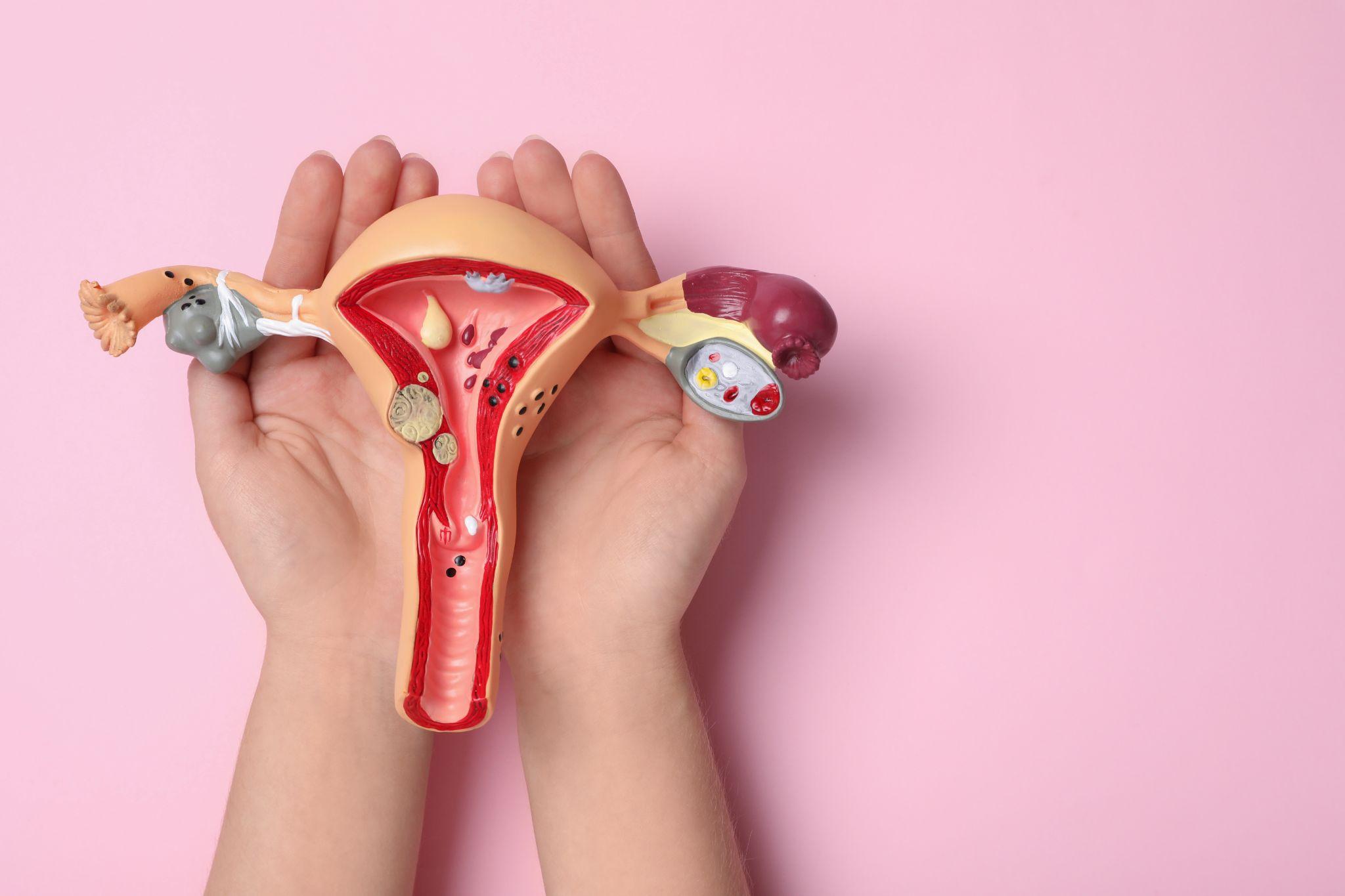
How to prevent cervical cancer
Things that are a part of your daily life might be causing cervical cancer, such as smoking and lack of regular check-ups and more.
4 Aug 2025
by Prakash Hospital
A magnified look at the cervix after an abnormal Pap or HPV test, to find any precancerous changes early, while they're simple to treat.

A call saying your Pap smear was abnormal, or that you tested positive for HPV, is frightening. It helps to know what it usually means. Some cells on the cervix look changed, most often because of an HPV infection, and they need a closer look. It very rarely means cancer.
Colposcopy is that closer look. You lie as you would for a Pap smear, and the doctor examines your cervix through a colposcope, a magnifying instrument with a light that stays outside your body. Dilute vinegar (acetic acid), and sometimes an iodine solution, is dabbed on the cervix. Abnormal areas turn white with the vinegar or don't take up the iodine stain. If an area looks abnormal, a tiny sample (biopsy) is taken.
Most colposcopies find either a normal cervix or mild changes that go away on their own. When higher-grade changes are found, they can be removed with a simple day procedure, years before they could turn into cancer. This is how cervical screening prevents most cervical cancers.
Colposcopy, Pap smears and pelvic ultrasound are all available in-house in our gynaecology department, and a female nurse or attendant is always with you during the examination. Biopsies are processed by our diagnostic department.
Colposcopy follows up a screening result or a symptom. It's usually advised for one of these reasons.
Small pieces, 2 to 3 mm across, are taken from the areas that look most abnormal. This is the most common approach, and it's what makes the result reliable.
If the abnormal area runs up into the canal of the cervix, out of the colposcope's view, a small brush or scoop collects cells from inside the canal.
When the changes clearly look high-grade, some women are offered treatment at the same visit with a LEEP (a thin, heated wire loop) under local anaesthetic, which saves a second trip.
The doctor explains your report and what they'll be looking for. You can ask anything before you change.
You lie on the couch with your legs in supports, and a speculum is inserted just as for a Pap smear.
The colposcope sits about 30 cm away, outside the vagina. The doctor applies acetic acid, and sometimes iodine, and studies the cervix in detail. This part is painless, though the solutions can sting slightly.
One or more tiny samples are taken, which feels like a quick pinch or cramp. A paste or silver nitrate is then applied to stop any bleeding.
The speculum comes out and you can dress and leave. The whole visit usually takes 15 to 20 minutes.
If no biopsy was needed, the doctor can often give you the findings straight away. Biopsy results usually take about a week and are graded as CIN (cervical intraepithelial neoplasia). CIN1 is a mild change, CIN2 moderate and CIN3 severe. These are precancerous changes, not cancer.
CIN1 usually clears by itself within one to two years as your immune system gets rid of HPV, so it's normally watched with repeat tests. CIN2 and CIN3 are usually treated, most often with a LEEP (a thin wire loop that removes the abnormal area under local anaesthetic) or by destroying the area with cold or heat. In younger women, CIN2 is sometimes watched closely instead, after a discussion with you.
Rarely, the biopsy shows cancer. Found this way, it's usually at an early stage, and your gynaecologist will explain the next steps, which may include referral to a gynaecological cancer specialist. Whatever the result, you'll be told when your next Pap or HPV test is due.
If no biopsy was taken, you can go back to work and normal life immediately.
After a biopsy, expect some spotting and a brownish discharge. Use pads rather than tampons.
Avoid sex, tampons and swimming for about a week while the biopsy site heals.
We'll go through the biopsy report with you and plan repeat tests or treatment. Keep up with your screening afterwards, as advised.
Call us on +91-8826000033 or come straight to our 24/7 emergency department.
For borderline or low-grade results, especially in younger women, a repeat test after 6 to 12 months is sometimes enough instead of going straight to colposcopy. Your gynaecologist will say which applies to you.
Visual inspection with acetic acid is done with the naked eye and is widely used in screening camps. It's quick and simple, but less accurate than colposcopy, so a positive VIA is usually followed by colposcopy.
If the abnormal area can't be fully seen, or the results don't match, a larger cone of tissue may be removed under anaesthesia to make the diagnosis.
Talk to our Gynecology & Obstetrics team
Ask about your options, the cost and your insurance before you decide. See the insurance and TPA panels we work with.
This page explains Colposcopy (Cervix Examination) in general terms. Your own plan depends on your health, your test results and your doctor's advice. Please read our medical disclaimer.
Colposcopy (Cervix Examination) is led by our Gynecology & Obstetrics team, with other departments stepping in at each stage of your care.
At Prakash Hospital, our Obstetrics and Gynecology Department provides expert care for women at every life stage — from prenatal care and childbirth to gynecological health and menopause management.
What the department treats
High-Risk Pregnancy Care
Laparoscopic Surgery
PCOS Management
Infertility Treatment
Prenatal and Postnatal Care
Menopause Management
Procedures often considered alongside Colposcopy (Cervix Examination), or that treat related conditions.
A camera through the cervix to see inside the uterus and remove polyps, small fibroids or scar tissue, with no cuts.
Removes the uterus through keyhole cuts, for fibroids, heavy periods or adenomyosis that other treatment hasn't fixed.
Treats the uterine lining to make heavy periods lighter or stop them, with no cuts, for women who want no more children.
Other procedures our Gynecology & Obstetrics team performs.
Care through labour and vaginal birth, including VBAC for suitable women who have had one caesarean before.
Delivers the baby through a low cut in the abdomen and uterus, planned or in labour, usually under spinal anaesthesia.
Keyhole removal of an ovarian cyst that keeps the healthy ovary, usually with a stay of one night or less.
Removes uterine fibroids and repairs the womb, easing heavy bleeding and pressure while keeping pregnancy possible.
Blocks or removes the fallopian tubes for permanent contraception, usually as day-care keyhole surgery.
Keyhole surgery on the ovaries to restart ovulation in PCOS when tablets haven't worked, without raising the twin risk.
We offer expert care across key specialties, including Medicine, Cardiology, Orthopaedics, ENT, Gynaecology, and more—delivering trusted treatment under one roof.
Free tools to check your weight, plan a pregnancy, track calories and more.
Things that are a part of your daily life might be causing cervical cancer, such as smoking and lack of regular check-ups and more.
4 Aug 2025
by Prakash Hospital

Discover effective natural remedies for period pain relief, including lifestyle tips, home treatments, and ways to ease menstrual cramps safely.
28 Apr 2026
by Prakash Hospital

White vaginal discharge — what's normal, what's not, and when to see a gynaecologist. From Prakash Hospital Noida.
3 Aug 2026
by Prakash Hospital
Oily skin causes in India, what makes it worse, and how to manage it with diet and skincare. Prakash Hospital Noida.
11 Sept 2026
by Prakash Hospital

Dry skin causes, best Indian remedies, and when it's something more serious. Prakash Hospital Noida.
10 Sept 2026
by Prakash Hospital

Best Indian foods for healthy, glowing skin — what to eat for skin hydration, collagen, and protection from UV damage. Prakash Hospital Noida.
14 Sept 2026
by Prakash Hospital

Understand period pain, its causes, types, underlying medical conditions, and effective relief options including lifestyle changes and medical treatment.
16 Jan 2026
by Prakash Hospital

Learn expert-backed tips to maintain a healthy menstrual cycle, reduce cramps, balance hormones, and support reproductive wellness. Get personalised gynecological care at Prakash Hospital.
10 Dec 2025
by Prakash Hospital
Period pain relief tips, home remedies, and treatment options. Know when severe period pain needs medical care. Visit Prakash Hospital Noida.
15 Jul 2026
by Prakash Hospital
Answers to common questions about Colposcopy (Cervix Examination) at Prakash Hospital, Noida.


Book a consultation with Prakash Hospital's specialists — 24/7 emergency care, 100+ doctors, NABH accredited.
View All Departments