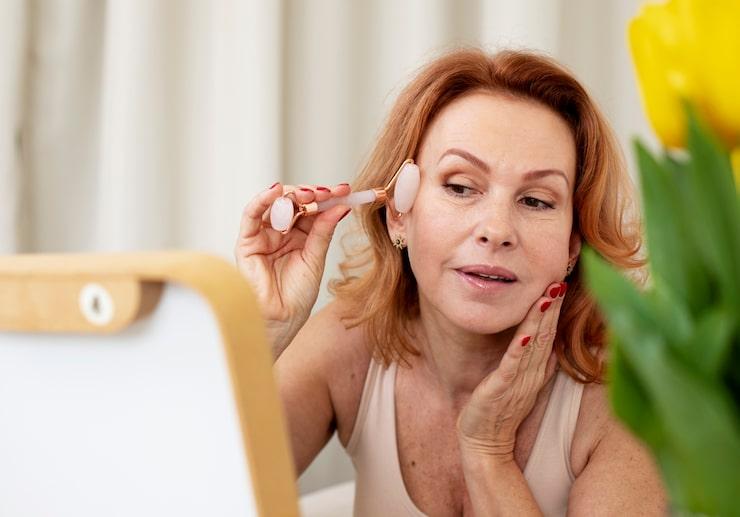
A woman with glowing healthy skin touching her face, symbolizing good internal health.
The idea that "you are what you eat" is nowhere more literally visible than in the skin. What you eat affects sebum production, collagen synthesis, inflammatory responses, the barrier function of the skin, and the pace of skin ageing. The skin is the largest organ in the body and among the most metabolically active — it needs consistent nutritional support to maintain its appearance and function.
The Indian diet has some excellent natural advantages for skin health — amla, turmeric, dal, dark leafy greens, and healthy cooking fats all have genuine skin benefits. Here's how to maximise them.
Vitamin C: essential for collagen synthesis; the most important single vitamin for skin structure and the most potent antioxidant in the skin.
Vitamin A (and beta-carotene): regulates skin cell renewal; deficiency causes rough, dry skin.
Vitamin E: fat-soluble antioxidant that protects skin cell membranes from oxidative damage.
Omega-3 fatty acids: maintain the lipid layer of the skin barrier; reduce inflammation; improve skin hydration.
Zinc: wound healing, immune function in the skin, sebum regulation.
Selenium: antioxidant protection; cofactor for antioxidant enzymes.
Protein: the building block of collagen, elastin, and all structural skin proteins.
Water: skin hydration depends fundamentally on adequate total body hydration.
Amla's vitamin C content is extraordinary — 600–700 mg per 100g (compared to 50 mg in orange). Vitamin C:
Beyond vitamin C, amla contains gallic acid, ellagic acid, and other polyphenols with anti-ageing and UV-protective properties. Research on amla for skin is consistently positive.
Daily target: fresh amla in season, amla powder (1 teaspoon in water), amla chutney. One of the simplest and most effective dietary skin interventions.
Lycopene in tomatoes is a powerful antioxidant specifically associated with reduced UV-induced skin damage. Clinical studies show that regular consumption of lycopene (from tomato products) reduces UV-induced redness and skin cell damage.
Importantly: cooked tomato provides more bioavailable lycopene than raw. The heat breaks down cell walls releasing more lycopene, and fat (cooking oil) enhances absorption. A tomato-based sabzi cooked in oil is far more effective for lycopene absorption than raw tomato.
Include tomato-based sabzi, soups, and sauces regularly.
Beta-carotene is converted to vitamin A in the body (as needed — no toxicity risk from food sources). Vitamin A:
These orange-coloured vegetables are rich, affordable, and versatile in Indian cooking. Pumpkin (kaddu) sabzi, carrot in salad or halwa (in moderation), roasted sweet potato.
Walnuts provide:
A small daily handful (4–6 whole walnuts) provides meaningful contributions to all three.
One tablespoon of ground flaxseed provides significant ALA along with lignans (antioxidants). Clinical research shows omega-3 supplementation improves skin hydration and smoothness, and reduces UV sensitivity.
Must be ground for absorption. Add to curd, oats, or dal daily.
Fatty fish provide EPA and DHA — the active forms of omega-3 that the body uses directly (rather than needing to convert from ALA). EPA and DHA:
Plus vitamin D — directly involved in skin cell cycling and repair.
Two to three servings weekly.
Eggs deliver biotin (keratin synthesis for skin as well as hair), protein (for collagen building blocks), selenium (antioxidant enzyme function), zinc, and vitamin D in the yolk. One to two daily.
The gut microbiome influences systemic inflammation, and systemic inflammation manifests in skin. Probiotics in curd support gut microbiome diversity, which reduces the inflammatory signals that worsen acne, eczema, rosacea, and psoriasis.
Additionally, curd's lactic acid (when curd is used in a face mask or body scrub) provides gentle exfoliation and smoothing.
Plain curd at both lunch and dinner.
Palak (spinach), methi, drumstick leaves (moringa): provide folate (for skin cell DNA replication), vitamin C, vitamin K (skin healing), and iron (maintaining skin colour through haemoglobin).
Vitamin K specifically is involved in reducing the purple discolouration of broken capillaries under thin skin areas like the under-eyes.
Curcumin in turmeric reduces NF-κB — a key inflammatory signalling molecule. Reducing systemic inflammation benefits acne, eczema, psoriasis, and UV-induced skin aging. The standard practice of turmeric in every dal and sabzi is, from a skin perspective, excellent.
For better absorption: with black pepper and a fat source (both present in standard cooking).
Sugar and refined carbohydrates: raise insulin and promote glycation — the binding of sugar to skin proteins including collagen. Glycated collagen is stiff, yellow-tinted, and prone to cross-linking — the internal mechanism of sugar-related premature ageing. Reducing sugar reduces this form of skin ageing.
Excess alcohol: dehydrating, depletes vitamin C and zinc, promotes inflammation, and disrupts sleep — all visible on skin.
Very low fat diets: impair absorption of fat-soluble vitamins A, D, E, K and eliminate omega-3 intake — both directly harmful to skin.
Dehydration: dull, less elastic skin. Adequate fluid intake is a basic but genuine skin intervention.
Morning:
Breakfast:
Lunch:
Snack:
Dinner:
This dietary pattern provides vitamin C, vitamin A, vitamin E, omega-3, zinc, selenium, protein, and probiotics — comprehensive skin nutritional support from the inside.
Whether you live in Sector 18, Sector 62, Greater Noida West, or anywhere in the NCR, Prakash Hospital Noida is a trusted name for skin health, nutrition assessment, and general wellness in Noida.
Tags: #FoodsForHealthySkin #IndianDietForSkin #PrakashHospitalNoida
 Copy
CopyWe offer expert care across key specialties, including Medicine, Cardiology, Orthopaedics, ENT, Gynaecology, and more—delivering trusted treatment under one roof.


Book a consultation with Prakash Hospital's specialists — 24/7 emergency care, 100+ doctors, NABH accredited.

Prakash Hospital Pvt. Ltd. is a 100 bedded NABH NABL accredited multispecialty hospital along with a center of trauma and orthopedics. We are in the service of society since 2001.
OUR SPECIALITIES
Patient Services
PROCEDURES
Contact Us
D – 12A, 12B, Sector-33, G. B. Nagar, Noida, Uttar Pradesh 201301
+91-8826000033


© 2026 All rights reserved.
Designed and Developed by Zarle Infotech