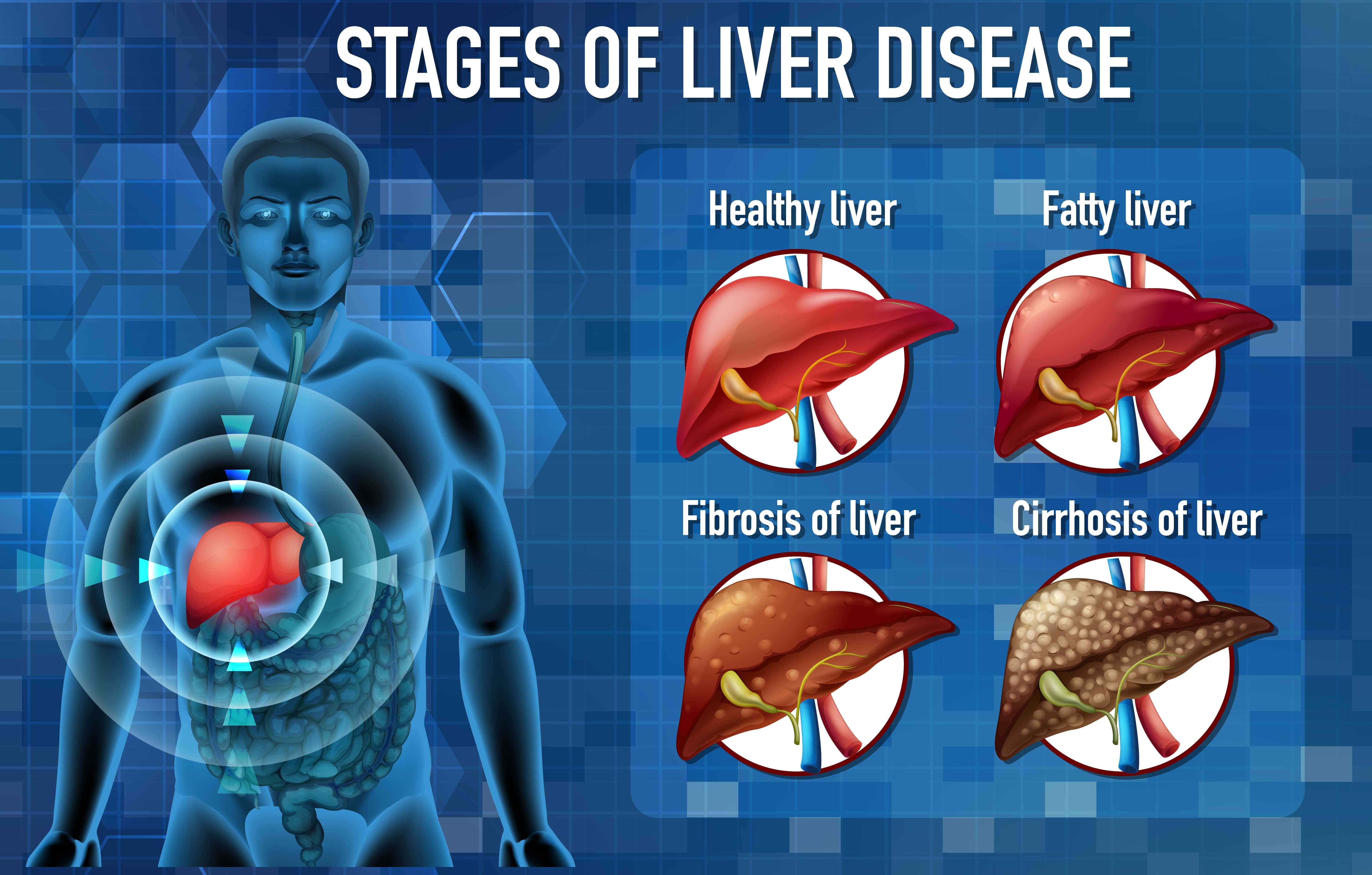
Illustration of a normal healthy liver.
You go for a routine ultrasound and the report mentions "hepatomegaly." Or your doctor presses on your abdomen and notes that your liver feels larger than normal. The term sounds alarming, but most people have not heard of it before and do not know what it means.
Hepatomegaly is the medical term for an enlarged liver — a liver larger than its normal size. It is important to understand that hepatomegaly is not a disease itself. It is a sign that something is affecting the liver. The list of possible causes is long, ranging from harmless temporary conditions to serious diseases requiring urgent attention.
This article walks through what enlarged liver actually means, the common causes, the diagnostic process, and treatment approaches.
A normal adult liver typically measures about 15 cm in length along its longest axis on ultrasound, though there is significant variation by body size, sex, and age.
When the liver exceeds normal size for an individual, this is called hepatomegaly. Causes include inflammation, fat accumulation, fluid accumulation, blood congestion, infiltration by various cells, tumours, and others.
The enlargement itself is the consequence. The cause is what matters for treatment and prognosis.
A doctor presses gently on the upper-right abdomen below the ribs. A normal liver is barely felt below the rib edge. An enlarged liver can be felt extending below the ribs.
Physical examination provides clues but is not very precise. Many enlarged livers cannot be felt clearly (in obese patients) and some normal-feeling livers turn out to be enlarged on imaging.
Ultrasound is the most common method for confirming hepatomegaly. It accurately measures liver size and can identify some causes.
CT or MRI provides more detailed information when needed.
The most common cause in modern India. Fat accumulation in liver cells causes the liver to enlarge.
Non-alcoholic fatty liver disease (NAFLD) — linked to obesity, diabetes, metabolic syndrome.
Alcoholic fatty liver disease — from chronic alcohol use.
Often silent. Often discovered incidentally on routine ultrasound.
Liver inflammation from viral hepatitis (A, B, C, D, E), alcoholic hepatitis, autoimmune hepatitis, or other causes makes the liver swell.
Can be acute (sudden, often with jaundice and other symptoms) or chronic (silent for years).
Counterintuitively, the liver can be enlarged in early cirrhosis. In advanced cirrhosis it usually shrinks. The presence of nodules and scarring makes the liver irregular in appearance.
Chronic heart failure causes blood to back up in the liver (congestive hepatopathy). The liver swells from blood congestion.
Often accompanied by ankle swelling, breathlessness, and other heart failure symptoms.
Primary liver cancer (hepatocellular carcinoma) often causes liver enlargement.
Metastatic cancer to the liver — from breast, colon, pancreas, lung, or other primary sites — can cause significant enlargement.
Liver abscess — bacterial or amoebic (from Entamoeba histolytica).
Viral infections including infectious mononucleosis (Epstein-Barr virus), cytomegalovirus.
Parasitic infections — malaria, schistosomiasis, hydatid disease.
Tuberculosis can affect the liver.
Hemolytic anemias — increased red cell breakdown.
Leukemia and lymphomas — can infiltrate the liver.
Myeloproliferative disorders.
Sickle cell disease.
Wilson's disease — copper accumulation.
Hemochromatosis — iron overload.
Alpha-1 antitrypsin deficiency.
Glycogen storage diseases.
Lipid storage diseases.
Cysts — including polycystic liver disease.
Benign tumours — hemangiomas, focal nodular hyperplasia, adenomas.
Bile duct obstruction.
Pregnancy — minor liver size changes can occur.
Certain medications — some can cause liver enlargement.
Many enlarged livers cause no symptoms. When they do:
Right upper abdominal discomfort or fullness — vague pressure or aching under the right ribs.
Feeling full quickly after eating (early satiety).
Bloating.
Mild nausea sometimes.
Fatigue.
Jaundice — yellowing of eyes and skin.
Dark urine.
Pale stools.
Abdominal swelling (ascites).
Leg swelling.
Easy bruising.
Loss of appetite.
Weight loss.
Itchy skin.
Spider angiomas, palmar erythema (signs of chronic liver disease).

Woman holding upper abdomen with highlighted liver area indicating early liver damage symptoms
Severe upper-right pain with fever — possible liver abscess or cholangitis.
Heart failure symptoms — breathlessness, ankle swelling.
Cancer-related symptoms — significant weight loss, fatigue, palpable mass.
Active hepatitis — fever, joint pains, nausea, fatigue.
Symptoms, alcohol use, medications, supplements, recent travel, contacts with infections, family history, other medical conditions.
Confirming enlarged liver. Looking for signs of chronic liver disease, heart failure, masses, lymph nodes.
Liver function tests — AST, ALT, ALP, GGT, bilirubin, albumin.
Complete blood count.
Hepatitis screening — A, B, C, and sometimes D, E.
Coagulation studies.
Specific tests based on suspected cause — autoimmune markers, iron studies, copper studies, tumour markers (AFP for liver cancer, others).
Stool examination for parasites in relevant cases.
Ultrasound — first-line.
CT scan — detailed evaluation.
MRI — when more detail is needed, particularly for masses.
FibroScan — assesses liver fibrosis.
Doppler studies — for blood flow problems.
Liver biopsy — for unclear diagnoses.
ERCP — when bile duct involvement is suspected.
Cardiac evaluation — when heart failure is suspected as cause.
The treatment depends entirely on the underlying cause:
Fatty liver — weight loss, diet changes, exercise, treating diabetes and metabolic factors.
Alcoholic liver disease — complete alcohol abstinence, nutritional support.
Viral hepatitis — antiviral medications for B and C, supportive care for A and E.
Autoimmune hepatitis — immunosuppressant medications.
Heart failure — addressing heart function with medications and lifestyle changes.
Liver abscess — antibiotics, sometimes drainage.
Cancer — surgery, chemotherapy, radiation, or palliative care depending on type and stage.
Metabolic disorders — specific treatments (chelation for Wilson's, phlebotomy for hemochromatosis).
Cysts and benign tumours — usually monitoring, intervention only if causing problems.
Drug-induced — stopping the offending drug.
While the specific treatment depends on the cause, general liver-supporting habits help most cases:
Limit or avoid alcohol completely if any liver issue is present.
Maintain a healthy weight — particularly important for fatty liver.
Balanced diet — vegetables, fruits, whole grains, lean proteins, healthy fats.
Limit refined carbs and added sugars — particularly for fatty liver.
Regular exercise — 150 minutes weekly minimum.
Adequate sleep — 7 to 9 hours.
Be careful with medications — only prescribed medications at recommended doses.
Avoid unregulated supplements — many cause liver damage.
Vaccinations — hepatitis A and B.
Address other conditions — diabetes, hypertension, cholesterol.
Regular follow-up with your doctor.
"Enlarged liver always means liver disease." Many causes do not originate in the liver itself — heart failure, blood disorders, metastatic cancer.
"You can feel an enlarged liver yourself." Self-examination is unreliable. Medical evaluation needed.
"All enlarged livers need treatment." Some causes are mild and resolve on their own.
"Enlarged liver is always serious." Severity varies enormously by cause.
"Specific home remedies shrink enlarged livers." No reliable evidence for general "shrinking" remedies. Addressing the underlying cause is what matters.
"You should drink alcohol to stimulate the liver." Alcohol damages the liver. This is dangerous advice.
"Enlarged liver always causes pain." Many cases are completely painless.
"Once enlarged, the liver stays enlarged." Many causes are reversible. Liver size can return to normal with treatment.
"Children cannot have enlarged livers." They can — from infections, metabolic disorders, blood diseases, and other causes.
The outcome depends entirely on the cause:
Fatty liver caught early — reversible with lifestyle changes.
Hepatitis B and C — manageable or curable with modern treatments.
Heart failure — depends on overall heart function and treatment response.
Liver abscess — usually curable with appropriate treatment.
Cirrhosis with hepatomegaly — depends on stage and cause.
Liver cancer — depends on stage at diagnosis.
Metabolic disorders — specific treatments effective in many cases.
Early diagnosis and treatment of the underlying cause typically improves outcomes substantially.
A consultation makes sense when:
Causes are often different from adults — congenital infections, metabolic disorders, blood diseases, infections, sometimes tumours. Always needs pediatric evaluation.
Minor liver changes are normal. Significant hepatomegaly during pregnancy needs evaluation. Some pregnancy-related liver conditions exist.
More likely to have cancer-related causes. Heart failure also more common.
NAFLD is much more common. Good glucose control essential.
Weight loss is one of the most impactful interventions for fatty liver.
Hepatomegaly is commonly identified in Delhi NCR primarily because of high rates of fatty liver disease, frequent ultrasound use in routine checkups, viral hepatitis prevalence, and rising rates of metabolic conditions like diabetes and obesity.
Most cases discovered incidentally on routine imaging are from NAFLD — a condition that has become extraordinarily common in working professionals.
Practical adaptations include annual liver function tests, ultrasound when indicated, addressing weight and metabolic issues, hepatitis vaccinations, moderating alcohol consumption, and gastroenterology consultation for evaluation of enlarged liver.
At Prakash Hospital, Noida, experienced gastroenterologists and hepatologists offer comprehensive evaluation of liver enlargement including blood tests, imaging, and treatment of underlying causes ranging from fatty liver to viral hepatitis to more complex conditions.
Whether you are in Sector 18, Sector 62, Greater Noida West, or anywhere nearby, Prakash Hospital Noida is a trusted name for liver care and gastroenterology.
An enlarged liver is a clue, not a diagnosis. The reliable approach is identifying what is causing the enlargement and treating that specific cause. The same finding can mean very different things — temporary fatty liver responsive to lifestyle changes, treatable viral hepatitis, heart-related congestion needing cardiac care, or serious conditions requiring urgent intervention.
If a report mentions hepatomegaly or your doctor notes an enlarged liver on examination, the next step is investigation — blood tests, sometimes additional imaging, occasionally biopsy. The investigation is usually straightforward and reveals the cause in most cases.
Once the cause is known, treatment can be specific and effective. Many causes are reversible. Others require ongoing management. A few are serious. The point is to know which one is at work in your case rather than guess.
Do not assume an enlarged liver means cancer. Do not assume it is nothing. Get proper evaluation. Follow through with recommended treatment. Address risk factors proactively. With the right approach, most cases of hepatomegaly have good outcomes.
 Copy
CopyWe offer expert care across key specialties, including Medicine, Cardiology, Orthopaedics, ENT, Gynaecology, and more—delivering trusted treatment under one roof.


Book a consultation with Prakash Hospital's specialists — 24/7 emergency care, 100+ doctors, NABH accredited.

Prakash Hospital Pvt. Ltd. is a 100 bedded NABH NABL accredited multispecialty hospital along with a center of trauma and orthopedics. We are in the service of society since 2001.
OUR SPECIALITIES
Patient Services
PROCEDURES
Contact Us
D – 12A, 12B, Sector-33, G. B. Nagar, Noida, Uttar Pradesh 201301
+91-8826000033


© 2026 All rights reserved.
Designed and Developed by Zarle Infotech