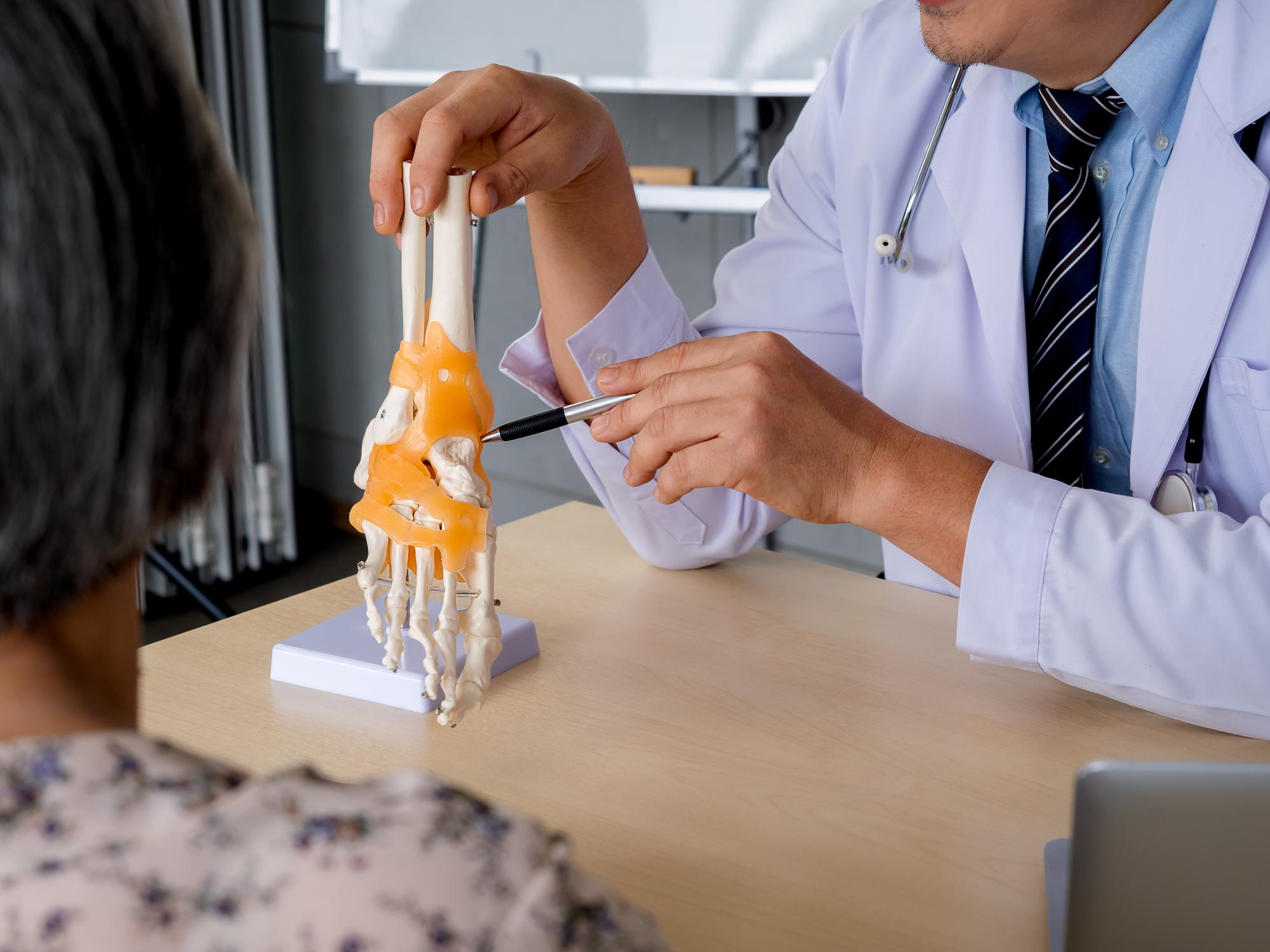
Some joints are damaged rather than worn out. A thigh bone that healed crooked after an accident years ago, so the knee now takes weight on one side. A fracture that never joined. A bow-legged knee in a 45-year-old, wearing fast on the inner side while the outer side is still healthy. In each case the aim is to fix the structure of your own joint.
In joint reconstruction surgery, your surgeon rebuilds the bone, cartilage or ligaments of a damaged joint. That can mean cutting and realigning a bone to move weight off the worn part of a joint (an osteotomy), correcting a fracture that healed in the wrong position, grafting bone into a fracture that won't heal, rebuilding ligaments that have left a joint loose, or joining two bones so a painful joint stops moving (a fusion). Many plans combine several of these, measured beforehand on long-leg X-rays and CT scans.
This is different from a total knee replacement or a revision knee replacement, which put in or change artificial parts. Keeping your own joint matters most for younger, active people who might otherwise face several replacements in a lifetime. The trade-off is a longer recovery, because bone and grafts take months to heal.
Our orthopaedics and trauma team treats fractures, deformities and their long-term effects, including corrective surgery in children and adults, and plans your rehabilitation with the physiotherapy team from the start.