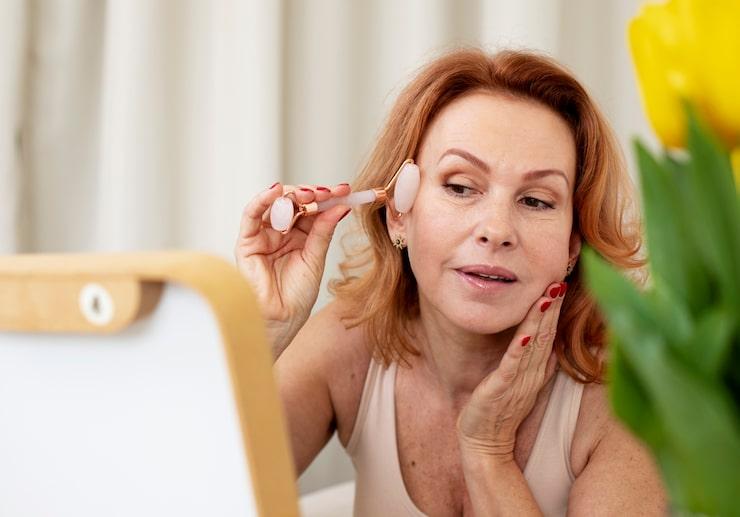
Woman applying serum.
Skin pigmentation — uneven colour, dark patches, or generalised darkening — is one of the most common dermatological concerns in India. Indian skin has higher melanin density than lighter skin tones, which provides sun protection but also makes it more prone to hyperpigmentation from even minor triggers like sun exposure, inflammation, hormonal changes, or injuries.
Melasma: brown or grey-brown patches, typically on the cheeks, forehead, nose bridge, and upper lip. Driven by UV exposure and hormonal changes — extremely common during pregnancy ("mask of pregnancy") and with oral contraceptive use. Affects women disproportionately. Tends to worsen in summer and improve in winter.
Post-inflammatory hyperpigmentation (PIH): flat dark marks left after inflammation — acne, insect bites, burns, cuts, or any skin trauma. Darker skin tones produce more melanin in response to injury and develop PIH more easily. Very common after pimples resolve.
Sun spots (solar lentigines): flat brown spots from cumulative UV damage. More common on the face, hands, and décolletage. Develops gradually over years.
Periorbital hyperpigmentation: dark circles under the eyes — discussed in detail in P5-31.
Acanthosis nigricans: velvety dark thickening at the neck, armpits, and skin folds — associated with insulin resistance, diabetes, and PCOD. Not cosmetic — a metabolic signal.
The common thread: all hyperpigmentation involves excess melanin production by melanocytes. The triggers are:
The non-negotiable foundation: daily broad-spectrum sunscreen
No pigmentation treatment works meaningfully without consistent daily sunscreen. Every day, even in winter and when indoors near windows. SPF 30–50. Reapply every 2 hours during outdoor exposure. This prevents further accumulation and allows other treatments to work.
Topical treatments that work:
For melasma specifically: melasma requires long-term management because it tends to recur. The combination of daily sunscreen + topical treatments (niacinamide + vitamin C + retinoid) + avoiding hormonal triggers (if possible) produces the best results. Professional treatments improve melasma but it often returns without ongoing topical maintenance.
Whether you live in Sector 18, Sector 62, Greater Noida West, or anywhere in the NCR, Prakash Hospital Noida is a trusted name for pigmentation treatment, dermatology, and skin health in Noida.
Tags: #SkinPigmentationTreatment #MelasmaTreatment #PrakashHospitalNoida
 Copy
CopyWe offer expert care across key specialties, including Medicine, Cardiology, Orthopaedics, ENT, Gynaecology, and more—delivering trusted treatment under one roof.


Book a consultation with Prakash Hospital's specialists — 24/7 emergency care, 100+ doctors, NABH accredited.

Prakash Hospital Pvt. Ltd. is a 100 bedded NABH NABL accredited multispecialty hospital along with a center of trauma and orthopedics. We are in the service of society since 2001.
OUR SPECIALITIES
Patient Services
PROCEDURES
Contact Us
D – 12A, 12B, Sector-33, G. B. Nagar, Noida, Uttar Pradesh 201301
+91-8826000033


© 2026 All rights reserved.
Designed and Developed by Zarle Infotech