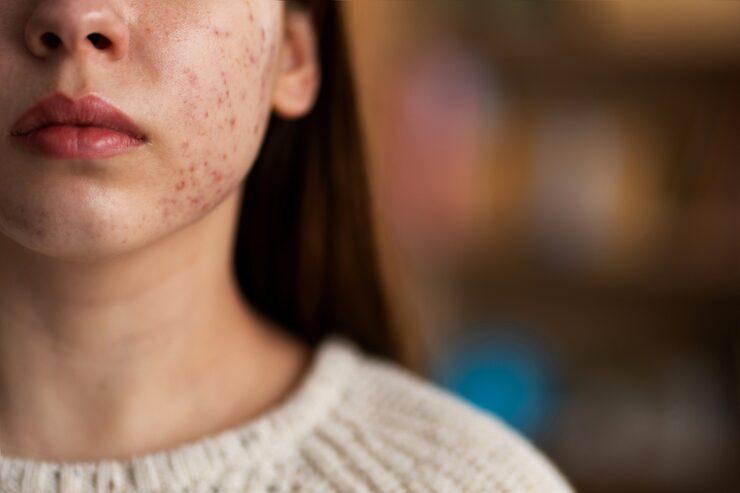
girl with Acne
Pimples — or acne — is one of the most universal skin concerns in India, affecting not just teenagers but a growing number of adults well into their 30s and 40s. The treatment landscape is confused by an enormous amount of incorrect information: products that promise overnight results (impossible), home remedies that work for some but make others worse, and the widespread habit of squeezing — which almost always makes things worse and leaves scars.
Understanding why pimples form and which treatments genuinely work cuts through this confusion.
Pimples are not random. They form through a predictable sequence:
1.Excess sebum production: sebaceous glands produce too much oil, often driven by androgens (why pimples peak at puberty and worsen with PCOD in women) and sometimes by diet (high glycaemic foods raise insulin, which stimulates sebum)
2.Follicle blockage: excess sebum combines with dead skin cells and clogs the hair follicle opening, forming a comedone (blackhead if open, whitehead if closed)
3.Bacterial overgrowth: Cutibacterium acnes (formerly Propionibacterium acnes) — bacteria that naturally live on skin — proliferate within the blocked follicle, feeding on the sebum
4.Inflammation: the immune system responds to the bacteria, producing the redness, swelling, and pain of an inflammatory pimple
The type of pimple that forms depends on where in this sequence the pathology is most prominent:
Hormonal fluctuations: androgens drive sebum production. PCOD is a major cause of adult acne in women — often with breakouts along the jawline and chin. Pimples that reliably worsen before menstruation reflect the hormonal fluctuation.
High glycaemic diet: the Indian urban diet — white rice, maida products, sugary drinks, sweets — raises insulin and IGF-1, which stimulate sebum production. Multiple studies link high glycaemic diets to worse acne.
Dairy: particularly skim milk and whey protein — through hormonal and growth factor pathways. Full-fat dairy may be less problematic than low-fat dairy. The relationship is stronger in some people than others.
Heat and humidity: the Indian climate promotes sweat that mixed with sebum and bacteria worsens acne, particularly chest and back acne.
Stress: cortisol stimulates sebum and inflammatory mediators.
Wrong products: heavy moisturisers, oily face creams, and certain sunscreens that are comedogenic (pore-clogging) worsen acne in oily-skinned people.
Face touching: hands carry bacteria; touching the face transfers bacteria to areas where they can cause new pimples.
Helmet wearing: in India, motorcycle helmets worn daily trap sweat and create friction and occlusion on the forehead and cheeks — "acne mechanica."
Benzoyl peroxide: the most effective over-the-counter acne treatment available. Available as face wash (2.5–5%) and gel. Kills C. acnes directly, reduces sebum, and has anti-comedone effects. Start with 2.5% to minimise irritation. Apply to the affected area after cleansing. The main side effect: bleaches fabric — use white pillowcases.
Salicylic acid (BHA): a beta-hydroxy acid that dissolves inside the follicle, breaking down the sebum-and-dead-cell plug. Available in face washes, toners, and spot treatments at 0.5–2%. Good for blackheads and whiteheads (comedonal acne). Less directly antibacterial than benzoyl peroxide.
Niacinamide (5–10% serum): reduces sebum production, has mild anti-inflammatory effects, and reduces post-acne pigmentation. Not a first-line acne treatment but an excellent adjunct and particularly useful for the dark spots pimples leave behind. Well-tolerated.
Retinoids (topical vitamin A): the most effective topical treatment for both active acne and preventing new breakouts. Prevent comedone formation, increase skin cell turnover, and have anti-inflammatory effects. Available as:
Apply at night only (retinoids increase UV sensitivity — sunscreen the next morning is non-negotiable). Start 3 nights per week to allow skin to adjust; expect initial peeling and purging (temporary worsening as existing comedones are pushed to the surface) before improvement at 8–12 weeks. Worth persisting with — retinoids are transformative for consistent users.
Topical antibiotics (clindamycin, erythromycin): prescribed by a doctor. Kill C. acnes directly. Should not be used alone (promotes resistance) — typically combined with benzoyl peroxide or a retinoid.
Azelaic acid: has antibacterial, anti-comedone, and melanin-reducing effects. Available at 15–20% by prescription or lower concentrations OTC. Excellent for dark skin tones as it reduces both acne and post-inflammatory hyperpigmentation simultaneously.
For a single pimple that appeared overnight:
Benzoyl peroxide 2.5% spot treatment: apply directly to the pimple. Reduces the bacterial load and inflammation within 24–48 hours.
Warm compress: a warm wet cloth held against a ripe pustule helps bring it to a head faster and reduces discomfort.
Ice: reduces redness and inflammation of a particularly angry pimple.
Hydrocolloid patches ("pimple patches"): available in Indian pharmacies and online. Applied over a pimple, they create a moist healing environment that absorbs pus and sebum, reduces inflammation, and protects from picking. Particularly useful for pustules.
What NOT to do: squeeze with nails, pop aggressively, or pick. This pushes inflammation deeper, increases bacterial contamination, and dramatically increases scarring risk.
Oral antibiotics (doxycycline, minocycline, azithromycin): for inflammatory acne not responding to topicals. Used for 3–6 months maximum — not long-term (resistance issues). Always combined with topical treatments.
Combined oral contraceptive pills (women): anti-androgenic pills (containing drospirenone or cyproterone acetate) significantly reduce sebum production and improve hormonal acne in women. Highly effective for PCOD-related acne.
Spironolactone (women): anti-androgen medication, increasingly used for adult female acne. Off-label in India but effective.
Isotretinoin (Accutane): the most effective acne treatment available — produces complete remission in most patients with a single course. Reserved for severe nodular-cystic acne, acne causing significant scarring, or acne that's failed multiple treatments. Requires prescription and monitoring. Multiple significant side effects including extreme dryness, sun sensitivity, and teratogenicity (must not be taken during pregnancy or without contraception in women).
Neem: has demonstrated antibacterial properties against C. acnes. Neem leaf paste or neem-based face wash is a reasonable natural adjunct. Not as effective as benzoyl peroxide or retinoids for established acne, but reasonable as part of routine prevention.
Turmeric paste: curcumin has anti-inflammatory and mild antibacterial properties. Applied as a paste (with yoghurt or honey) for 15 minutes, 2–3 times weekly. Can temporarily stain the skin yellow. Not a primary treatment but a traditional adjunct with genuine mechanism.
Aloe vera gel: anti-inflammatory and soothing. Applied to inflamed pimples reduces redness. Doesn't treat the cause but reduces discomfort and inflammation.
Tea tree oil (diluted): has antibacterial properties. Apply diluted in a carrier oil (1–2 drops per tablespoon) to spots. Evidence suggests comparable to benzoyl peroxide 5% for mild-moderate acne in some trials.
What doesn't work: toothpaste (causes chemical burns on skin), lemon juice (too acidic, causes photosensitivity and hyperpigmentation on Indian skin), baking soda (disrupts skin pH and strips protective barrier).
Reduce the glycaemic index of your diet: less white rice and maida products, less sugar and sugary drinks, more protein and complex carbohydrates. This is among the most evidence-based dietary interventions for acne.
Reduce dairy (experimentally): if acne is persistent despite topical treatment, try reducing milk and whey protein for 4–6 weeks to assess impact.
Increase zinc: from diet or supplementation (15–25 mg daily). Zinc has anti-inflammatory and sebum-reducing properties specifically relevant to acne.
Antioxidants: vitamin C (amla) and vitamin E from nuts and seeds support skin barrier repair.
Even after pimples resolve, they often leave marks:
Post-inflammatory hyperpigmentation (PIH): flat brown marks — extremely common in Indian skin. Treated with sunscreen (prevents darkening), vitamin C serum, niacinamide, and retinoids over 3–6 months.
Atrophic scars (pitted/boxcar/rolling): require professional dermatological treatment — microneedling, fractional laser, chemical peels, subcision.
Avoid picking and squeezing — this is the single biggest determinant of whether acne leaves permanent scars.
At Prakash Hospital Noida, our dermatologists and physicians evaluate acne — including hormonal assessment for women, dietary counselling, topical and prescription treatment, and scar management. PCOD-related acne workup and treatment is available.
Whether you live in Sector 18, Sector 62, Greater Noida West, or anywhere in the NCR, Prakash Hospital Noida is a trusted name for pimple treatment, acne management, and skin care in Noida.
Tags: #HowToRemovePimples #AcneTreatmentIndia #PrakashHospitalNoida
 Copy
CopyWe offer expert care across key specialties, including Medicine, Cardiology, Orthopaedics, ENT, Gynaecology, and more—delivering trusted treatment under one roof.


Book a consultation with Prakash Hospital's specialists — 24/7 emergency care, 100+ doctors, NABH accredited.

Prakash Hospital Pvt. Ltd. is a 100 bedded NABH NABL accredited multispecialty hospital along with a center of trauma and orthopedics. We are in the service of society since 2001.
OUR SPECIALITIES
Patient Services
PROCEDURES
Contact Us
D – 12A, 12B, Sector-33, G. B. Nagar, Noida, Uttar Pradesh 201301
+91-8826000033


© 2026 All rights reserved.
Designed and Developed by Zarle Infotech