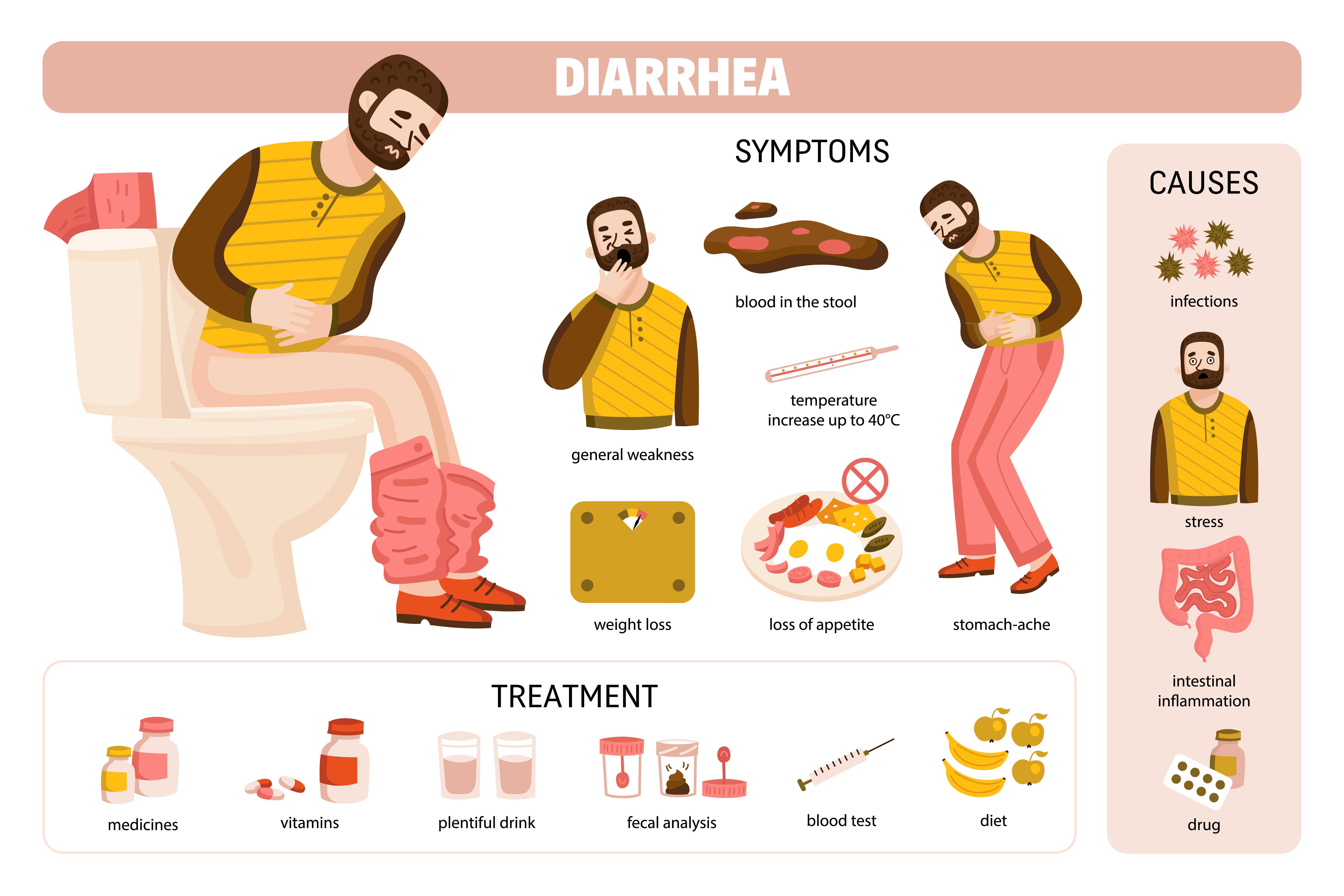
Infographic showing IBS symptoms like bloating, pain, constipation, and diarrhoea.
Constipation is one of the most common digestive complaints in India, affecting an estimated 22% of adults in urban India — with higher rates in women, the elderly, and people with sedentary lifestyles. Yet most cases of constipation are treated incorrectly — either ignored for too long, treated with stimulant laxatives that create dependence, or managed symptomatically without addressing the underlying causes.
Many people assume that not having a bowel movement every day means they're constipated. This isn't accurate. Normal bowel frequency ranges from three times daily to three times weekly — what's normal varies by individual.
Constipation is present if three or more of these apply:
Chronic constipation is constipation lasting more than 3 months. This warrants investigation.
Insufficient fibre: the single most common cause. Dietary fibre absorbs water in the gut, adds bulk to stool, and stimulates peristalsis. The standard Indian urban diet — high in refined flour and white rice, low in whole grains and vegetables — is often inadequate in fibre.
Dehydration: the colon absorbs water from stool. Insufficient hydration produces harder, harder-to-pass stool. Very common in the Indian summer.
Sedentary lifestyle: physical activity stimulates gut motility. Desk-bound workers with minimal physical activity have slower gut transit.
Ignoring the urge: regularly suppressing the urge to defecate (because of work demands, cultural settings, or toilet access concerns) trains the rectum to be less responsive to the normal defecation reflex.
Diet changes: travel, dietary changes during illness, or sudden major changes in eating pattern can cause transient constipation.
Medications: iron supplements (very common cause — ferrous sulphate particularly), calcium supplements, opioid pain medications, antacids with aluminium or calcium, antidepressants, and antihypertensives.
Medical conditions: hypothyroidism (very common in Indian women — reduces gut motility); diabetes (diabetic autonomic neuropathy slows gut function); IBS with constipation predominance; Parkinson's disease; spinal cord problems; depression.
Colon problems: colorectal cancer, strictures, or other structural problems — these are rarer but important to rule out in new constipation in someone above 50, or with red flag symptoms.
Target: 25–38 grams of fibre daily. Most Indians consume 10–15 grams.
Best Indian fibre sources:
Increase fibre gradually over 1–2 weeks — sudden large increases cause gas and bloating.
2.5–3 litres of total fluid daily. Warm water or warm fluids in the morning specifically stimulate gut motility — a glass of warm water first thing in the morning is a traditional and effective practice.
Nimbu pani, chaas, coconut water, warm dal soup all count toward fluid intake.
Even 30 minutes of brisk walking daily significantly improves gut transit time. The mechanical effect of walking and the systemic circulation improvement both stimulate peristalsis. Walking after meals (10–15 minutes) is particularly effective.
The gastrocolic reflex — a wave of gut motility triggered by eating — is strongest in the morning after breakfast. Sitting on the toilet after breakfast and allowing 10–15 minutes (without straining) trains the body to use this natural reflex. Don't rush the process.
Correct posture on Indian-style toilets is naturally squatting — the anorectal angle created by squatting allows easier stool passage than sitting on a Western toilet. If using a Western toilet, a footstool (squatty potty) that raises the feet to 20–25 cm recreates the squat angle and significantly eases defecation.
If iron supplements are causing constipation: switch from ferrous sulphate (most constipating) to ferrous bisglycinate (much better tolerated), take with food and plenty of water, or split the dose.
Any woman with persistent constipation that isn't responding to dietary changes should have a TSH (thyroid stimulating hormone) test. Hypothyroidism is one of the most common missed causes of chronic constipation in Indian women.
Warm water with lemon in the morning: the warmth stimulates gut motility; the citric acid may also gently stimulate digestion. A traditional morning ritual with genuine benefit.
Castor oil (1 tablespoon, occasionally): a traditional and effective laxative for acute constipation. Ricinoleic acid in castor oil stimulates intestinal contractions. Not for regular use — stimulant effect; cramping can be intense.
Triphala (1 teaspoon in warm water before bed): a traditional Ayurvedic formulation of three fruits (amla, bibhitaki, haritaki). Has mild laxative effects and antioxidant properties. Regular use supported by some trials for chronic constipation. Gentler than stimulant laxatives.
Papaya in the morning: papain enzyme has mild digestive and mild laxative properties. Regular consumption of ripe papaya helps maintain gut regularity.
Prune juice or dried prunes: prunes contain sorbitol (a natural laxative sugar) and fibre. One of the most evidence-based dietary interventions for constipation globally; prunes are not culturally central to Indian diets but are available.
Flaxseed water: 1 tablespoon of whole flaxseeds soaked in a glass of water overnight, drink the water (and seeds) in the morning. Fibre and mucilage provide gentle laxative effect.
Ghee in warm milk at bedtime: small amounts of ghee have mild lubricating and laxative properties; warm milk stimulates the gut. A traditional Indian remedy.
Bisacodyl (Dulcolax) and senna are stimulant laxatives that are effective for acute constipation but problematic with regular use:
Use stimulant laxatives only for occasional acute constipation, not daily or weekly. Osmotic laxatives (lactulose, polyethylene glycol/Movicol) are safer for more regular use when dietary approaches are insufficient.
Seek medical evaluation if constipation:
At Prakash Hospital Noida, our physicians evaluate chronic or refractory constipation — including thyroid testing, blood tests, abdominal examination, and referral for colonoscopy where indicated. Dietary guidance and appropriate medication management are available.
Whether you live in Sector 18, Sector 62, Greater Noida West, or anywhere in the NCR, Prakash Hospital Noida is a trusted name for digestive health, constipation treatment, and general medicine in Noida.
Tags: #HowToRelieveConstipation #ConstipationRemediesIndia #PrakashHospitalNoida
 Copy
CopyWe offer expert care across key specialties, including Medicine, Cardiology, Orthopaedics, ENT, Gynaecology, and more—delivering trusted treatment under one roof.

Dr. Alka Kapoor


Book a consultation with Prakash Hospital's specialists — 24/7 emergency care, 100+ doctors, NABH accredited.

Prakash Hospital Pvt. Ltd. is a 100 bedded NABH NABL accredited multispecialty hospital along with a center of trauma and orthopedics. We are in the service of society since 2001.
OUR SPECIALITIES
Patient Services
PROCEDURES
Contact Us
D – 12A, 12B, Sector-33, G. B. Nagar, Noida, Uttar Pradesh 201301
+91-8826000033


© 2026 All rights reserved.
Designed and Developed by Zarle Infotech