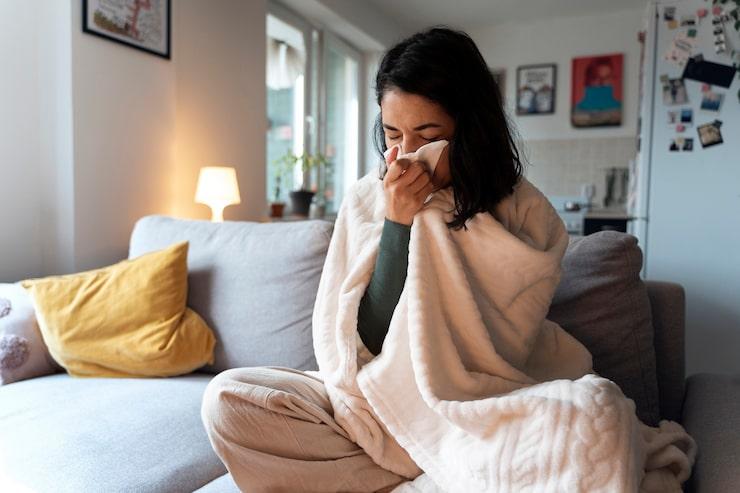
Child resting comfortably in bed at home to recover from fever and illness.
Chikungunya is one of those diseases that's easy to dismiss initially — the early symptoms look like a standard viral fever — and then becomes very difficult to ignore. The joint pain that characterises chikungunya is not ordinary body ache. It is, by many patient accounts, among the most intense pain they have experienced. It can make walking impossible, holding objects painful, and sleeping nearly out of the question.
What makes chikungunya particularly challenging is that its most disabling feature — the joint pain — can last long after the acute fever resolves. Weeks in many patients. Months in others. A significant proportion develop a form of post-chikungunya arthritis that persists for a year or more.
Understanding what to expect, what helps, and what warrants medical attention makes a meaningful difference to how people navigate this illness.
Chikungunya is caused by the chikungunya virus (CHIKV), an alphavirus transmitted by the Aedes aegypti and Aedes albopictus mosquitoes — the same mosquitoes that transmit dengue. Like dengue, these mosquitoes bite primarily during the day, particularly in the early morning and late afternoon. They breed in clean, stagnant water: coolers, flower pots, tyres, container gardens, and anything that holds water for more than a few days.
The word "chikungunya" derives from the Makonde language (spoken in parts of Tanzania) and translates roughly as "to become contorted" or "to walk bent over" — describing the stooped posture that severe joint pain produces.
India has experienced multiple significant chikungunya outbreaks, with the 2006 outbreak affecting an estimated 1.4 million people. The disease re-emerged substantially in 2016 and continues to occur annually in seasonal outbreaks, particularly in the NCR, Maharashtra, Karnataka, and Kerala.
Symptoms appear 1 to 12 days after the mosquito bite, with most cases presenting within 2 to 7 days.
Sudden high fever: the illness begins abruptly with fever, often 39–40°C, rising quickly over 24 hours. The fever can be extremely high in the first 2–3 days.
Joint pain — the defining symptom: this is what distinguishes chikungunya most clearly. The joint pain (arthralgia) and joint swelling (arthritis) are typically:
Many patients cannot grip a cup, button their shirt, or walk normally. The pain can be disabling.
Headache: prominent in the acute phase, often severe.
Rash: a maculopapular rash (flat red areas with some raised spots) appears in approximately 40–75% of patients, usually in the first few days of illness. It typically covers the trunk, arms, and legs. It may be itchy (pruritic).
Muscle pain (myalgia): generalised muscle aches alongside the joint pain.
Fatigue: profound weakness and fatigue, often persisting beyond the acute fever.
Conjunctivitis: red, inflamed eyes — less common than dengue's retroorbital pain but present in some patients.
Nausea: mild to moderate, accompanying the fever.
The fever typically resolves within 5–7 days. In some patients there is a biphasic pattern — fever for a few days, a day of improvement, then a second shorter fever episode — similar to the dengue "saddle-back" pattern.
The critical point: the fever getting better does not mean the illness is over. The joint pain often persists and may even worsen as the fever resolves, because the immune response driving the joint inflammation continues after the virus is cleared.
This is where chikungunya diverges most sharply from other acute viral fevers.
In most patients: joint pain improves significantly over 2–6 weeks. Residual mild aching may persist for up to 3 months.
In a significant minority (estimates range from 15–60% depending on the study and population): joint pain persists beyond 3 months. This is called post-chikungunya arthritis or persistent chikungunya arthritis.
In some patients: joint pain continues for 12 months or longer, with characteristics similar to rheumatoid arthritis — morning stiffness, joint swelling, functional limitation.
Factors associated with more prolonged joint involvement:
The joint inflammation in post-chikungunya arthritis appears to be immune-mediated — the immune response that was appropriate during the active infection persists in the joints even after the virus is gone.
Because both are transmitted by the same mosquito, occur in the same season, and share some symptoms, they are frequently confused. The key distinguishing features:
Joint pain severity: dengue has muscle pain and some joint aching; chikungunya has intense, often disabling arthralgia as the dominant symptom. If the joint pain is the most prominent and debilitating complaint, chikungunya is more likely.
Platelet count: dengue causes significant platelet drops with attendant bleeding risk; chikungunya causes only mild thrombocytopenia.
Serious complications: dengue can cause plasma leakage, shock, and haemorrhage — life-threatening complications. Chikungunya rarely causes comparable organ system emergencies in immunocompetent adults (though encephalitis and cardiac involvement have been reported in the elderly and immunocompromised).
Recovery timeline: dengue's acute phase typically resolves fully within 7–10 days; chikungunya's joint symptoms often persist for weeks to months.
Blood tests — dengue NS1 antigen and chikungunya IgM antibodies — are the definitive way to distinguish them. Given the management implications (platelet monitoring in dengue, joint anti-inflammatory management in chikungunya), testing is worthwhile.
Chikungunya IgM antibodies: detected from approximately day 5–7 of illness. A positive result confirms recent chikungunya infection.
Chikungunya RT-PCR: detects viral RNA in the blood during the first 5 days of illness. Highly specific but more expensive and less widely available.
Complete blood count: white blood cells are typically low (leucopenia). Platelet count mildly reduced. These findings alongside the clinical picture support the diagnosis.
C-reactive protein (CRP) and ESR: inflammatory markers are typically elevated during acute phase and may remain elevated in post-chikungunya arthritis.
Because chikungunya and dengue co-infection can occur, testing for both is reasonable in severe or atypical presentations during monsoon season.
There is no specific antiviral treatment for chikungunya. Management focuses on relieving symptoms and supporting recovery.
Paracetamol is the first-line choice for fever and pain. Safe, effective, and appropriate for use throughout the illness.
Avoid NSAIDs (ibuprofen, naproxen, diclofenac) during the acute febrile phase: until dengue has been excluded by testing, NSAIDs carry bleeding risk due to their antiplatelet effects. Once dengue is ruled out and the diagnosis confirmed as chikungunya, NSAIDs are appropriate and effective for joint pain.
Avoid aspirin — same reasoning as NSAIDs, with additional gastric risk.
NSAIDs (naproxen, ibuprofen, diclofenac, meloxicam): the most effective available treatment for chikungunya joint pain. Naproxen is often preferred because of its longer duration of action (twice daily dosing). Take with food to reduce gastric side effects. Not for prolonged use without medical supervision in people with kidney disease or ulcer history.
Chloroquine: an older antimalarial drug that has anti-inflammatory properties in joint disease. Some evidence for benefit in post-chikungunya arthritis — has been used for prolonged joint involvement.
Corticosteroids: occasionally used for severe or prolonged joint inflammation under medical supervision. Not appropriate as first-line therapy.
Physiotherapy and gentle movement: for post-chikungunya arthritis, gentle range-of-motion exercises and warm water soaking help maintain joint function. Complete immobilisation leads to stiffness and muscle wasting. Movement should be within pain tolerance — not aggressive, but not total rest either.
Warm compresses: applying warm (not hot) compresses to affected joints provides pain relief. Contrast therapy (alternating warm and cold) may help with swelling.
Rest is important during the acute phase. As the fever resolves, gradually increasing activity — guided by pain — is better than extended complete rest.
Adequate protein intake supports tissue repair and immune function. Dal, eggs, paneer, curd, chicken — all contribute. Good hydration continues to be important.
There's no specific "chikungunya diet," but the general anti-inflammatory dietary approach — reducing refined carbohydrates and sugar, increasing omega-3 (fatty fish, walnuts, flaxseed), turmeric with black pepper, fresh fruits and vegetables — supports recovery from the chronic joint inflammation.
For patients whose joint pain persists beyond 4–6 weeks:
Rheumatology evaluation: post-chikungunya arthritis can be difficult to distinguish from the early stages of rheumatoid arthritis. A rheumatologist assessment is appropriate for persistent joint involvement — they can guide treatment and monitor for development of true inflammatory arthritis.
Anti-rheumatic medications: hydroxychloroquine (commonly used in rheumatoid arthritis and lupus) has evidence for benefit in post-chikungunya arthritis with prolonged course. Should be managed by a rheumatologist.
Regular monitoring: CRP, ESR, and joint function assessment track progress.
Mental health support: prolonged joint pain significantly affects mood, sleep, and daily function. Acknowledging this and seeking support — whether from a counsellor, psychiatrist, or simply a GP who takes the psychological impact seriously — is legitimate and important.
During the acute phase:
Post-acute:
Chikungunya prevention is mosquito prevention — the same measures that protect against dengue:
At Prakash Hospital Noida, our physicians provide chikungunya diagnosis with IgM antibody testing, dengue co-infection testing, joint pain management, and follow-up for post-chikungunya arthritis. For persistent joint involvement, specialist referral and rheumatological assessment are available.
Whether you live in Sector 18, Sector 62, Greater Noida West, or anywhere in the NCR, Prakash Hospital Noida is a trusted name for chikungunya treatment, monsoon fever care, and general medicine in Noida.
Tags: #ChikungunyaSymptoms #ChikungunyaJointPain #PrakashHospitalNoida
 Copy
CopyWe offer expert care across key specialties, including Medicine, Cardiology, Orthopaedics, ENT, Gynaecology, and more—delivering trusted treatment under one roof.


Book a consultation with Prakash Hospital's specialists — 24/7 emergency care, 100+ doctors, NABH accredited.

Prakash Hospital Pvt. Ltd. is a 100 bedded NABH NABL accredited multispecialty hospital along with a center of trauma and orthopedics. We are in the service of society since 2001.
OUR SPECIALITIES
Patient Services
PROCEDURES
Contact Us
D – 12A, 12B, Sector-33, G. B. Nagar, Noida, Uttar Pradesh 201301
+91-8826000033


© 2026 All rights reserved.
Designed and Developed by Zarle Infotech