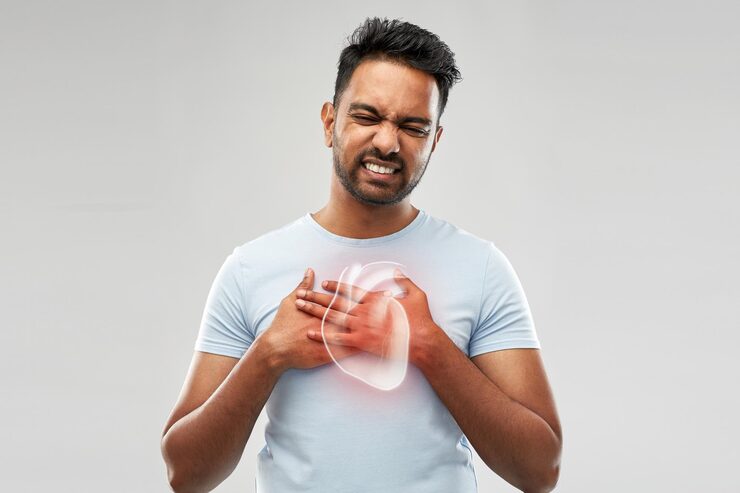
A heart attack patient is usually awake; someone in cardiac arrest is unresponsive and needs CPR straight away.
A heart attack is a circulation problem: a blocked artery cuts off blood to part of the heart muscle, and the person is usually awake and in pain. Cardiac arrest is an electrical problem: the heart suddenly stops pumping effectively, and the person collapses, does not respond and is not breathing normally. A heart attack can lead to cardiac arrest, but they are not the same thing, and the first aid is different. For a heart attack, call an ambulance, keep the person calm and seated. For cardiac arrest, call an ambulance and start CPR immediately.
People often use the terms interchangeably, and that confusion costs time. This guide sets out the difference, compares the symptoms side by side, explains what to do in each situation step by step, describes hands-only CPR and the use of an AED, and lists the risk factors and prevention steps.
The plumbing and the wiring
A simple way to remember it:
Heart attack (myocardial infarction) is a plumbing problem. A coronary artery, which supplies blood to the heart muscle, becomes blocked, usually by a clot forming on a cholesterol plaque. The part of the heart muscle that loses blood starts to die. The heart is still beating.
Cardiac arrest is an electrical problem. The heart's electrical system malfunctions, causing a dangerous rhythm (such as ventricular fibrillation) or stopping altogether. The heart quivers or stops and no blood reaches the brain and body. Without help, death occurs within minutes.
A heart attack can trigger the electrical disturbance that causes cardiac arrest. But cardiac arrest can also occur from other causes, such as inherited rhythm disorders, cardiomyopathy, severe electrolyte disturbances, drowning, electric shock, drug overdose and severe blood loss.
Side-by-side comparison
| | Heart attack | Cardiac arrest |
|---|---|---|
| What happens | Blood flow to part of the heart muscle is blocked | The heart suddenly stops pumping effectively |
| Cause | Usually a blocked coronary artery | Usually an electrical rhythm problem |
| Is the person awake? | Yes, typically | No, unconscious and unresponsive |
| Breathing | Present (may be breathless) | Absent or only gasping |
| Pulse | Present | Absent |
| Onset | Often builds over minutes to hours, sometimes sudden | Sudden, without warning in many cases |
| Pain | Chest pain or pressure is typical | Not applicable, as the person has collapsed |
| What is needed | Emergency hospital treatment to open the artery | CPR and a defibrillator shock immediately |
| Survival depends on | Speed of reaching hospital | Speed of CPR and defibrillation |
Heart attack: symptoms
Symptoms can be dramatic or subtle.
Chest discomfort: pressure, squeezing, fullness, heaviness or pain in the centre or left of the chest, lasting more than a few minutes or coming and going
Pain spreading to the left arm, both arms, shoulder, back, neck, jaw or upper abdomen
Shortness of breath, with or without chest discomfort
Cold sweat
Nausea, vomiting or indigestion-like discomfort
Light-headedness or sudden weakness
Unusual tiredness or anxiety
Differences in women, older adults and people with diabetes
Women are more likely than men to have non-classic symptoms: breathlessness, nausea, back or jaw pain, unusual fatigue, with or without chest pain. People with diabetes and older adults may have "silent" heart attacks with little or no pain. Take any unusual combination of symptoms seriously.
Indians develop heart disease, including heart attacks, about ten years earlier on average than people in many Western countries. A heart attack in the 30s and 40s is not rare, so don't dismiss symptoms because of age.
Cardiac arrest: signs
Sudden collapse
No response when shaken and shouted at
No normal breathing (absent, or only occasional gasping, which is not normal breathing)
No pulse (checking is not necessary for laypersons: if the person is unresponsive and not breathing normally, start CPR)
Sometimes preceded by chest pain, palpitations, dizziness or fainting; often there is no warning
Brief seizure-like jerking can occur in the first moments of cardiac arrest, so a "fit" with no breathing afterwards should be treated as cardiac arrest.
What to do for a suspected heart attack
Call for an ambulance immediately. Dial 112 (India's emergency number) or 108 or 102 where available, or arrange the fastest transport to a hospital with a cardiac facility. Don't drive yourself if you are the patient.
Stop all activity. Sit or lie in a comfortable position, such as semi-reclined, and stay calm. Loosen tight clothing.
Aspirin: if the person is not allergic, has no history of serious bleeding or stomach ulcer problems, and emergency services advise it, chewing one regular-strength aspirin (162 to 325 mg, for example one 300 mg tablet) can help by slowing clot growth. Do not give aspirin to a child. If you are unsure, wait for the emergency service's advice.
If the person has been prescribed nitroglycerin (sorbitrate) for angina, it may be taken as directed by their doctor, unless they have very low blood pressure or have taken certain erectile dysfunction medicines.
Do not give food or drink, and don't let the person walk around.
Stay with them and monitor. If they become unresponsive and stop breathing normally, start CPR.
Tell the paramedics about the time symptoms began, medicines and medical history.
Time matters. Heart muscle dies progressively. The sooner the artery is opened with angioplasty or clot-dissolving medicine, the more heart muscle is saved. Guidelines aim for treatment within about 90 minutes of arrival at a hospital for angioplasty, and clot-dissolving drugs within 30 minutes if angioplasty is not quickly available. Don't wait to see if the pain goes away.
What to do for cardiac arrest
Follow these steps, often summarised as: check, call, compress, shock.
Check for danger, then tap the person's shoulders and shout.
If they don't respond and are not breathing normally, shout for help and call 112 (or ask someone else to call). Ask someone to bring an AED if one is available.
Start chest compressions immediately.
Place the heel of one hand in the centre of the chest (the lower half of the breastbone), with your other hand on top.
Lock your elbows, shoulders above your hands.
Push hard and fast: about 5 to 6 cm (2 to 2.4 inches) deep, at a rate of 100 to 120 compressions per minute, which is about the beat of a fast song.
Allow the chest to rise fully between compressions.
Don't stop except when instructed or when the person moves or breathes normally.
Use an AED as soon as it arrives. Switch it on, follow the voice instructions, attach the pads to the bare chest, and let it analyse. Stand clear when it advises a shock. Then resume compressions immediately.
Keep going until the person breathes normally, an ambulance team takes over, or you are too exhausted to continue.
Hands-only CPR
If you are not trained in rescue breaths, or are uncomfortable giving them, hands-only CPR (compressions alone) is recommended for adults who suddenly collapse. It is far better than doing nothing. If you are trained, you can give two rescue breaths after every 30 compressions. For children, drowning victims and cardiac arrest from breathing problems, rescue breaths matter more, and trained rescuers should use them.
Don't be afraid
You cannot make a person in cardiac arrest worse by doing CPR.
Ribs may crack. That is acceptable and doesn't mean you did it wrong.
Laws in many places, including good Samaritan protections, support those who help in good faith.
AEDs: automated external defibrillators
An AED delivers an electric shock that can restore a normal rhythm. They are found in airports, malls, offices and railway stations, and are designed for use by untrained people with voice prompts. For each minute without defibrillation, survival chances fall by roughly 10 percent, which is why early shock and CPR together matter so much.
Why CPR training matters
Most cardiac arrests happen at home or in public places. Bystander CPR can double or triple the chance of survival, but only a small proportion of people receive it in India. Learn CPR. Many hospitals, including those in Noida, and organisations run short courses. Teach your family, colleagues and drivers.
Risk factors
Both heart attack and cardiac arrest share many risk factors:
High blood pressure
High cholesterol, especially LDL and triglycerides
Diabetes and prediabetes
Smoking and tobacco use
Obesity and abdominal fat
Physical inactivity
Family history of early heart disease or sudden death
Unhealthy diet high in trans fats, salt and sugar
Excess alcohol
Chronic stress and poor sleep
Air pollution
Kidney disease
Age (men over 45, women over 55), though younger Indians are affected
Prevention
Know and control your blood pressure, sugar and cholesterol
Don't smoke or chew tobacco
Be active, aiming for at least 150 minutes of moderate exercise a week
Eat vegetables, fruit, whole grains, pulses, nuts, and limit fried foods, sweets and salt
Maintain a healthy waist size
Manage stress and sleep well
Get regular health check-ups, particularly after 30 to 35 if you have risk factors
Take prescribed medicines regularly and don't stop on your own
Take chest pain seriously, even if you feel it can't be serious
After survival
People who survive a heart attack need cardiac rehabilitation, medicines (antiplatelets, statins, beta-blockers and others) and lifestyle change. Survivors of cardiac arrest need thorough evaluation for the cause, and may need an implantable defibrillator.
Frequently asked questions
What is the main difference between a heart attack and cardiac arrest?
A heart attack is caused by a blocked artery, and the person is usually awake. Cardiac arrest is when the heart stops, and the person is unconscious and not breathing normally.
Can a heart attack cause cardiac arrest?
Yes. A heart attack can trigger a dangerous rhythm leading to cardiac arrest, which is why rapid treatment matters.
What should I do if someone collapses and is not breathing?
Call 112, start chest compressions immediately and use an AED if available.
Should I give aspirin for a heart attack?
If the person is not allergic and has no bleeding problems, chewing a regular aspirin while waiting for the ambulance can help. Follow the emergency operator's advice.
Is chest pain always a heart attack?
No, but chest pain should never be ignored. Acid reflux, muscle strain and anxiety can cause chest pain, but a doctor must rule out the heart.
Can young people have a heart attack?
Yes, particularly smokers and those with diabetes, high cholesterol or a family history.
How long can a person survive cardiac arrest without CPR?
Brain damage begins within a few minutes. Survival falls rapidly with each minute without CPR and defibrillation.
When to see a doctor
Call an ambulance for chest pain, pressure or tightness lasting more than a few minutes, especially with breathlessness, sweating, nausea or pain spreading to the arm or jaw. See a doctor promptly for recurrent chest discomfort on exertion, palpitations, fainting, or if you have a family history of sudden cardiac death.
Care at Prakash Hospital Noida
Whether you live in Sector 18, Sector 62, Greater Noida West, or anywhere nearby, Prakash Hospital Noida is a trusted name for cardiology and emergency care in Noida. Our emergency and cardiac teams treat heart attacks and cardiac arrests around the clock, and help you reduce your risk.
To book a consultation, call the number.
Sources: American Heart Association guidelines for CPR and emergency cardiovascular care; European Society of Cardiology and Indian cardiology society guidance on acute coronary syndromes. First aid guidance is general; follow emergency operators' instructions.
We offer expert care across key specialties, including Medicine, Cardiology, Orthopaedics, ENT, Gynaecology, and more—delivering trusted treatment under one roof.
Understand the critical difference between a heart attack and cardiac arrest, their symptoms, causes, emergency response steps, and treatment options. Learn when to seek urgent help from expert cardiologists at Prakash Hospital.
PCOD symptoms — recognise the early warning signs of polycystic ovarian disease and when to see a gynaecologist. Visit Prakash Hospital Noida for women's health care.
जानिए लो हीमोग्लोबिन का दिल की सेहत पर क्या प्रभाव पड़ता है। इसके कारण, लक्षण और समय पर इलाज व सही खानपान से कैसे बचाव किया जा सकता है, सरल भाषा में समझें।