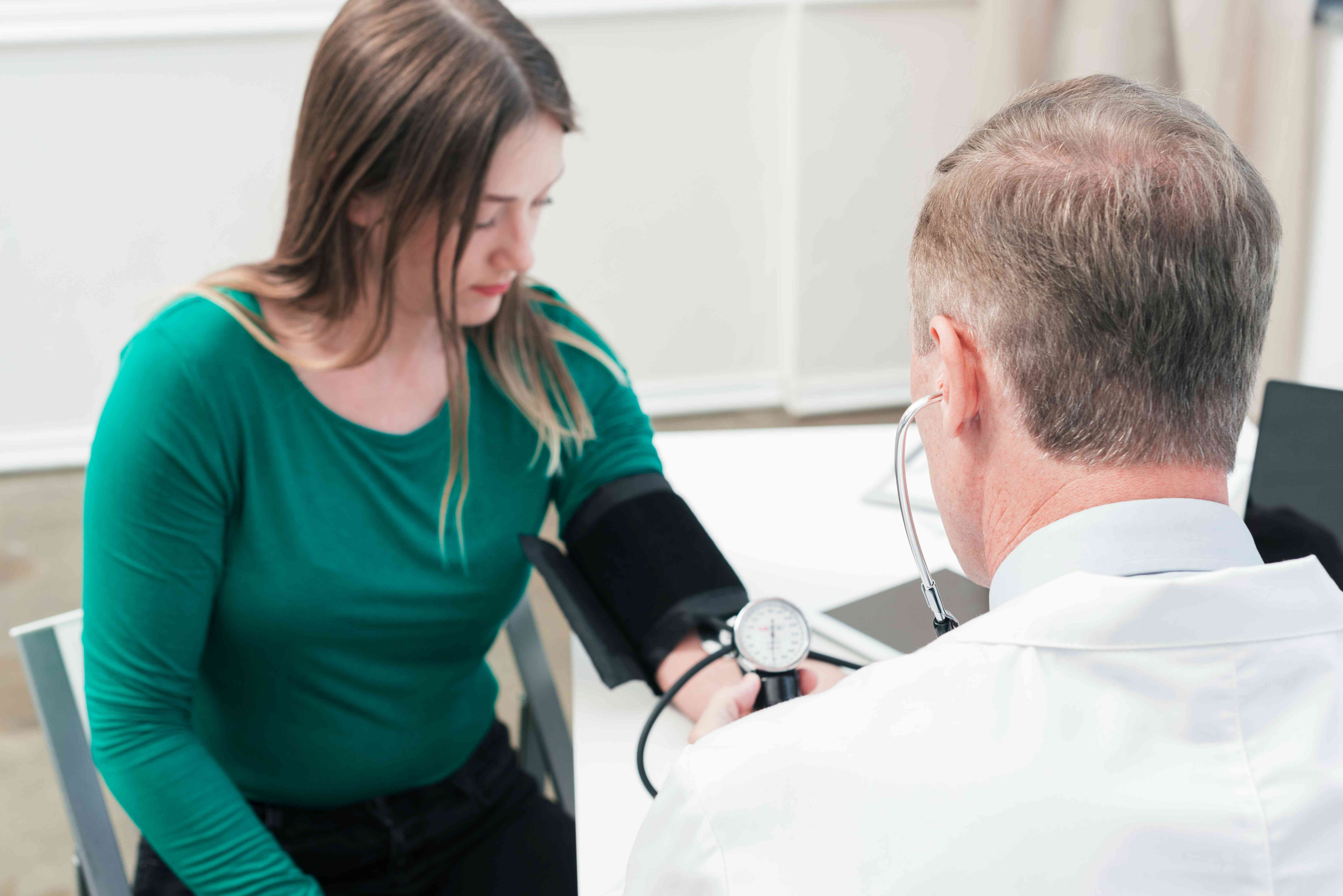
Doctor measuring a young woman's blood pressure during a medical checkup.
About one in three Indian adults has high blood pressure, and many do not know it. The condition causes no symptoms in most people, no pain, no obvious signs. It just sits there quietly, year after year, gradually damaging arteries, the heart, the kidneys, the brain, and the eyes. By the time complications appear, often as a stroke, heart attack, or kidney failure, the underlying high blood pressure has usually been there for many years.
The fact that hypertension is silent is exactly why screening matters. A two-minute blood pressure check catches it. The treatments are well-established and effective. Most complications are preventable.
This is a practical guide to high blood pressure: what it is, why it matters, how it is treated, and what you can do.
Blood pressure is the force the blood exerts on the walls of arteries. Two numbers are measured:
Systolic pressure (the upper number): pressure when the heart contracts and pushes blood out.
Diastolic pressure (the lower number): pressure when the heart relaxes between beats.
Both numbers matter, though systolic pressure becomes more important with age.
International guidelines vary slightly. The commonly used categories:
1. Normal: less than 120/80 mmHg
2. Elevated: 120 to 129 / less than 80
3. Stage 1 hypertension: 130 to 139 / 80 to 89
4. Stage 2 hypertension: 140/90 or higher
5. Hypertensive emergency: 180/120 or higher with symptoms
A single high reading does not mean you have hypertension. The diagnosis usually requires multiple elevated readings on different days, or ambulatory monitoring.
Target for treatment in most people is below 130/80 mmHg, sometimes below 120/80 in younger patients without other conditions.
This is the most important thing about hypertension: it usually has no symptoms.
When symptoms occur, they often indicate severe or long-standing hypertension or complications:
By the time symptoms appear, damage may already be significant. This is why screening is the only reliable way to detect hypertension early.
Persistently high blood pressure causes:
1. Heart: thickening of the heart muscle, weakening over time, heart failure, increased risk of heart attacks.
2. Brain: increased risk of stroke (both blockage and bleeding types), vascular dementia.
3. Kidneys: damage to small blood vessels, eventually kidney failure. Hypertension is a leading cause of kidney failure in India.
4. Eyes: damage to retinal blood vessels, vision loss in severe cases.
5. Arteries: accelerated atherosclerosis throughout the body.
6. Aorta: weakening, aneurysm formation, sometimes dissection.
7. Sexual function: erectile dysfunction in men.
Most of this damage is preventable with good blood pressure control.
In about 90% of cases, no specific cause is found. This is called primary or essential hypertension. Multiple factors contribute:
Younger patients with very high or resistant hypertension, those with sudden onset, or those with specific clues need investigation for secondary causes.
Blood pressure check at every health-related visit is standard. Specifically:
In India, given the high prevalence, an annual blood pressure check from age 30 makes sense for most adults.
For accurate readings:
A single reading does not diagnose hypertension. Multiple readings on different days are needed.
White coat hypertension: readings high at the doctor's office but normal at home. Common.
Masked hypertension: readings normal at the doctor's office but high at home. Easily missed.
For both, home monitoring or 24-hour ambulatory blood pressure monitoring helps clarify.
Reliable home monitors (validated, upper arm cuff, not wrist) are widely available. Useful for:
How to monitor:
Hypertension in someone under 30 deserves investigation for secondary causes (kidney issues, hormonal disorders). Lifestyle modifications are even more important when treatment may need to continue for decades.
Pregnancy-related hypertension (gestational hypertension, preeclampsia) needs urgent attention. See the pregnancy complications blog in this series.
Common, often with prominent systolic hypertension (top number high, bottom number normal or low). Treatment is helpful but care is needed to avoid dropping pressure too low, especially when standing.
Tight blood pressure control is even more important. Target usually below 130/80 mmHg.
Tight control. ACE inhibitors or ARBs (specific medications) are preferred.
Strict control to prevent another stroke.
Treatment combines lifestyle changes and medications, depending on severity and overall cardiovascular risk.
For stage 1 hypertension without other risk factors, lifestyle changes alone may be tried for 3 to 6 months.
Weight loss: even 5 kg loss reduces blood pressure by several points.
Exercise: 30 to 45 minutes of moderate exercise most days. Cardio plus some strength training. Reduces blood pressure by 5 to 8 mmHg on average.
Limit alcohol: ideally none. Maximum one drink a day for women, two for men.
Stop smoking: smoking causes acute and chronic blood pressure rises.
Stress management: yoga, meditation, breathing exercises, hobbies.
Adequate sleep: 7 to 8 hours. Treat sleep apnea if present.
Limit caffeine if you are sensitive to it.
Multiple classes of medications are effective. A doctor chooses based on age, other conditions, side effect concerns, and individual response.
Calcium channel blockers (amlodipine, nifedipine): commonly used, effective, well-tolerated.
ACE inhibitors (enalapril, ramipril, lisinopril): protect the heart and kidneys, particularly useful in diabetics. May cause cough in some.
ARBs (telmisartan, losartan, olmesartan): similar to ACE inhibitors, fewer side effects.
Thiazide diuretics (chlorthalidone, hydrochlorothiazide): commonly used, effective, especially in combination.
Beta-blockers (metoprolol, atenolol, bisoprolol): particularly useful in heart disease, irregular heart rhythms.
Other medications: aldosterone antagonists, alpha-blockers, central agents, others, used in specific situations.
Combinations are common. Most patients need two or more medications for good control. Single tablet combinations exist for convenience.
Generally, treatment is lifelong. Blood pressure tends to return to previous levels when medications are stopped.
When blood pressure remains high despite three medications including a diuretic. Causes include:
Specialist evaluation helps identify and address the cause.
A small percentage of patients develop a hypertensive emergency: very high blood pressure with damage to organs.
Blood pressure typically 180/120 or higher with these symptoms requires immediate hospital evaluation.
For very high blood pressure without symptoms (urgency, not emergency), urgent but not emergency treatment is needed.
"I feel fine, so my blood pressure must be normal." Hypertension has no symptoms in most cases.
"If symptoms go away, I do not need medication." Symptoms come and go but the underlying condition persists.
"You can stop medication once blood pressure is normal." It is normal because of the medication. Stopping returns it to the previous level.
"Blood pressure medications damage the kidneys." Most blood pressure medications protect the kidneys. Untreated hypertension is the main cause of kidney damage.
"You will become dependent on the medication." Dependence in the addictive sense does not occur. The body does not need the medication to function. It needs the medication to control the disease.
"Salt is the only dietary cause." Salt matters, but overall diet, weight, alcohol, and other factors also contribute.
"Thin people do not get hypertension." Body weight is one factor among many. Genetic factors, salt sensitivity, and other influences mean thin people also get hypertension.
"You can lower blood pressure quickly when needed." Sudden lowering with home remedies is not safe or effective. Steady treatment over time is the right approach.
"Blood pressure varies, so monitoring is not useful." It varies through the day, but average levels still matter. Multiple readings show the true picture.
"Garlic and home remedies replace medication." May modestly support. Cannot replace prescribed treatment in significant hypertension.
"Stress is the cause of all hypertension." Stress contributes but is not the only cause. Many people with hypertension are not particularly stressed.
At Prakash Hospital Noida, our cardiologists and physicians evaluate hypertension comprehensively, identify any secondary causes when relevant, prescribe personalised treatment, monitor for complications, and provide lifestyle counselling. Related condition screening (kidney, heart, diabetes, cholesterol) is part of complete care.
Whether you live in Sector 18, Sector 62, Greater Noida West, or anywhere nearby, Prakash Hospital Noida is a trusted name for cardiology and hypertension management in Noida.
To book a consultation, call the number.
High blood pressure is common, silent, and causes serious complications over years. A simple check catches it. The treatments work.
Lifestyle changes (lower salt, healthy weight, regular exercise, limited alcohol, no smoking, stress management, adequate sleep) reduce blood pressure significantly. Medications are added when needed, usually lifelong.
Get tested annually if you have not been. Aim for below 130/80 mmHg if treated. Take medications consistently. Monitor at home. Address related risk factors. Stay engaged with your care.
The quiet work of controlling blood pressure prevents many of the dramatic problems that show up suddenly years later. Few medical interventions offer such large benefits for such reasonable effort.
Tags: #HighBloodPressure #Hypertension #PrakashHospitalNoida
 Copy
CopyWe offer expert care across key specialties, including Medicine, Cardiology, Orthopaedics, ENT, Gynaecology, and more—delivering trusted treatment under one roof.
Dr. R.C. Sharma


Book a consultation with Prakash Hospital's specialists — 24/7 emergency care, 100+ doctors, NABH accredited.

Prakash Hospital Pvt. Ltd. is a 100 bedded NABH NABL accredited multispecialty hospital along with a center of trauma and orthopedics. We are in the service of society since 2001.
OUR SPECIALITIES
Patient Services
PROCEDURES
Contact Us
D – 12A, 12B, Sector-33, G. B. Nagar, Noida, Uttar Pradesh 201301
+91-8826000033


© 2026 All rights reserved.
Designed and Developed by Zarle Infotech