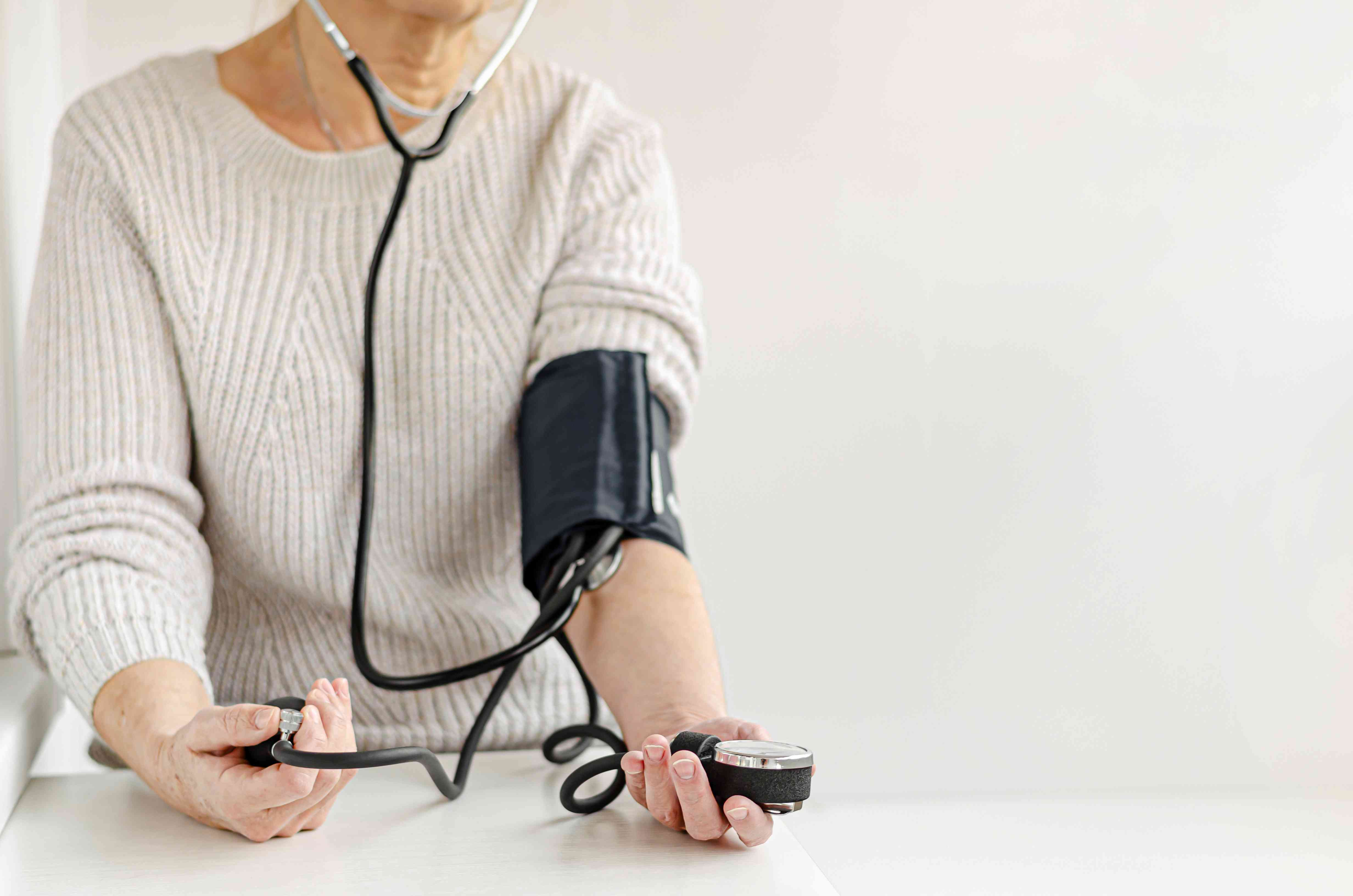
Older woman self-checking her blood pressure with a manual device.
High blood pressure (hypertension) is the most common chronic medical condition in India — affecting roughly one in three adults. It's also one of the most deadly, largely because of how quietly it operates. No pain, no obvious symptoms, just steady damage to the arteries, heart, kidneys, and brain over years.
The good news is that blood pressure is highly responsive to lifestyle change. More than almost any other major chronic condition, hypertension reacts to what you eat, how you move, how you sleep, and how you manage stress. For people with mildly to moderately elevated blood pressure, lifestyle changes alone can produce results comparable to medication. For those already on medication, lifestyle improvements often reduce the doses needed.
Understanding the Numbers
Blood pressure is measured as two numbers — systolic (the higher number, pressure when the heart beats) over diastolic (the lower number, pressure between beats).
The current target for most people is below 130/80. For people with diabetes or kidney disease, tight blood pressure control is even more important — high blood pressure accelerates diabetic nephropathy and retinopathy significantly.
Diet: The Most Immediate Way to Lower Blood Pressure
1. Reduce salt — the highest priority
Sodium directly raises blood pressure in most people. The kidneys regulate blood pressure partly through sodium and fluid balance — excess sodium means more fluid retained, more volume in blood vessels, higher pressure.
The recommended maximum is 5 grams of salt daily (about one teaspoon). Most Indians consume 8–12 grams. The gap is significant.
Where salt hides in Indian diets:
Papad — one papad contains 500–800 mg sodium
Achaar — very high sodium per serving
Packaged namkeen, chips, and snacks
Commercial sauces, ketchup, packaged masalas
Salted peanuts and roasted seeds
Extra salt added at the table
Ready-to-eat meals and instant foods
Practical reductions:
Stop adding salt at the table — taste before salting, then often you won't need to
Reduce papad from daily to a few times a week
Use lemon and herbs for flavour instead of extra salt
Make achaar at home with less salt, or limit portions of commercial versions
Check packaged food labels for sodium content — look for "low sodium" options
Taste buds adapt to lower salt levels within 4–6 weeks. What seems bland initially becomes normal, and overly salty food then tastes unpleasant.
Potassium directly opposes sodium's blood pressure-raising effect — it helps the kidneys excrete sodium and relaxes blood vessel walls. Most Indians consume far too little potassium relative to sodium.
Excellent Indian sources of potassium:
Bananas — one banana provides about 420 mg
Coconut water — 600 mg per cup; an excellent natural electrolyte drink
Tomatoes and tomato-based sabzi
Spinach and dark leafy greens
Dal — generous portions provide significant potassium
Potatoes (boiled with skin) — one of the highest potassium vegetables
Sweet potato
Oranges and mosambi
Eating more fruits and vegetables simultaneously reduces sodium density and raises potassium — a double benefit.
Note: people with kidney disease need to limit potassium because impaired kidneys cannot excrete excess potassium safely. If you have kidney disease, don't increase potassium without discussing with your doctor.
3. Follow a DASH-style eating pattern
The DASH diet (Dietary Approaches to Stop Hypertension) is the most evidence-backed dietary approach for blood pressure. It maps closely to healthy traditional Indian eating:
Generous fruits and vegetables (8–10 servings daily)
Whole grains instead of refined
Low-fat dairy (curd, toned milk)
Dal and pulses prominently
Nuts and seeds in small amounts
Limited red meat, sugar, and salt
A DASH-style Indian diet is not radical departure — it's a better version of what many people already eat, with less salt and more vegetables.
4. Limit alcohol
Alcohol raises blood pressure — even moderate consumption. Three or more drinks daily produces significant, dose-dependent blood pressure elevation. Reducing from heavy to moderate, or from moderate to minimal, produces measurable blood pressure improvement.
Beer specifically is problematic because of volume — the same alcohol content in beer occupies much more fluid than spirits, increasing fluid volume effects.
5. Reduce caffeine if consumption is high
Caffeine causes a temporary spike in blood pressure. For most people, moderate caffeine (one to two cups of tea or coffee daily) doesn't cause sustained hypertension. But for people who consume six or more cups of chai daily — common in many Indian households — reducing caffeine is worth trying if blood pressure is borderline elevated.
6. Include specific blood pressure-lowering foods
Amla: multiple Indian studies show amla reduces systolic blood pressure — possibly through its ACE-inhibitory and antioxidant effects. One to two amla daily or amla powder in water.
Hibiscus tea: consistent evidence across multiple trials shows hibiscus tea (made from dried hibiscus flowers — called karkade or roselle, sometimes available in herbal stores) reduces systolic blood pressure by 5–7 mmHg over 6 weeks. The mechanism involves ACE inhibition similar to ACE inhibitor medications.
Beetroot juice: contains nitrates that convert to nitric oxide in the body, relaxing blood vessels. A glass of fresh beetroot juice daily showed 4–5 mmHg reduction in systolic BP in multiple trials.
Flaxseeds: omega-3 ALA and lignans in flaxseeds produce modest but consistent blood pressure reductions. A tablespoon of ground flaxseed daily.
Dark chocolate/cocoa: the flavonols in dark cocoa have vasodilatory effects. A small piece of very dark chocolate (70%+ cocoa) is acceptable and may help modestly — though the sugar and calorie cost makes this a minor addition, not a primary strategy.
Exercise: The Second Most Powerful Natural Intervention
Aerobic exercise lowers both systolic and diastolic blood pressure — the effect equivalent to a first-line antihypertensive medication in mild to moderate hypertension.
What happens: regular aerobic exercise reduces peripheral vascular resistance (blood vessels become more responsive and less stiff), reduces resting heart rate, and promotes nitric oxide production that relaxes vessel walls.
The minimum effective dose: 30–45 minutes of moderate aerobic exercise — brisk walking, cycling, swimming — five days a week. This produces a reduction of 5–8 mmHg in systolic blood pressure over weeks to months.
The effect requires maintenance — blood pressure returns toward baseline within weeks if exercise stops.
Resistance training: adds independent blood pressure benefit beyond aerobic exercise. Two to three resistance training sessions per week combined with aerobic exercise produces greater reduction than either alone.
Isometric exercise: an underappreciated addition. Wall sits, grip exercises, and planks — sustained static muscle contractions — have stronger evidence for blood pressure reduction than was previously understood. Four sets of 2-minute wall sits, three times a week, reduces systolic BP by up to 10 mmHg in some trials.
Avoid isometric exercises with very high breath-holding: Valsalva manoeuvre (holding breath during heavy lifting) causes acute blood pressure spikes. Breathe continuously during resistance exercise.
Weight Management
Every kilogram of weight lost in an overweight person reduces systolic blood pressure by approximately 1 mmHg. The relationship is consistent — losing 5–10 kg produces a 5–10 mmHg reduction.
The mechanism: excess body weight requires more cardiac output (the heart pumps more blood per minute), raises blood volume, and is associated with insulin resistance and sympathetic nervous system activation — all of which raise blood pressure.
Waist circumference specifically (more than BMI) correlates with blood pressure — abdominal fat produces more inflammatory signals and hormones that raise blood pressure than subcutaneous fat.
Stress Management: Underestimated and Critical
Chronic psychological stress produces sustained elevation in adrenaline and cortisol, which:
Raise heart rate and cardiac output
Cause blood vessel constriction
Promote sodium retention through aldosterone
Over time, cause structural vascular changes
The evidence that chronic work stress, financial stress, and relationship stress raise blood pressure is substantial. This isn't a soft lifestyle consideration — it's a physiological mechanism.
What helps:
Slow breathing: 10 minutes of slow, controlled breathing (breathe in for 4 counts, out for 6–8 counts) twice daily measurably reduces blood pressure — with consistent practice, reductions of 3–5 mmHg are documented. Some devices (like RESPeRATE) specifically use breathing pace for blood pressure reduction. The same benefit can be achieved with a simple timer.
Yoga: several Indian and international trials show yoga (with pranayama) reduces blood pressure. The combination of physical movement, breathing, and mindfulness addresses multiple stress pathways simultaneously.
Reducing sympathetic activation: turning off notifications, limiting news consumption to specific times, establishing transition rituals between work and home — these reduce the chronic low-level adrenaline activation that many urban people experience constantly.
Sleep: The Often-Missed Blood Pressure Factor
Sleeping fewer than six hours consistently raises both systolic and diastolic blood pressure. Sleep is when blood pressure normally dips to its lowest (nocturnal dipping) — this dip is associated with lower cardiovascular risk. Poor sleep eliminates the dip.
A woman sleeping peacefully in a comfortable bedroom, representing the importance of proper sleep in maintaining hormonal balance.
Sleep apnoea specifically causes dramatic nocturnal blood pressure spikes from oxygen desaturation — the body responds to low oxygen with adrenaline release, causing brief but repeated blood pressure surges throughout the night. Untreated sleep apnoea causes resistant hypertension — blood pressure that doesn't respond normally to medication. Treating sleep apnoea significantly improves blood pressure.
Signs of possible sleep apnoea: loud snoring, waking partner repeatedly, waking unrefreshed, morning headaches, excessive daytime sleepiness.
Monitoring Blood Pressure at Home
Home monitoring is the most reliable way to track blood pressure outside of clinical settings. Clinic blood pressure is often elevated by the "white coat effect" — anxiety from the medical setting.
Tips for accurate home monitoring:
Sit quietly for 5 minutes before measuring
Use the upper arm (not wrist — less accurate)
Keep the cuff at heart level
Don't exercise, drink caffeine, or smoke in the 30 minutes before measurement
Take two readings, one minute apart, and average them
Measure at the same time each day — typically morning before medication, and evening
Keep a log to share with your doctor
When Medication Is Needed
Lifestyle changes are powerful, but they have limits. Medication is necessary when
Blood pressure remains above 140/90 despite three months of genuine lifestyle change
Blood pressure is very high (above 160/100) — start medication alongside lifestyle change, not instead of it
You have diabetes or kidney disease — stricter targets require medication for most people
You have established cardiovascular disease
Common first-line medications (amlodipine, ramipril, telmisartan, hydrochlorothiazide) are safe, well-tolerated, and work alongside lifestyle change rather than replacing it. People on medication who improve their lifestyle often need lower doses — the two approaches complement each other.
Never stop blood pressure medication abruptly without medical guidance. Blood pressure can rebound significantly.
Care at Prakash Hospital Noida
At Prakash Hospital Noida, our physicians evaluate and manage hypertension — including 24-hour ambulatory blood pressure monitoring, investigation for secondary causes of hypertension, medication management, and lifestyle counselling. Whether you have newly elevated readings or difficult-to-control blood pressure, our team provides comprehensive assessment.
Whether you live in Sector 18, Sector 62, Greater Noida West, or anywhere in the NCR, Prakash Hospital Noida is a trusted name for hypertension management, blood pressure control, and cardiovascular health in Noida.
We offer expert care across key specialties, including Medicine, Cardiology, Orthopaedics, ENT, Gynaecology, and more—delivering trusted treatment under one roof.
Low testosterone symptoms — fatigue, low libido, mood changes and more. Causes, when to get a morning blood test, and treatment. Prakash Hospital Noida.
जानिए लो हीमोग्लोबिन का दिल की सेहत पर क्या प्रभाव पड़ता है। इसके कारण, लक्षण और समय पर इलाज व सही खानपान से कैसे बचाव किया जा सकता है, सरल भाषा में समझें।
Learn how heart disease affects women differently. Discover key risk factors, symptoms, and prevention tips from cardiology experts at Prakash Hospital.