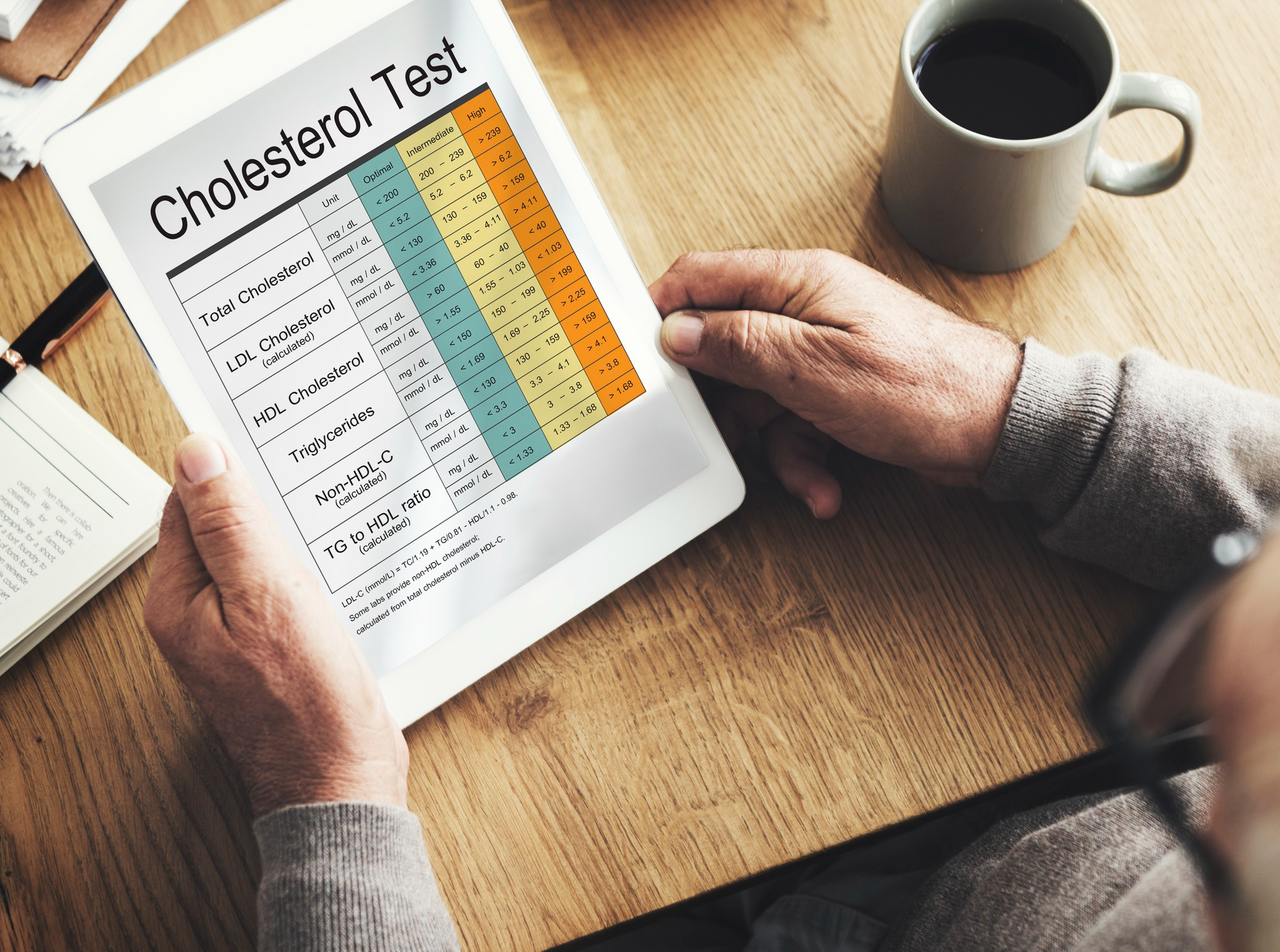
A person holding a cholesterol test report, displaying details like total cholesterol, HDL, LDL and triglyceride levels.
When most people think about blood fats, cholesterol gets all the attention. Triglycerides are the quieter cousin. They show up on the same lipid profile but get discussed less. In India, with our high-carbohydrate diet and rising rates of metabolic problems, triglyceride levels are frequently high. Often this is brushed off because cholesterol gets the spotlight, but high triglycerides bring their own risks.
This is a practical guide to triglycerides: what they are, why they rise, what level matters, and how to bring them down.
Triglycerides are the most common type of fat in the body. They come from two sources: directly from the fat in food, and from the conversion of excess calories (especially from sugar and refined carbohydrates) by the liver.
When you eat more calories than the body needs immediately, the excess gets stored as triglycerides in fat cells. Between meals, hormones release these triglycerides for energy.
Triglycerides circulate in the blood inside particles. After a fatty meal, blood triglycerides rise temporarily and then return to baseline. The fasting level (measured 9 to 12 hours after eating) reflects the body's overall fat handling.
Persistent high triglycerides cause two main problems.
Atherosclerosis and heart disease: high triglycerides contribute to plaque buildup in arteries. They are an independent risk factor for heart attacks and strokes, particularly when combined with low HDL or high LDL.
Pancreatitis: when triglycerides go very high (above 500 mg/dL, especially above 1000 mg/dL), the pancreas can become inflamed. Acute pancreatitis is painful, dangerous, and can be life-threatening.
High triglycerides also tend to come with other problems: insulin resistance, prediabetes, diabetes, fatty liver, central obesity, and the cluster called metabolic syndrome.
Measured fasting:
Many Indians have borderline high or high triglycerides. The combination of high triglycerides and low HDL (often seen together) is common.
The lower target for people with heart disease, diabetes, or other high-risk conditions is below 150 mg/dL, with some doctors aiming below 100 mg/dL.
The causes are usually a combination of lifestyle, weight, and metabolic factors.
The biggest dietary culprits:
In India, a diet heavy in white rice, sweets, and oily snacks raises triglycerides reliably. The carbohydrate-heavy nature of Indian diets is a major factor.
Particularly abdominal weight. Belly fat is metabolically active and raises triglycerides.
Sedentary lifestyle worsens triglyceride handling.
Insulin resistance makes the liver produce more triglycerides. Diabetes is often associated with high triglycerides and low HDL.
Even moderate alcohol raises triglycerides. Heavy alcohol use can push levels very high.
Underactive thyroid raises triglycerides. Treatment of thyroid often normalises them.
Affects fat metabolism.
Familial hypertriglyceridemia and other inherited conditions cause persistently high levels despite good lifestyle.
Triglycerides naturally rise in pregnancy. Usually not treated unless very high.
Like cholesterol, high triglycerides typically produce no symptoms.
Very high levels (usually above 1000 mg/dL) can cause:
When pancreatitis occurs, severe abdominal pain (usually upper abdomen, often radiating to the back), nausea, vomiting, and fever are typical.
Triglycerides are part of a standard lipid profile. Most people should be screened along with cholesterol:
Testing is done fasting (9 to 12 hours, water allowed) for the most accurate result, since triglycerides spike after meals.
Treatment depends on the level and overall risk.
Lifestyle changes are usually enough. Address weight, diet, exercise, alcohol.
Lifestyle changes are the foundation. Medications may be added based on overall cardiovascular risk. Often statins are given even when the main issue is triglycerides because they reduce overall heart risk.
Active medical treatment. Risk of pancreatitis is the immediate concern. Lifestyle changes plus medications:
These can reduce triglycerides by 30 to 50% in many cases, sometimes more.
This is often the single most effective change:
Even moderate alcohol can keep triglycerides elevated. Complete cessation may be needed for very high levels.
5 to 10% weight loss significantly improves triglycerides.

Sudden weight loss concern, man standing on weighing scale.
Both affect metabolism and triglycerides.
Smoking worsens overall lipid profile and cardiovascular risk.
A cluster of risk factors that often occur together:
Three or more features = metabolic syndrome. Significantly raises heart disease and diabetes risk. Active lifestyle and medical management needed.
When triglycerides are very high (above 1000 mg/dL), preventing pancreatitis is the priority. Aggressive treatment with diet (often very low fat temporarily), medications, and sometimes apheresis (a procedure to remove fat from blood) may be needed.
Triglycerides naturally rise. Usually not treated unless very high or there is a history of pancreatitis. Diet adjustments help.
Increasingly common with childhood obesity. Diet, activity, and weight management are the main approaches.
Genetic high triglycerides need lifelong management with diet and medications. Family screening is important.
"Triglycerides do not matter; only cholesterol matters." Triglycerides are an independent risk factor for heart disease and a cause of pancreatitis.
"Triglycerides come only from fat in food." Most come from excess calories, especially sugars and refined carbs.
"If I do not eat oily food, my triglycerides will be normal." Sugar and refined carbohydrates raise triglycerides more than dietary fat in many people.
"Coconut water is unlimited." It has sugar. Moderate amounts are fine.
"Fruit juice is healthy." Even fresh juice raises triglycerides because of concentrated sugar without fibre.
"Alcohol is fine in moderation for cholesterol." Even moderate alcohol raises triglycerides.
"Triglyceride medication is harmful." Modern medications are well-tolerated. Untreated very high triglycerides are dangerous.
"You can eat as much rice as you want if it is brown." Brown rice has the same carbs as white. The advantage is fibre and slower absorption.
"Triglycerides can be lowered with home remedies alone." Mild elevations may respond. Significant elevations need both lifestyle and often medication.
Morning: Warm water with lemon. A small breakfast of vegetable upma or poha with vegetables. Skip the sugar in tea or coffee.
Mid-morning: An apple or a small handful of almonds and walnuts. No biscuits with chai.
Lunch: One roti and a small portion of rice with dal, sabzi (plenty of vegetables), and salad. Curd or buttermilk.
Afternoon: Roasted chana or a fruit. Avoid packaged snacks.
Dinner: Light. Khichdi or one roti with sabzi. Salad. Lean protein like grilled fish or paneer.
Avoid throughout the day: sweets, packaged biscuits, fried snacks, sugary drinks, alcohol, large portions of rice and roti, vanaspati items.
Add throughout the week: 2 to 3 servings of fatty fish, daily walk or exercise, weekly weight check.
At Prakash Hospital Noida, our cardiologists, physicians, and endocrinologists evaluate and manage high triglycerides comprehensively, address related conditions (diabetes, thyroid, metabolic syndrome), and provide nutritional counselling. Cardiac evaluation and risk assessment are part of complete care.
Whether you live in Sector 18, Sector 62, Greater Noida West, or anywhere nearby, Prakash Hospital Noida is a trusted name for cardiology and metabolic care in Noida.
High triglycerides are common in India, often missed in favour of cholesterol discussions. They increase heart disease risk and, when very high, can cause acute pancreatitis.
The biggest dietary drivers are refined carbohydrates, sugar, and alcohol. Reducing these, alongside weight management, regular exercise, and addressing diabetes and thyroid issues, can dramatically lower triglycerides.
Medications (fibrates, omega-3 supplements) are added for high levels or when lifestyle changes are not enough.
Get tested if you have not been. Take the numbers seriously. The work to bring triglycerides down also improves diabetes, weight, blood pressure, and overall metabolic health. Few changes give such broad benefits.
 Copy
CopyWe offer expert care across key specialties, including Medicine, Cardiology, Orthopaedics, ENT, Gynaecology, and more—delivering trusted treatment under one roof.


Book a consultation with Prakash Hospital's specialists — 24/7 emergency care, 100+ doctors, NABH accredited.

Prakash Hospital Pvt. Ltd. is a 100 bedded NABH NABL accredited multispecialty hospital along with a center of trauma and orthopedics. We are in the service of society since 2001.
OUR SPECIALITIES
Patient Services
PROCEDURES
Contact Us
D – 12A, 12B, Sector-33, G. B. Nagar, Noida, Uttar Pradesh 201301
+91-8826000033


© 2026 All rights reserved.
Designed and Developed by Zarle Infotech