


स्ट्रेस फ्रैक्चर (Stress Fracture): कारण, लक्षण और रिकवरी
जानिए स्ट्रेस फ्रैक्चर के कारण, लक्षण और सही इलाज। समय पर देखभाल, आराम और सही उपचार से जल्दी रिकवरी कैसे पाएं।
12 May 2026
by Prakash Hospital
by Prakash Hospital
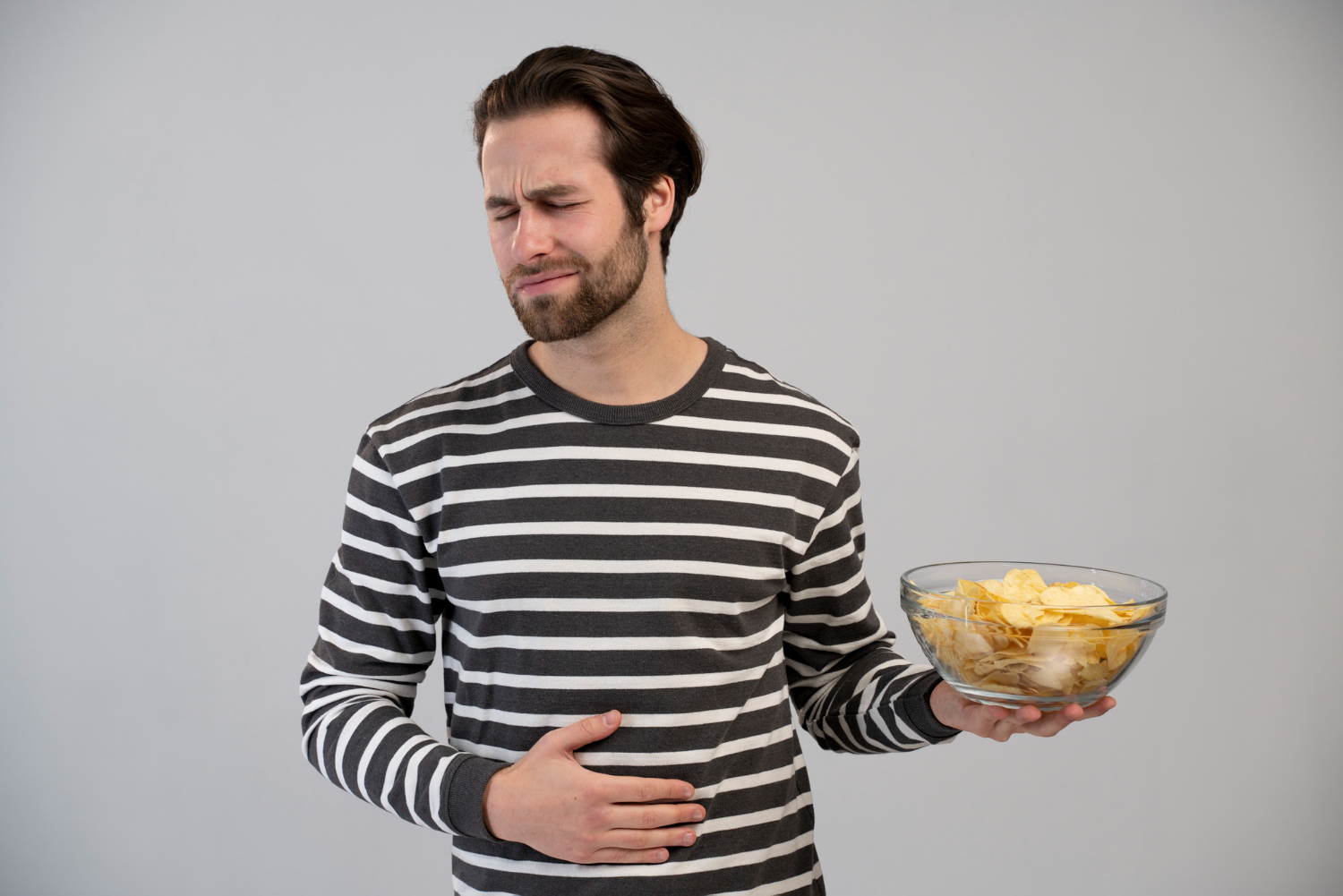
A person holding their stomach and worried about belly fat.
Something shifts around 40. People who maintained a stable weight for years suddenly notice belly fat appearing — despite no obvious change in what they're eating or how much they're moving. It's frustrating, and it feels unfair. It's also physiologically real, and it's not just about eating less.
The body at 40 and beyond is genuinely different. Hormones change. Muscle mass declines. Metabolism adjusts. Sleep patterns shift. All of these affect fat distribution, and the belly is where the effects land most visibly. Understanding why makes it possible to address it more effectively than generic diet advice allows.
In women, the perimenopausal transition (typically 40s) involves declining estrogen. Estrogen plays a role in fat distribution — it keeps fat preferentially stored in the hips and thighs. As estrogen drops, fat begins redistributing toward the abdomen. This is why women who maintained a pear shape for decades often find themselves with a larger waist in their 40s and 50s, even without significant weight gain.
Progesterone levels also fluctuate, contributing to water retention and bloating that can make the abdomen appear larger.
In men, testosterone declines gradually from around 30 onwards (about 1% per year). Lower testosterone reduces muscle mass, slows metabolism, and promotes abdominal fat storage. By 40–50, these cumulative changes are often noticeable.
After 30, muscle mass decreases by roughly 3–8% per decade without specific resistance training. By 40, this process is meaningful — less muscle mass means lower basal metabolic rate. The same food intake that maintained weight at 30 creates a surplus at 45, with no change in actual eating behaviour.
This is the most important physiological factor most people don't account for when trying to lose belly fat after 40. The metabolism hasn't "slowed" arbitrarily — it's slower because there's less muscle. The solution is to rebuild muscle, not just reduce calories.
Sleep architecture changes after 40 — specifically, there's less slow-wave (deep) sleep. This is the sleep phase most important for growth hormone release (which supports fat burning and muscle maintenance), cortisol regulation, and metabolic recovery. Many people over 40 sleep the same number of hours but sleep less deeply, which has downstream metabolic effects.
Insulin sensitivity tends to decrease with age, particularly without regular physical activity. This means the body handles carbohydrates less efficiently — blood glucose rises higher and stays elevated longer after meals. The metabolic response to a large rice-heavy meal at 45 is different from the same meal at 25.
The 40s often bring particular stress loads — career demands, children's education pressures, ageing parents, financial responsibilities. Chronic stress means chronically elevated cortisol, which directly promotes visceral fat storage.
The strategies that worked at 25 — eating slightly less and walking a bit more — often don't produce the same results at 45. Not because they're wrong, but because they address only part of the problem. The muscle loss and hormonal factors need different interventions.
Before 40, resistance training is optional — you can maintain weight with cardio alone. After 40, it becomes the most important type of exercise for belly fat specifically, because:
This doesn't require a gym. Bodyweight exercises — squats, lunges, push-ups, planks, rows with resistance bands — done consistently three times a week produce significant benefits.
If you've never done resistance training, start with guided programmes or a trainer for the first few weeks to learn correct form. The risk of injury from poor form is real, especially in the 40s.
The body becomes slightly less efficient at building muscle from protein as it ages — a phenomenon called anabolic resistance. The practical implication is that you need more protein, not less, as you age to maintain the same muscle mass.
After 40, target 1.4 to 1.8 grams of protein per kilogram of body weight daily. For most Indian adults in this age range, this means actively increasing protein at every meal:
Higher protein intake also supports satiety — you feel fuller on fewer total calories, which helps with the calorie management that belly fat requires.
The reduced insulin sensitivity after 40 means carbohydrate choices matter more. This isn't a reason to eliminate carbohydrates — dal-roti and dal-rice are still good meals — but it is a reason to reduce:
Replacing a portion of refined carbohydrate with protein or vegetables at each meal is the most practical approach.
If sleep is inadequate or disrupted, every other effort is working against the metabolic current. Seven to eight hours, with attention to sleep quality:
Chronic stress directly adds to belly fat regardless of diet and exercise. After 40, this often requires active, deliberate interventions:
Daily breathwork or meditation (10–15 minutes). Regular physical activity (which also reduces cortisol). Social connection. One evening per week with no work obligations. Reducing caffeine after 12 noon (cortisol is already naturally elevated in the morning; adding caffeine can overshoot and impair sleep).
For women in perimenopause or menopause with significant symptoms, Hormone Replacement Therapy (HRT) may affect fat distribution alongside other symptom relief. This is a medical discussion to have with a gynaecologist based on individual health history and risk profile — not a recommendation for everyone, but worth discussing if weight redistribution is significant and other symptoms are present.
For men with documented low testosterone (blood test), testosterone therapy is sometimes appropriate. Again, a medical evaluation rather than a self-determined intervention.
For women with PCOD (which can persist beyond 40), treating insulin resistance is central to belly fat management.
Belly fat reduction after 40 is slower than it was at 25. This is true, and it's worth accepting rather than fighting. A realistic timeline:
The goal is sustainable change over months and years, not transformation in weeks. Approaches that produce rapid results after 40 usually involve significant muscle loss, which worsens the metabolic situation long-term.
Severe calorie restriction: at 40+, severe restriction accelerates muscle loss and triggers metabolic adaptation faster than it did at 25. The body protects fat stores aggressively during starvation. Modest, sustainable deficits work better.
Cardio only: walking and running are excellent for health. Without resistance training after 40, they don't address the muscle loss that's driving metabolic slowdown.
Skipping meals: increases cortisol, disrupts hunger hormones, and promotes muscle breakdown. Three regular meals with adequate protein is better.
Fad diets: any approach you can't sustain after the first month will be followed by weight regain. Sustainable modest changes compound.
Supplements and detoxes: no product compensates for the fundamental hormonal and metabolic changes. They're unlikely to help and some are harmful.
Exercise:
Monday: 30-minute brisk walk + 20 minutes resistance training
Tuesday: 30-minute walk or light swim
Wednesday: 30 minutes HIIT (intervals)
Thursday: Rest or very light walk
Friday: 30 minutes walk + 20 minutes resistance training
Saturday: 30-minute walk + active household activity
Sunday: Rest
Diet basics:
Protein at every meal. One less roti or half the usual rice portion at dinner. No sugary drinks. Dal daily. Fish or chicken 3–4 times a week. Seasonal fruit instead of biscuits for snacks.
Sleep:
In bed by 10:30 pm. Phone out of the room. 7–8 hours target.
Stress:
10-minute morning breathing. One evening per week with no work.
This isn't glamorous. It's sustainable — which is what produces results over 6–12 months rather than what looks good for 3 weeks.
If belly fat is increasing despite genuine, sustained lifestyle effort, ask for:
A medical assessment identifies whether physiological factors are blocking progress and what specific management might help.
At Prakash Hospital Noida, we provide metabolic health assessment for adults over 40 — including blood glucose, thyroid, hormonal evaluation, and lipid profile — alongside dietary and lifestyle counselling for belly fat management. Gynaecology consultation for perimenopausal women and general physician support for men are both available.
Whether you're in Sector 18, Sector 62, Greater Noida West, or anywhere nearby, Prakash Hospital Noida is a trusted name for metabolic health and weight management in Noida.
To book a consultation, call the number.
Tags: #BellyFatAfter40 #HowToLoseBellyFatAfter40 #PrakashHospitalNoida

A portable ECG worn for 24 to 48 hours to catch irregular heartbeats that come and go.
Permanent male contraception: the sperm tubes are cut and sealed under local anaesthetic in about 30 minutes.
Removes a breast lump after tests, usually as day care, and sends it to the lab to confirm what it is.
Free tools to check your weight, plan a pregnancy, track calories and more.
We offer expert care across key specialties, including Medicine, Cardiology, Orthopaedics, ENT, Gynaecology, and more—delivering trusted treatment under one roof.
जानिए स्ट्रेस फ्रैक्चर के कारण, लक्षण और सही इलाज। समय पर देखभाल, आराम और सही उपचार से जल्दी रिकवरी कैसे पाएं।
12 May 2026
by Prakash Hospital
Improve gut health naturally with diet, probiotics, and lifestyle tips guided by experts at Prakash Hospital.
7 Nov 2025
by Prakash Hospital

लिवर खराब होने के शुरुआती लक्षण क्या हैं? थकान, पीलिया, पेट दर्द जैसे संकेतों को नज़रअंदाज़ न करें। कारण, जांच, इलाज और बचाव के तरीके जानें।
20 Feb 2026
by Prakash Hospital

Hair fall in women — hormones, PCOD, thyroid, iron deficiency, and more. Why women lose hair and what helps. Prakash Hospital Noida.
2 Sept 2026
by Prakash Hospital

Natural ways to stop hair fall at home — diet, scalp care, Ayurvedic remedies with evidence, and what to avoid. Prakash Hospital Noida.
2 Sept 2026
by Prakash Hospital

Which vitamin deficiencies cause hair fall — iron, vitamin D, B12, and zinc. How to test and fix them. Prakash Hospital Noida.
4 Sept 2026
by Prakash Hospital


Book a consultation with Prakash Hospital's specialists — 24/7 emergency care, 100+ doctors, NABH accredited.
View All Departments