



Preventive Measures Against Seasonal Sickness: Stay Healthy All Year Round
Learn all about the best preventive measures against seasonal sickness with advice from the experienced doctors at Prakash Hospital, Noida.
23 Oct 2025
by Prakash Hospital
by Prakash Hospital
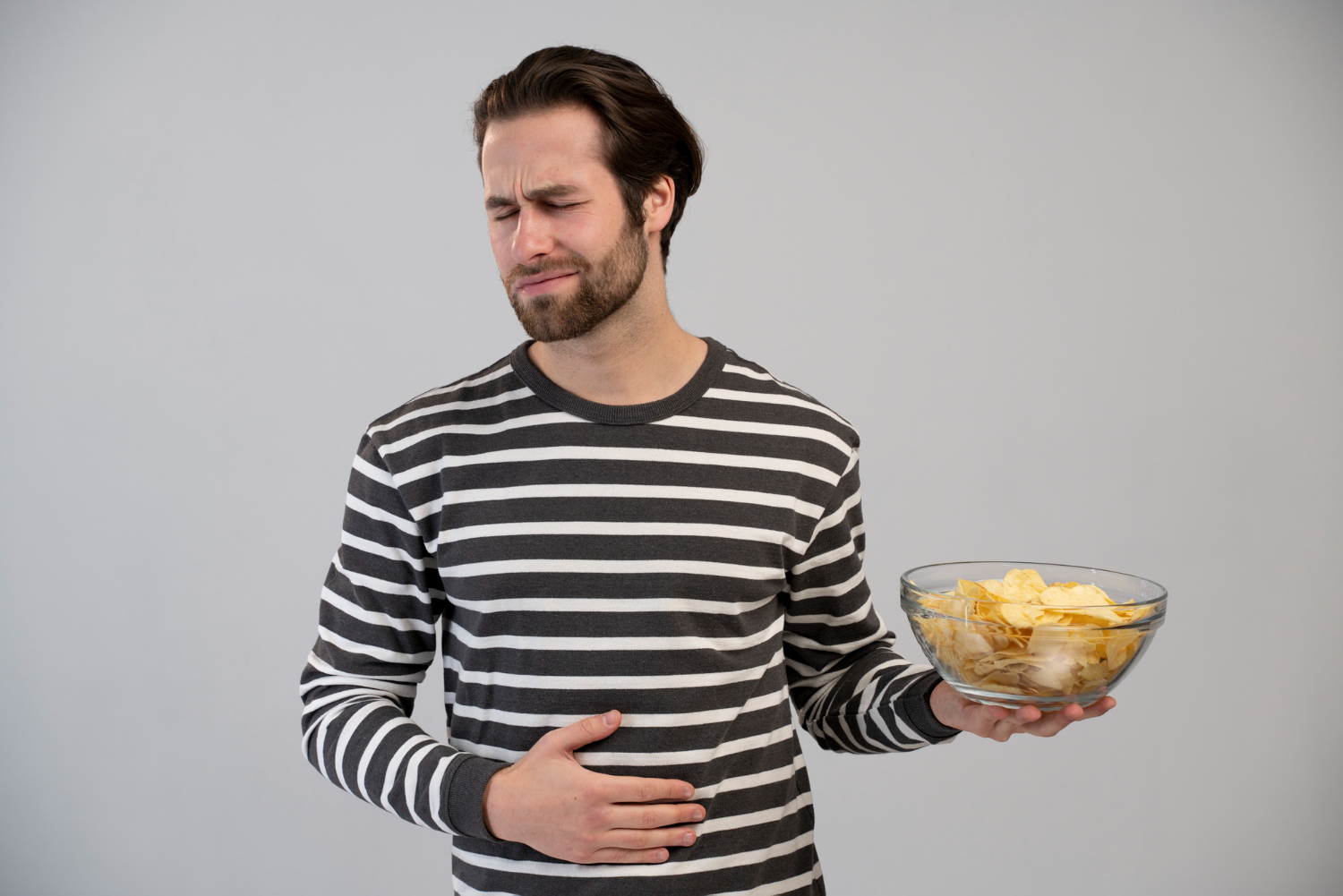
A person holding their stomach and worried about belly fat.
Most people think of belly fat as the soft, pinchable kind around the waist. That's subcutaneous fat — it's visible, it's what makes clothes tight, and it's the type most people are talking about when they say they want to "lose belly fat." It can be a cosmetic concern. It's not typically a medical emergency.
Visceral fat is different. It sits inside the abdominal cavity, wrapped around the liver, pancreas, intestines, and other organs. You can't see it. You can't pinch it. A person can appear thin or carry a normal body weight and still have dangerous levels of visceral fat internally.
This matters because visceral fat is metabolically active in ways that subcutaneous fat isn't. It produces inflammatory chemicals, disrupts insulin signalling, contributes to fatty liver disease, and significantly raises the risk of type 2 diabetes, heart disease, and certain cancers. The risks it poses are internal, quiet, and cumulative.
This is not a generalisation — it's a documented genetic and metabolic reality. Indian populations accumulate visceral fat at lower BMI thresholds than Western populations. The ICMR-INDIAB study established that Indian men face health complications at a waist circumference of 90 cm and women at 80 cm — versus 102 cm and 88 cm in Western guidelines.
The term "thin-fat" or "metabolically obese normal weight" describes this pattern: a person who appears normal-weight by BMI but carries metabolically dangerous visceral fat. This phenotype is disproportionately common in South Asians.
The implication is that Indians cannot rely on BMI or appearance alone to determine if visceral fat is a problem. Waist circumference and metabolic markers matter as much as scale weight.
Waist circumference is the simplest measurement. Measure at the navel level, relaxed (don't suck in):
This is a rough guide, not a clinical measurement. Waist circumference can look fine while visceral fat is elevated in thin-fat individuals.
Waist-to-hip ratio is more refined. Divide your waist measurement by your hip measurement. Values above 0.85 in women and 0.90 in men suggest excess visceral fat.
Blood markers that suggest visceral fat excess:
Metabolic syndrome — the cluster of these findings — is strongly associated with visceral fat and is alarmingly common in urban India.
CT or MRI scans are the only precise measurement tools, but they're ordered for medical reasons, not routine screening.
Insulin resistance promotes visceral fat storage. When cells become resistant to insulin's signal, the body compensates by producing more insulin. High insulin levels promote fat storage, particularly in the visceral depot. Refined carbohydrate-heavy diets, inactivity, and excess weight all worsen insulin resistance.
Cortisol directly drives visceral fat storage. The stress hormone tells the body to store fuel for emergencies, and the visceral depot is where it prefers to store it. Chronic stress — a hallmark of urban Indian life — produces chronically elevated cortisol, which produces visceral fat regardless of diet.
Poor sleep raises cortisol, disrupts insulin sensitivity, and promotes visceral fat accumulation. Research consistently shows that people sleeping fewer than six hours have more visceral fat than adequate sleepers.
Sedentary behaviour — prolonged sitting throughout the day — specifically impairs the fat-burning enzymes that regulate visceral fat. Exercise matters, but so does reducing uninterrupted sitting time.
Dietary patterns: not any single food, but overall patterns. High refined carbohydrate intake, high fructose from sugary drinks, excessive saturated and trans fat, very large meals — all promote visceral fat over time.
Alcohol: regular alcohol consumption, even moderate, raises visceral fat. Beer belly is not a myth.
Menopause and hormonal changes: estrogen decline shifts fat distribution toward the abdomen in women. This is why postmenopausal women often see belly fat accumulate despite no change in diet or exercise.
The damage is systemic and progressive:
Insulin resistance and type 2 diabetes: visceral fat cells are particularly insulin-resistant and release fatty acids that impair insulin signalling in the liver and muscle.
Cardiovascular disease: visceral fat is associated with high triglycerides, low HDL, high LDL, and inflammation — all major heart disease risk factors.
Non-alcoholic fatty liver disease (NAFLD): visceral fat around the liver directly promotes liver fat accumulation. India has some of the highest NAFLD rates globally.
Metabolic syndrome: visceral fat is central to the cluster of conditions (high blood pressure, high triglycerides, low HDL, high blood sugar, large waist) that dramatically raise cardiovascular and diabetes risk.
Inflammation: visceral fat produces inflammatory cytokines that contribute to a chronic low-grade inflammatory state associated with accelerated ageing and disease.
Cancer: excess visceral fat raises risk of colon, pancreatic, and other cancers through multiple mechanisms.
Here's the genuinely encouraging news: visceral fat is more metabolically active than subcutaneous fat, which means it responds to lifestyle changes relatively quickly. Research shows measurable visceral fat reduction within 8–12 weeks of consistent changes — faster than the more visible subcutaneous fat.
Visceral fat, like all body fat, requires an energy deficit to reduce. This doesn't mean severe restriction — a modest deficit of 300–500 calories below maintenance, sustained consistently, produces meaningful fat loss without the metabolic adaptation and muscle loss that accompanies aggressive cutting.
Practically: slightly smaller portions at each meal, reduced refined carbohydrates, more protein and vegetables, fewer liquid calories.
Fructose (from sugary drinks and excessive fruit juice) is converted directly to visceral fat by the liver when consumed in excess. This is one area where the type of calorie matters, not just the total. Eliminating sugary drinks is one of the single most impactful dietary changes for visceral fat.
Other key reductions: packaged biscuits and snacks, excessive white rice portions, maida-based items consumed regularly.
Aerobic exercise reduces visceral fat even without scale weight change. Studies consistently show visceral fat reduction from regular moderate-intensity cardio (brisk walking, cycling, swimming) even when total body weight is stable.
Resistance training adds benefits by improving insulin sensitivity and building muscle that raises resting metabolic rate.
High-Intensity Interval Training (HIIT) is particularly effective for visceral fat — short bursts of high effort followed by recovery. Twenty minutes of HIIT three times a week produces visceral fat reduction comparable to much longer steady-state cardio sessions.
Even walking consistently — 7,000–10,000 steps daily — produces measurable visceral fat reduction over months.
This is not optional. Short sleep raises cortisol, impairs insulin sensitivity, and directly promotes visceral fat accumulation. Getting sleep right often unlocks fat loss that wasn't happening despite diet and exercise.
Cortisol-driven visceral fat won't respond fully to diet and exercise if cortisol remains chronically elevated. Breathwork, meditation, yoga, adequate sleep, social connection, and manageable work hours are not lifestyle luxuries — they're part of the physiological protocol.
Ten minutes of slow breathing (4 seconds in, 4 seconds hold, 6 seconds out) reduces cortisol measurably. Daily practice compounds this.
Alcohol is one of the cleaner interventions — its effect on visceral fat is well-documented and its reduction produces measurable results. Even two to three months of abstinence produces visible changes for regular drinkers.
Hypothyroidism slows metabolism and promotes fat storage. Treatment normalises metabolism and often produces spontaneous visceral fat reduction.
Insulin resistance and prediabetes need active management — dietary changes, exercise, sometimes medication.
PCOD in women often involves insulin resistance that drives visceral fat accumulation. Treatment of the hormonal component is necessary alongside lifestyle changes.
Spot exercises: crunches, abdominal belts, waist trainers. These do not reach the visceral depot.
Detox products: no evidence. The liver detoxes itself with adequate sleep, hydration, and not overloading it.
Fat burner supplements: very limited evidence, some potential harm.
Severe crash diets: rapid weight loss from severe restriction often includes significant muscle loss. Muscle loss worsens insulin sensitivity and raises the proportion of visceral fat even as total weight drops.
Measure waist circumference at the navel weekly rather than relying on scale weight. Visceral fat reduction shows up as waist reduction. Scale weight can be misleading — muscle gain alongside fat loss can keep weight stable while body composition improves significantly.
Blood markers (triglycerides, fasting glucose, HDL) tend to improve within weeks of lifestyle changes, often before significant physical changes are visible. These are useful early indicators that the metabolic situation is improving.
At Prakash Hospital Noida, our physicians assess visceral fat-related metabolic risk through clinical examination, waist measurement, and blood tests including fasting glucose, HbA1c, lipid profile, liver function, and thyroid function. Medical management of contributing conditions — insulin resistance, PCOD, hypothyroidism, metabolic syndrome — alongside lifestyle guidance is available.
Whether you're in Sector 18, Sector 62, Greater Noida West, or anywhere nearby, Prakash Hospital Noida is a trusted name for metabolic health and weight management in Noida.
To book a consultation, call the number.
Tags: #ViscoeralFat #HowToLoseViscoeralFat #PrakashHospitalNoida

Measures pressure and oxygen inside the heart and lungs through a thin tube, to guide valve and heart failure care.
Removes the foreskin, usually as day care, for phimosis, repeated infection or religious reasons.
An ultrasound of the heart that shows how well it pumps and how the valves work. Painless and radiation-free.
Free tools to check your weight, plan a pregnancy, track calories and more.
We offer expert care across key specialties, including Medicine, Cardiology, Orthopaedics, ENT, Gynaecology, and more—delivering trusted treatment under one roof.
Learn all about the best preventive measures against seasonal sickness with advice from the experienced doctors at Prakash Hospital, Noida.
23 Oct 2025
by Prakash Hospital

Stay healthy this winter with immunity-boosting, hygiene, and infection-prevention tips from Prakash Hospital.
27 Oct 2025
by Prakash Hospital

Monsoon brings dengue, malaria, viral fever, and gut infections. Here's how to strengthen your immunity before and during the season. Prakash Hospital Noida.
18 Aug 2026
by Prakash Hospital

Skin pigmentation — what causes dark patches, melasma, and uneven skin tone, and what treatment works. Prakash Hospital Noida.
9 Sept 2026
by Prakash Hospital

How to remove sun tan from face and body — what works at home and what professional treatments offer. Prakash Hospital Noida.
10 Sept 2026
by Prakash Hospital

How to get glowing skin naturally — Indian diet, hydration, sleep, and skincare tips that actually work. Prakash Hospital Noida.
9 Sept 2026
by Prakash Hospital


Book a consultation with Prakash Hospital's specialists — 24/7 emergency care, 100+ doctors, NABH accredited.
View All Departments