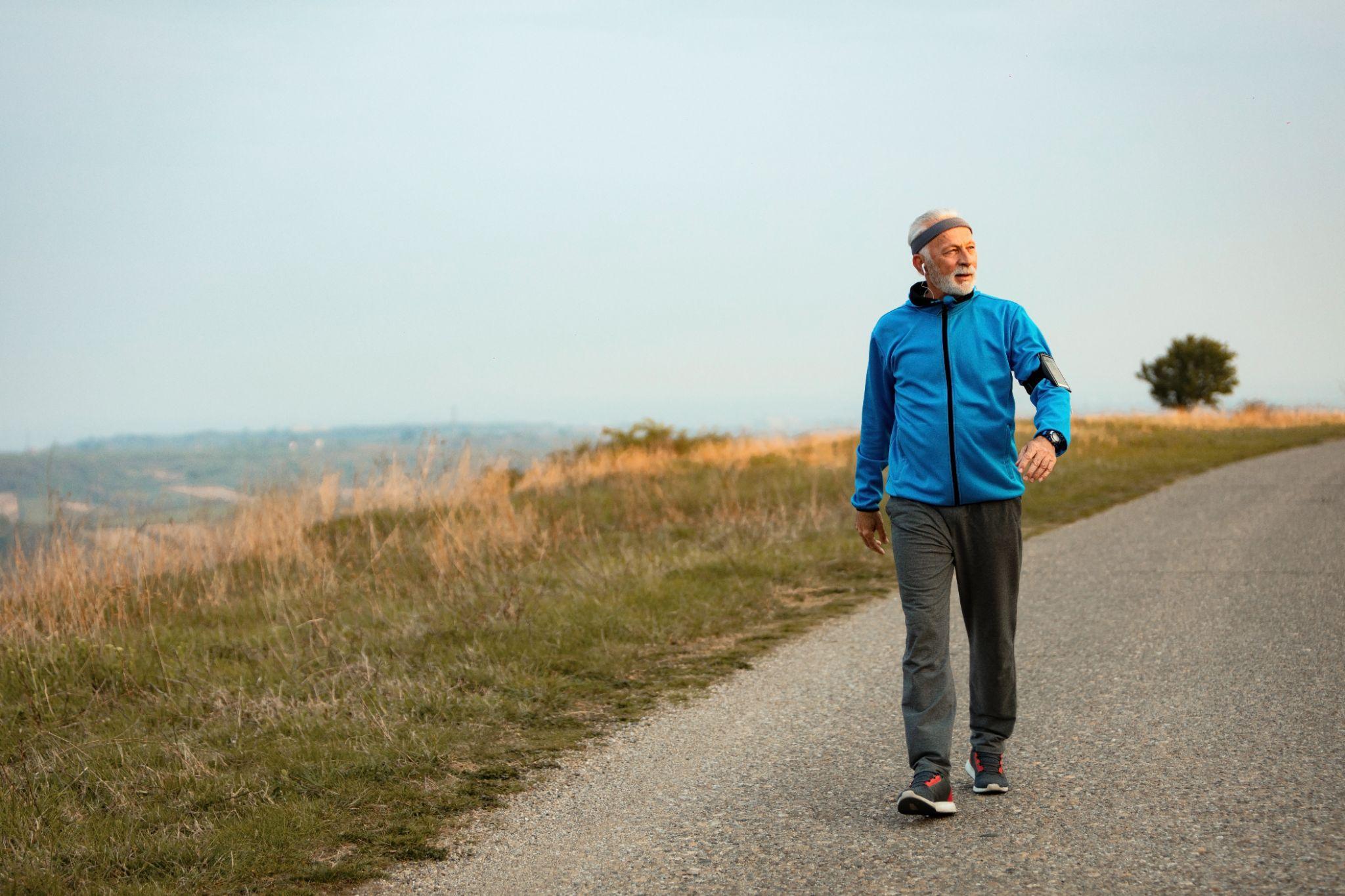
An elderly man walking on a paved path in nature, representing low-impact exercise recommended for joint health and arthritis pain relief.
Walking is the most accessible form of exercise on earth. No equipment, no gym membership, no special clothing — just consistent movement. And yet the research on what regular walking does to the human body is compelling enough that it's recommended by virtually every major health body in the world as the foundation of physical activity guidelines.
In India, where sedentary desk work, long commutes, and time pressure reduce structured exercise for most urban adults, the case for walking is particularly strong. It can be built into commute, lunch break, or morning routine without requiring a schedule change as dramatic as joining a gym.
150 minutes per week of moderate-intensity physical activity is the global minimum recommendation — which translates to 30 minutes on 5 days, or variations thereof. Moderate intensity means brisk walking — the pace at which you can hold a conversation but would find it slightly difficult to sing. Not a leisurely stroll, but not running either.
This threshold is also where the research shows the steepest health gains — additional benefit continues beyond 150 minutes but at a diminishing rate. Below it, health gains are less consistent.
Reduces heart disease risk: regular brisk walking reduces the risk of coronary artery disease and cardiovascular events by 30–35%. The mechanism is multifactorial: improved lipid profile (higher HDL "good" cholesterol, lower triglycerides), reduced blood pressure, reduced resting heart rate (a marker of cardiac efficiency), improved endothelial (blood vessel lining) function, and reduced chronic low-grade inflammation.
Lowers blood pressure: walking is among the most evidence-based non-pharmacological interventions for hypertension. 150 minutes of moderate walking weekly reduces systolic blood pressure by 4–6 mmHg and diastolic by 2–3 mmHg — equivalent to the effect of some antihypertensive medications.
Improves HDL and lipid profile: regular aerobic activity increases HDL cholesterol and shifts LDL to less atherogenic particle sizes. The effect on triglycerides is particularly pronounced — post-meal walking specifically reduces the triglyceride spike that follows a meal.
Post-meal walking — a specifically powerful habit: walking for 10–15 minutes after meals (particularly after carbohydrate-rich Indian meals) reduces postprandial blood glucose and triglyceride spikes. Multiple studies show post-meal walking of just 10 minutes has metabolic benefits disproportionate to its duration — it blunts the glucose peak that follows a meal, reducing insulin demand and long-term glycaemic stress.
Regular walking improves insulin sensitivity — the responsiveness of cells to insulin signals — which is the central metabolic defect in type 2 diabetes. The improvement is independent of weight loss. Muscle contractions during walking activate GLUT4 transporters that bring glucose into muscle cells without insulin — a direct blood glucose-lowering mechanism.
For people with type 2 diabetes, regular brisk walking reduces HbA1c (3-month average blood sugar) by 0.5–0.7% — clinically significant, comparable to some oral diabetes medications.
For people with prediabetes, regular walking (combined with modest dietary improvement) reduces the risk of progression to type 2 diabetes by approximately 58% — the most evidence-based diabetes prevention intervention.
Walking burns approximately 200–300 calories per 30 minutes in an average adult (dependent on body weight and pace). While calorie arithmetic is simplified, the consistent contribution of daily walking to energy balance — alongside the metabolic effects of improved insulin sensitivity and reduced chronic inflammation — makes it a meaningful component of weight management.
Walking also reduces appetite in some people (contrary to the misconception that exercise always increases hunger) and is associated with better dietary choices through its effects on mood and self-regulation.
Weight-bearing exercise — including walking — stimulates bone remodelling through the mechanical stress it places on bone. Regular walkers have measurably higher bone density than sedentary adults. This becomes increasingly important after menopause in women, when bone loss accelerates. Walking doesn't replace the need for calcium and vitamin D — but it works synergistically with them.
The mental health benefits of walking are underappreciated in India, where structured exercise for psychological wellbeing is less culturally normalised than in many Western contexts.
Reduces anxiety and depression: regular aerobic exercise produces effects on depression comparable to antidepressant medication in mild-moderate depression in multiple meta-analyses. The mechanisms include: endorphin release, BDNF (brain-derived neurotrophic factor — stimulates new neuron growth, particularly in the hippocampus), norepinephrine and serotonin modulation, and cortisol reduction.
Reduces stress: even a single brisk walk acutely lowers cortisol and produces a sense of mental clarity. Regular walking builds a more resilient stress response.
Improves sleep: people who walk regularly fall asleep faster and experience more deep (slow-wave) sleep. Regular aerobic activity is one of the most consistent non-pharmacological interventions for insomnia.
Reduces cognitive decline: epidemiological studies consistently show that regular walkers have lower rates of dementia and age-related cognitive decline. Walking improves cerebral blood flow, reduces neuroinflammation, and promotes hippocampal neurogenesis (new brain cell growth in memory regions).
Walking stimulates gut motility — the wave-like contractions that move food through the digestive tract. Regular walkers have significantly faster gut transit times than sedentary people, meaning less time for stool to sit in the colon (reducing constipation and the bacterial overgrowth that accompanies slow transit). A 15-minute post-meal walk is a traditional recommendation in many cultures for a reason.
The common belief that walking "wears out" joints is not supported by evidence. Regular moderate-pace walking protects cartilage health in the knees by:
People who walk regularly have lower rates of knee osteoarthritis than sedentary people. The exceptions are very high-intensity running (particularly with poor biomechanics) and walking with significant pre-existing joint damage — in these cases, lower-impact alternatives (swimming, cycling) may be more appropriate.
Regular moderate aerobic exercise — including walking — improves immune surveillance. Immune cells circulate more effectively and natural killer cell activity is higher in regular exercisers compared to sedentary people. Regular walkers have lower rates of respiratory infections and shorter duration of illness when they do get sick.
Overtraining (very high-intensity exercise without adequate recovery) temporarily suppresses immune function — the "J-curve" relationship. Brisk daily walking is in the optimal zone for immune benefit.
Morning walking before phone and work begins: the most consistent walkers typically go before the competing demands of the day arrive.
Post-meal walking (after lunch or dinner): naturally integrated into the routine; provides specific metabolic benefit.
Walking meetings: for colleagues — some meetings become more productive in motion than seated.
Two-wheeler to walking for short distances: many Indian urban errands within 1–2 km are walkable; habitual two-wheeler use for these distances removes daily incidental activity.
10-minute segments: research shows that three 10-minute walks spread through the day produce similar benefits to a single 30-minute walk. This makes the target achievable even on fragmented days.
Comfortable footwear matters: supportive walking shoes with adequate cushioning prevent the joint and foot discomfort that discourages consistency. A modest investment in proper footwear pays dividends in consistency.
Whether you live in Sector 18, Sector 62, Greater Noida West, or anywhere in the NCR, Prakash Hospital Noida is a trusted name for preventive health, diabetes management, cardiovascular health, and general wellness in Noida.
To book a consultation, call the number.
Tags: #BenefitsOfWalking #WalkingHealthBenefits #PrakashHospitalNoida

We offer expert care across key specialties, including Medicine, Cardiology, Orthopaedics, ENT, Gynaecology, and more—delivering trusted treatment under one roof.


Book a consultation with Prakash Hospital's specialists — 24/7 emergency care, 100+ doctors, NABH accredited.

Prakash Hospital Pvt. Ltd. is a 100 bedded NABH NABL accredited multispecialty hospital along with a center of trauma and orthopedics. We are in the service of society since 2001.
OUR SPECIALITIES
Patient Services
PROCEDURES
Contact Us
D – 12A, 12B, Sector-33, G. B. Nagar, Noida, Uttar Pradesh 201301
+91-8826000033


© 2026 All rights reserved.
Designed and Developed by Zarle Infotech