


Dengue, Malaria, or Chikungunya? How to Tell the Difference
Dengue, malaria and chikungunya share many symptoms — here's how to tell them apart and when to get tested. Prakash Hospital Noida.
18 Aug 2026
by Prakash Hospital
by Prakash Hospital
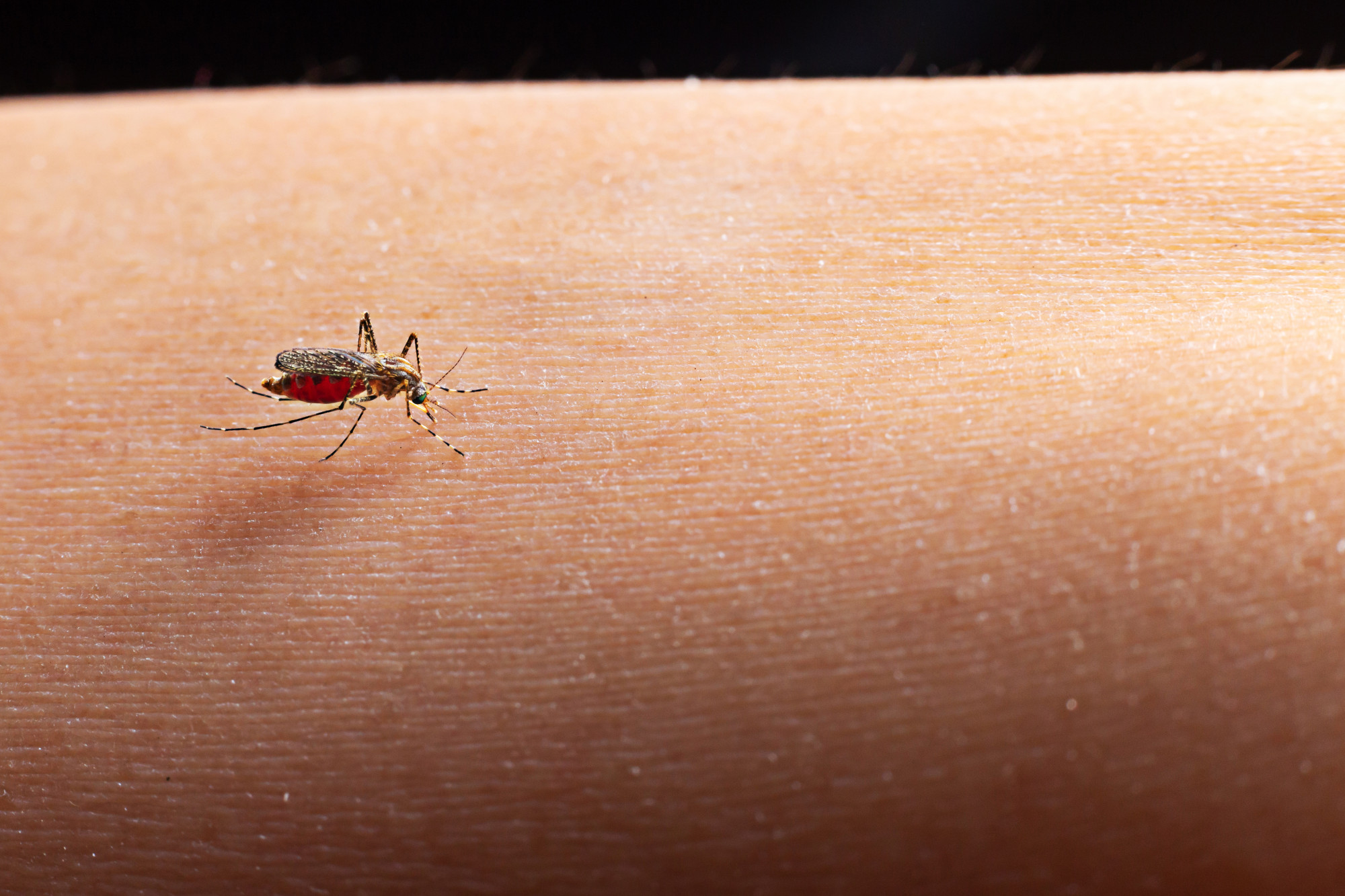
A mosquito biting human skin, illustrating dengue transmission and highlighting dengue symptoms, treatment, and prevention measures.
Every monsoon season in India, dengue cases surge. The Aedes aegypti mosquito — the primary carrier of dengue virus — thrives in clean, stagnant water that accumulates during and after rains. In Noida and Delhi NCR, dengue is a real seasonal risk from July through October, with peaks in August and September.
Most dengue cases are self-limiting — the infection is unpleasant but manageable at home with supportive care. But a minority of cases progress to severe dengue, which can be life-threatening within hours if not recognised and treated. Knowing the difference between manageable dengue and warning signs that need hospital care is genuinely critical knowledge during the monsoon months.
Dengue is a viral infection caused by the dengue virus (DENV), transmitted through the bite of an infected Aedes mosquito. There are four serotypes (DENV-1 through DENV-4). Infection with one serotype provides lifelong immunity to that serotype but not to the others. A second dengue infection with a different serotype carries significantly higher risk of severe disease.
The Aedes aegypti mosquito bites primarily during the day — unlike the malaria-carrying Anopheles mosquito which bites at night. It breeds in small collections of clear water: flower pot saucers, tyres, coolers, clogged gutters, water storage containers without lids, and anything that holds water for more than five days.
Dengue has three phases:
High fever: typically 38.5–40°C, often rising suddenly. The fever may remit briefly and then return — giving the classic "saddle-back" pattern in some cases.
Severe headache: typically behind the eyes and forehead. The retroorbital pain (pain behind the eyes that worsens when moving the eyes or pressing on them) is characteristic of dengue and less common in malaria or flu.
Muscle and joint pain: dengue is sometimes called "breakbone fever" because the muscular and joint pain can be so severe it feels as though bones are breaking. This is not an exaggeration — the myalgia (muscle pain) and arthralgia (joint pain) are disproportionate to a typical viral fever.
Nausea and vomiting: common, particularly in the first 1–2 days.
Rash: a flushed, red appearance to the face is common early. A second, maculopapular rash (flat red spots with raised areas) often appears on day 3–5, typically starting on the trunk and spreading outward.
Fatigue and weakness: profound tiredness out of proportion to how long the fever has been present.
Loss of appetite: food and even water may be unappealing.
During this phase, platelet count typically begins to fall and white blood cell count drops (leucopenia). Blood tests done at this stage will often show these changes.
This is the most important phase to understand. Many patients feel the fever has reduced and assume they are recovering — but this is when the risk of severe disease is highest.
Warning signs — these require immediate hospital care:
Severe dengue (dengue haemorrhagic fever / dengue shock syndrome):
Some patients develop plasma leakage — the dengue virus increases vascular permeability and fluid leaks from blood vessels into surrounding tissues. This causes:
Severe dengue requires hospitalisation, close monitoring, and careful fluid management. If caught early, outcomes are generally good. If missed or delayed, it can be fatal.
The fever resolves, platelet count begins to rise, and appetite returns. Most patients feel substantially better. The rash often reappears in this phase as platelet count recovers.
Excessive fluid given intravenously during the critical phase may shift to the circulation during recovery, causing transient fluid overload — another reason why dengue management requires medical supervision rather than self-management with excessive IV drips.
These three mosquito-borne infections overlap in season and some symptoms. Key differences:
| Feature | Dengue | Malaria | Chikungunya | |---|---|---|---| | Fever pattern | High, may saddle-back | Cyclic, with shivering | High, sudden | | Joint pain | Moderate-severe | Mild | Severe, often disabling | | Retroorbital pain | Yes, characteristic | Uncommon | Uncommon | | Rash | Yes, typical | Uncommon | Yes | | Platelet drop | Yes, significant | Mild | Mild | | Severe complications | Bleeding, shock | Cerebral malaria | Joint involvement prolonged | | Mosquito biting time | Day | Night | Day and night |
Blood tests (dengue NS1 antigen, dengue IgM/IgG antibodies, malaria RDT or smear) distinguish these accurately. Testing is important — treatment implications differ.
NS1 antigen test: detects dengue virus antigen in blood; positive in the first 1–5 days of fever. Turns negative as the immune response clears the antigen.
IgM and IgG antibodies: IgM appears from day 5 and persists weeks to months. IgG indicates past infection. If the NS1 is negative but dengue is suspected and it's past day 5, the antibody test is used.
Complete blood count (CBC): essential for monitoring. Platelet count and haematocrit are tracked to detect severity and plasma leakage. Low white blood cell count (leucopenia) alongside low platelets is characteristic of dengue.
Testing should be done at the appropriate time — an NS1 test done on day 1 of symptoms is more useful than one done on day 7.
There is no specific antiviral treatment for dengue. Management is supportive — keeping the patient hydrated, reducing fever, and monitoring for warning signs.
Hydration is the most important intervention:
Papaya leaf extract: widely recommended in India, and now supported by some evidence. Clinical trials show papaya leaf extract (prepared from raw fresh papaya leaves — typically blended and the juice strained) may speed platelet recovery. It's not a substitute for medical monitoring, but it's a reasonable adjunctive support for mild cases. Don't consume in very large amounts; the extract can cause nausea. Several commercial preparations are also available.
Light, easily digestible foods:
Avoid:
Can be managed at home (with daily monitoring):
Go to the hospital immediately if:
Children, elderly people, pregnant women, and people with diabetes, kidney disease, or heart disease who develop dengue should be more conservatively managed — earlier hospitalisation is appropriate.
No specific dengue vaccine is widely available for general use in India. Prevention relies on:
Eliminating mosquito breeding sites:
Personal protection:

A woman spraying mosquito repellent on her skin, highlighting an effective preventive measure against mosquito bites and dengue infection.
Community-level: fogging and larval control in residential areas during outbreaks.
At Prakash Hospital Noida, our physicians provide dengue testing (NS1 antigen and antibody testing), platelet count monitoring, and hospitalisation with IV fluid management for severe dengue. During peak dengue season in Noida and Greater Noida, rapid testing and close monitoring ensure appropriate management for every patient.
Whether you live in Sector 18, Sector 62, Greater Noida West, or anywhere in the NCR, Prakash Hospital Noida is a trusted name for dengue fever management, fever evaluation, and general medicine in Noida.

This article covers general medicine concerns. These Prakash Hospital doctors in Noida treat them.

Dr. Birendra Pawar
Consultant Internal Medicine
Hysterectomies · Laparoscopic Hysterectomies · Gynecological Pathologies

Dr. Sunil P. Chaudhary
Consultant Internal Medicine
Diabetes · Hypertension · Thyroid Disorders
A swallowed pill camera that photographs the small intestine to find hidden bleeding or Crohn's disease.
Removes enlarged adenoids that block a child's nose, disturb sleep or keep causing ear infections.
Removes an inflamed appendix through three small cuts, usually with one or two nights in hospital.
Free tools to check your weight, plan a pregnancy, track calories and more.
We offer expert care across key specialties, including Medicine, Cardiology, Orthopaedics, ENT, Gynaecology, and more—delivering trusted treatment under one roof.
Dengue, malaria and chikungunya share many symptoms — here's how to tell them apart and when to get tested. Prakash Hospital Noida.
18 Aug 2026
by Prakash Hospital

Learn the early symptoms of dengue, its stages, warning signs, and when to seek medical help for timely diagnosis and effective treatment.
27 Apr 2026
by Prakash Hospital
Learn everything about dengue like its symptoms, causes, diagnosis, treatment, and prevention at Prakash Hospital.
26 Dec 2025
by Prakash Hospital

Prostate problems — symptoms of BPH, prostatitis and prostate cancer, the tests used to diagnose them, and when to see a doctor. Prakash Hospital Noida.
5 Oct 2026
by Prakash Hospital

Male infertility causes, from varicocele to heat and smoking, the semen analysis, and what helps — a practical guide for Indian men. Prakash Hospital Noida.
7 Oct 2026
by Prakash Hospital

जानिए किडनी फंक्शन टेस्ट (KFT) क्या होता है, यह किन-किन पैरामीटर्स को मापता है और किडनी की सेहत के बारे में क्या जानकारी देता है।
11 May 2026
by Prakash Hospital

Science-backed ways to strengthen your immune system naturally through diet, sleep, exercise, and lifestyle. Prakash Hospital Noida.
30 Jul 2026
by Prakash Hospital
Typhoid fever symptoms, how it's diagnosed, what to eat during recovery, and when to see a doctor. Prakash Hospital Noida.
20 Aug 2026
by Prakash Hospital

Diabetes types, symptoms, diagnosis, and management. Visit Prakash Hospital Noida for comprehensive diabetes care.
17 Jul 2026
by Prakash Hospital


Book a consultation with Prakash Hospital's specialists — 24/7 emergency care, 100+ doctors, NABH accredited.
View All Departments