


खुद से दवा लेना क्यों खतरनाक हो सकता है?
बिना डॉक्टर की सलाह दवा लेना सेहत के लिए क्यों खतरनाक है? जानिए self-medication के नुकसान, साइड इफेक्ट्स और सुरक्षित इलाज का सही तरीका।
5 Jan 2026
by Prakash Hospital
by Prakash Hospital

A man sitting at his workspace, deeply focused on his work, representing natural ways to boost focus, concentration, and overall cognitive performance.
Every student knows the feeling. You sit down to study, open the book, read the same paragraph three times, and still have no idea what it said. The phone is face-down but you're thinking about it. You start a chapter, drift off, come back, realize twenty minutes have passed, and you've retained almost nothing.
This is not a willpower problem. It's partly environmental, partly physiological, and partly about how studying is being done. The good news is that all three are fixable.
Concentration isn't just about effort or discipline. Several things actually make it harder:
1. Sleep debt is probably the biggest single factor for most students. Studying late and waking early for class is a cycle that compounds itself. Sleep-deprived brains process information shallowly and retain far less. Pulling an all-nighter before an exam is almost certainly counterproductive — the material encoded on no sleep is poorly consolidated and retrieved with difficulty under exam stress.
2. Digital devices are specifically engineered to break concentration. Every notification interrupts a focused state, and it takes roughly 15–20 minutes to fully return to deep concentration after an interruption. Most students check their phone multiple times an hour. Do the math — deep concentration rarely happens at all.
3. Wrong environment — noise, poor lighting, uncomfortable seating, clutter — competes for attention without the student necessarily being aware of it.
4. Passive study methods produce less engagement, which feels harder to sustain. Re-reading notes for the fifth time is genuinely boring because the brain doesn't find it demanding. Active study methods are harder but more engaging.
5. Hunger or heavy meals both impair concentration. Working on an empty stomach creates glucose-dip brain fog. A very heavy lunch redirects blood flow to digestion and induces sleepiness. Neither is ideal for studying.
6. Underlying health issues occasionally contribute — anemia, B12 deficiency, thyroid problems, undiagnosed anxiety — but these are less common causes and worth considering only if concentration problems are persistent and severe.
Before the first word is read, the environment matters.
A dedicated study space signals to the brain that it's time to concentrate. If you study in the same place you watch videos and scroll social media, the brain has no contextual cue to shift into a different mode.
What makes a good study space:
Not muted. Not face-down on the desk. Not set to one hour of focus mode. The phone should be in another room.
If this sounds extreme, consider: research from the University of Texas found that the mere presence of a phone on the desk — even switched off — reduced available cognitive capacity. The brain devotes resources to managing the urge to check it.
If that's not possible, use app blockers (Forest, Stay Focused, Freedom) that lock social media and messaging for a set period.
"Study chemistry" is too vague. "Understand and summarize the reaction types in Chapter 6, then do 10 practice problems" is specific. A specific goal gives the brain a clear endpoint and makes the session feel manageable rather than endless.
The method matters as much as the duration. Some techniques are far more conducive to sustained attention than others.
Study for 25 minutes, take a 5-minute break. After four sessions, take a 20–30 minute break.
The breaks are not a reward — they're a functional part of the method. Concentration has a natural duration, and trying to push through its limits produces steeply diminishing returns. Planned breaks reset the attention system.
During the break: stretch, drink water, look at something distant to rest the eyes. Don't check the phone — that restarts the distraction cycle.
Reading and re-reading is passive. The brain processes passively-received information shallowly. After reading a section, close the book and write down everything you remember. Then check what you missed. This is uncomfortable — but that discomfort is the learning happening.
Flashcards, practice questions, past papers, explaining the concept to an imaginary student — all of these are active recall methods and all produce better retention than re-reading.
Pick a concept you're studying. Write it down as if explaining it to someone who knows nothing about the subject. Where the explanation becomes vague or breaks down is where understanding is incomplete. Go back to the material, fill the gap, and try again.
This method forces engagement and quickly reveals which concepts are actually understood versus which are just recognisable from memory.
Studying the same material across multiple sessions spread over days retains far more than cramming the same material in one long session. Each review strengthens the memory trace. Use a schedule: review today, review tomorrow, review in three days, review in a week.
For exams, this means starting earlier — not the night before. Students who start revision two weeks out and space their reviews consistently outperform students who cram, almost every time.
The brain retains information that connects to something it already knows or finds meaningful. Rote facts without context are hard to remember. Facts that fit into a story, connect to a real example, or relate to something personally interesting are retained much more easily.
When studying, ask: why does this matter? What does this remind me of? How does this connect to what I already know? These questions create retrieval pathways.
Seven to nine hours. This is not negotiable if you want to actually retain what you study.
Reviewing material in the hour before sleep and then sleeping is one of the most effective memory consolidation strategies. The brain processes and stores what was in working memory most recently during slow-wave sleep.
Sacrificing sleep for more study time is almost always counterproductive — you're trading consolidation for exposure, and it's a bad deal.
Don't study on an empty stomach. Light, balanced meals before study sessions work better than heavy ones. Good options: a handful of nuts and fruit, curd with a small meal, eggs, dal chawal in moderate amounts.
Avoid sugar-heavy snacks — the spike and crash pattern creates exactly the kind of energy fluctuation that breaks concentration. Stay hydrated through the session.
A 20–30 minute walk or light exercise before a study session measurably improves attention and retention for several hours afterwards. Exercise increases dopamine, norepinephrine, and BDNF — all of which improve focus and memory formation. Many students find the best results come from morning exercise followed by study.
During Pomodoro breaks, move around. Stand up, stretch, walk to the kitchen, do a few jumping jacks. Physical movement resets mental fatigue faster than sitting still.
Post-meal sleepiness (postprandial dip) is real and physiological — blood flow shifts toward digestion and melatonin rises slightly. Schedule lighter study tasks right after meals and save demanding material for when energy peaks (typically mid-morning or late afternoon for most people).
Set specific times to check these — maybe once in the morning, once in the afternoon, once in the evening. Outside those times, the apps are off. This sounds extreme until you try it and notice how much time and attention it returns.
Noise-cancelling headphones with instrumental music, white noise, or brown noise. Apps like myNoise provide a range of soundscapes. Classical music, lo-fi, nature sounds — whatever doesn't activate the language-processing centres (lyrics are distracting for most people when reading or writing).
Many students find that before starting to study, writing down everything currently worrying them — a "brain dump" — clears mental space. The thoughts are captured and don't need to be held in mind while studying.
Scheduled worry time sounds absurd but works: set aside 15 minutes in the evening specifically for worrying and planning. When anxious thoughts come up during study, note them and return to them at the scheduled time.
Break large tasks into tiny, specific pieces. "Study for physics exam" is paralyzing. "Read and summarize pages 45–60 on Newton's laws" is manageable. Cross things off as you go — the dopamine from completion helps sustain motivation.
Consistency builds concentration. When you study at the same time in the same place every day, the brain starts preparing for concentration before you even open the book — in the same way hunger builds before a regular mealtime.
A sample structure:
This is a structure, not a rigid prescription. Adjust for your own peak concentration times.
Occasionally, difficulty concentrating in studies points to something that needs evaluation:
If concentration problems are severe, persistent, and not responding to lifestyle and technique improvements, a doctor's evaluation is worthwhile.
At Prakash Hospital Noida, we evaluate students and young adults with persistent concentration difficulties through blood tests, clinical assessment, and referral to appropriate specialists where needed. Whether the cause is nutritional, hormonal, or related to mental health, there are clear treatment pathways.
Whether you're in Sector 18, Sector 62, Greater Noida West, or anywhere nearby, Prakash Hospital Noida is a trusted name for student health and cognitive wellness care in Noida.
To book a consultation, call the number.
Fix your sleep. Put the phone in another room. Study in short focused blocks with planned breaks. Use active recall instead of re-reading. Space your reviews over days rather than cramming. Eat light before studying, exercise before studying if you can. Stay hydrated.
Do these things consistently for two weeks and see what changes. Most students notice a significant difference within that time. The strategies aren't complex — doing them requires only decision and repetition.
Tags: #HowToImproveConcentrationInStudies #StudyTips #PrakashHospitalNoida

Removes the uterus through keyhole cuts, for fibroids, heavy periods or adenomyosis that other treatment hasn't fixed.
Keyhole surgery on the ovaries to restart ovulation in PCOS when tablets haven't worked, without raising the twin risk.
Removes an inflamed appendix through three small cuts, usually with one or two nights in hospital.
Free tools to check your weight, plan a pregnancy, track calories and more.
We offer expert care across key specialties, including Medicine, Cardiology, Orthopaedics, ENT, Gynaecology, and more—delivering trusted treatment under one roof.
बिना डॉक्टर की सलाह दवा लेना सेहत के लिए क्यों खतरनाक है? जानिए self-medication के नुकसान, साइड इफेक्ट्स और सुरक्षित इलाज का सही तरीका।
5 Jan 2026
by Prakash Hospital
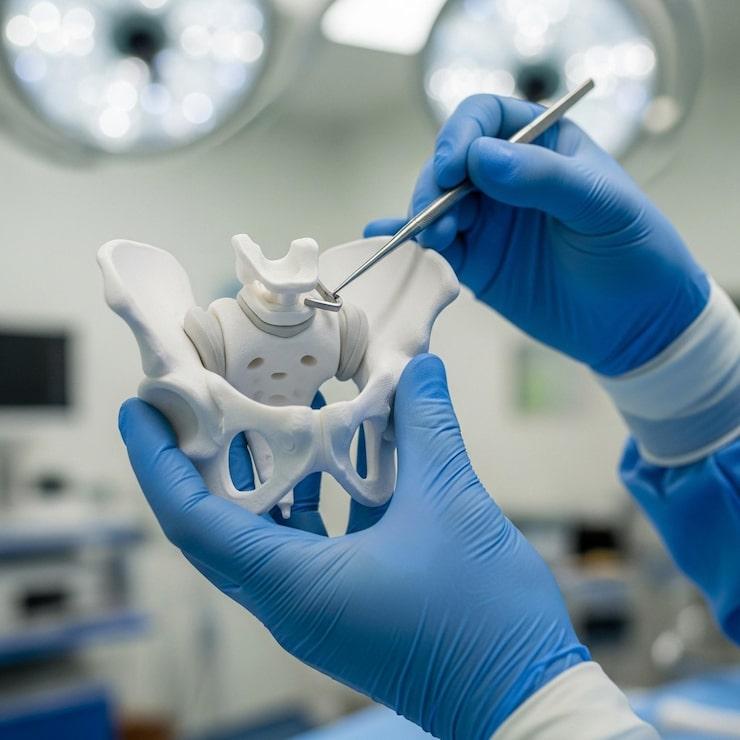
Learn about the ins and outs of hip replacement surgery with the guidance of expert advice from Prakash Hospital, Noida.
17 Sept 2025
by Prakash Hospital

Eczema — understand the symptoms, causes, triggers, and effective treatments for this chronic skin condition. Visit Prakash Hospital Noida for dermatology care.
3 Jun 2026
by Prakash Hospital

ब्लड क्लॉट (खून का थक्का) क्या है, क्यों बनता है, इसके लक्षण क्या हैं और यह कितना खतरनाक हो सकता है, पूरी जानकारी आसान हिंदी में।
27 Apr 2026
by Prakash Hospital

COPD क्या है, इसके शुरुआती लक्षण क्या हैं और इसका इलाज कैसे होता है? जानिए क्रॉनिक ऑब्सट्रक्टिव पल्मोनरी डिजीज के बारे में पूरी जानकारी।
11 Mar 2026
by Prakash Hospital

Discover effective home remedies for dry and wet cough. Know when to seek medical care and get expert respiratory treatment at Prakash Hospital.
5 Feb 2026
by Prakash Hospital


Book a consultation with Prakash Hospital's specialists — 24/7 emergency care, 100+ doctors, NABH accredited.
View All Departments