


Vitamin B12 Deficiency: Symptoms, Risk Factors and What to Do
Vitamin B12 deficiency symptoms — tingling, fatigue, memory issues and more. Who's at risk in India and how to fix it. Prakash Hospital Noida.
30 Sept 2026
by Prakash Hospital
by Prakash Hospital
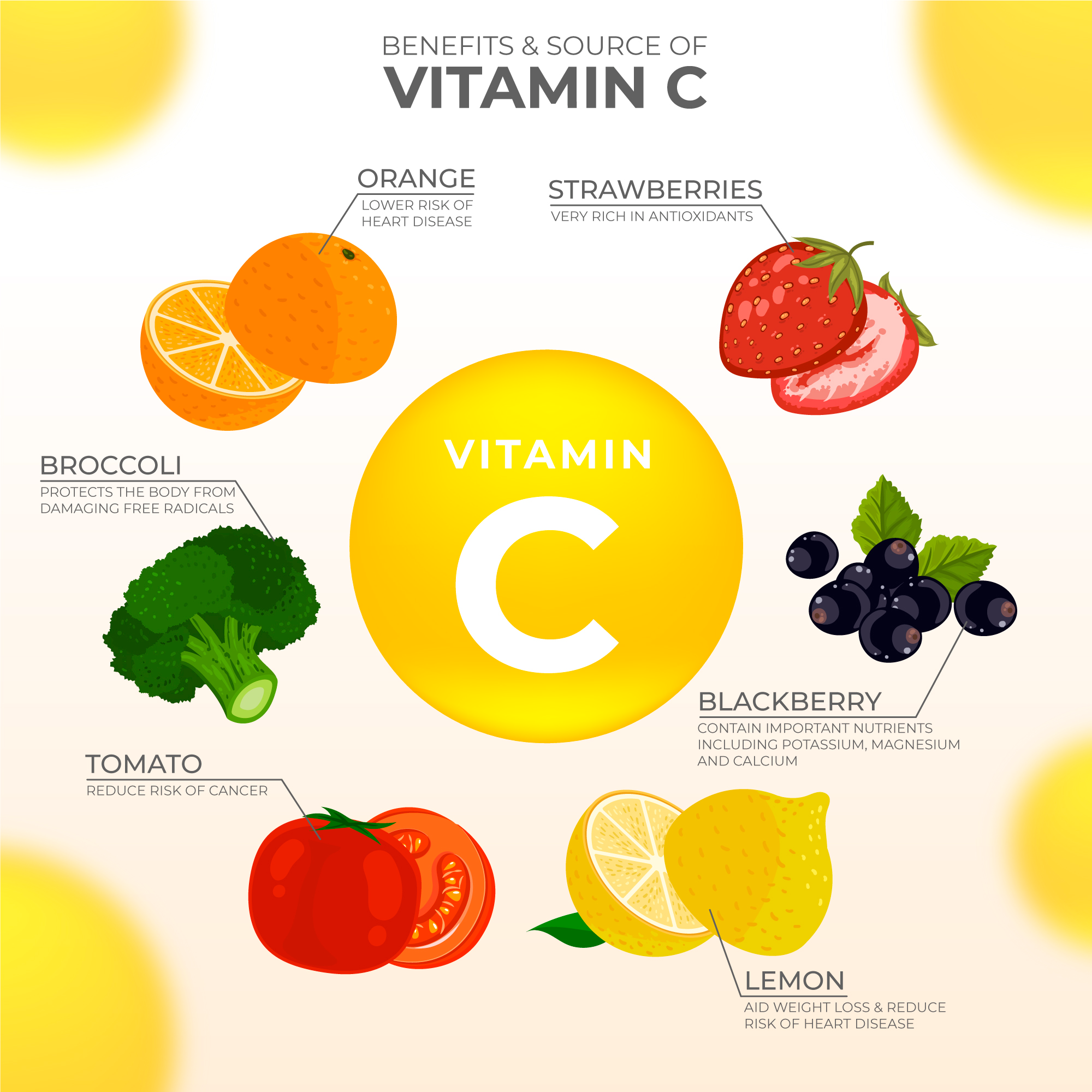
An infographic showing foods rich in Vitamin C such as oranges, lemons, tomatoes, berries.
Most people associate vitamin C with oranges and immune support. The connection is real, but the role of vitamin C in the body is far broader. It supports collagen production, wound healing, iron absorption, antioxidant defence, and immune function. Severe deficiency causes a condition called scurvy, which once devastated sailors on long voyages and still occasionally appears today in people with very restricted diets.
Severe vitamin C deficiency is uncommon in modern India, given the variety of fruits and vegetables widely available. But mild and moderate deficiency are surprisingly common, particularly in smokers, people on restricted diets, the elderly, and those with chronic illnesses. The symptoms — fatigue, slow healing, easy bruising, gum problems — get attributed to other causes.
This article explains what vitamin C does, the symptoms of deficiency, the foods that provide it, and how to make sure you are getting enough.
Vitamin C, also called ascorbic acid, is a water-soluble vitamin. The body cannot make it. It must come from food.
It is essential for collagen synthesis. Collagen is the protein that holds skin, blood vessels, bones, cartilage, tendons, and ligaments together. Without vitamin C, collagen production fails, and connective tissues throughout the body weaken.
It supports wound healing. Cuts, surgical wounds, burns, and other injuries depend on adequate vitamin C for proper repair.
It enhances iron absorption, particularly the plant-based non-heme iron that vegetarians rely on. Vitamin C-rich foods eaten alongside iron-rich foods substantially improve absorption.
It supports the immune system. While vitamin C does not "cure" colds, adequate levels do help the body fight infections more effectively.
It functions as an antioxidant, protecting cells from damage by free radicals. This is part of the reason vitamin C is linked to long-term health protection.
It supports the formation of neurotransmitters including norepinephrine, which affects mood and energy.
It plays a role in the synthesis of carnitine, which the body uses for energy production.
Daily requirements vary by age, sex, and individual factors.
Adult men need 90 milligrams per day.
Adult women need 75 milligrams per day.
Pregnant women need 85 milligrams.
Breastfeeding women need 120 milligrams.
Children need 15 to 75 milligrams depending on age.
Smokers need an additional 35 milligrams per day because smoking depletes vitamin C.
These amounts are easily met by a few servings of fruits and vegetables daily. The body absorbs vitamin C efficiently up to about 100 milligrams per day. Higher doses get progressively less absorbed and excreted in urine.
The body holds about 1500 milligrams of vitamin C in total, with reserves depleted in 1 to 3 months without intake.
Severe vitamin C deficiency (scurvy) is rare in India, but mild and moderate deficiency are more common than people realise.
Studies suggest 5 to 10 percent of the general population has suboptimal vitamin C levels at any given time. The rate is much higher in specific groups — smokers, the elderly, people with chronic illnesses, alcohol-dependent individuals, and people on very restricted diets.
The deficiency develops after weeks to months of inadequate intake. The early symptoms are non-specific and easy to miss.
These appear within weeks of inadequate intake and are easily attributed to other causes.
Fatigue and weakness — persistent tiredness without clear cause.
Irritability and low mood — vitamin C deficiency affects neurotransmitter synthesis.
Vague body and joint aches — diffuse muscle and joint discomfort.
Loss of appetite — reduced interest in food.
Mild weight loss — gradual and unexplained.
These develop after a few months of significant deficiency.
Bleeding gums — gums become swollen, soft, and bleed easily when brushing.
Loose teeth — in advanced cases, teeth become loose because of weakened connective tissues around them.
Easy bruising — small bruises appear with minimal trauma, sometimes spontaneously.
Skin changes — dry, rough skin with a coarse texture. Sometimes coiled, corkscrew-shaped body hair. Perifollicular haemorrhages (small bleeds around hair follicles) may appear.
Slow wound healing — cuts, surgical wounds, and other injuries take longer to heal.
Joint pain and swelling — especially in the knees and ankles, sometimes with internal bleeding.
Petechiae — pinpoint red spots on the skin from tiny bleeds.
Anaemia — vitamin C deficiency reduces iron absorption and causes anaemia indirectly.
Frequent infections — weakened immune function leads to more illnesses.
In advanced scurvy, which is rare in modern India but still occurs:
Severe bleeding under the skin, in the gums, and into joints.
Tooth loss as gum disease progresses.
Severely impaired wound healing.
Jaundice and oedema in late stages.
Severe weakness that prevents normal activities.
Heart and respiratory problems in untreated cases.
Eventually death in extreme untreated deficiency — historically common in sailors on long voyages before the role of vitamin C was understood.
Infants and children show specific signs — irritability, pain on movement, refusing to eat, slowed growth, and bone problems on X-ray. Infant scurvy is a medical emergency.
The primary cause. Diets very low in fresh fruits and vegetables eventually produce deficiency. This can happen in people with limited food access, very restrictive eating patterns, eating disorders, or persistent food preferences that exclude vitamin C sources.
Vitamin C is heat-sensitive and water-soluble. Boiling, prolonged cooking, and storing for long periods all reduce the vitamin C content of foods substantially — sometimes by 50 percent or more. Diets dominated by overcooked vegetables provide less vitamin C than the same vegetables eaten raw or lightly cooked.
Smoking dramatically increases vitamin C requirements. Each cigarette generates oxidative stress that vitamin C neutralises. Smokers need 35 milligrams more per day than non-smokers, and many fall short.
Heavy alcohol use interferes with vitamin C absorption and metabolism while often replacing nutritious foods in the diet.
Malabsorption disorders — Crohn's disease, celiac disease, IBS, severe diarrhoea — reduce absorption.
Chronic kidney disease, particularly in dialysis patients, leads to vitamin C losses through dialysis.
Severe iron overload affects vitamin C metabolism.
Hyperthyroidism, fever, inflammation, surgery, burns, and other conditions that increase metabolic demand raise vitamin C requirements.
Older adults sometimes adopt very limited diets ("tea and toast" eating patterns) that lack fresh produce. Vitamin C deficiency in the elderly is more common than people assume.
Increased requirements during pregnancy and breastfeeding can lead to deficiency if intake does not increase accordingly.
Plenty of options exist, and many are inexpensive and widely available in India.
The classic vitamin C sources. Oranges provide about 70 mg per medium fruit. Lemons and limes add vitamin C to many Indian dishes. Mosambi (sweet lime) is a particularly Indian source.

A bowl filled with fresh citrus fruits, think oranges, lemons, and grapefruits, spotlighting vitamin C-rich foods for women’s fertility.
One of the richest natural sources. A single amla can provide 600 milligrams or more — many times the daily requirement. Amla juice, powders, pickles, and chutneys are widely consumed in India.
Another standout. A medium guava provides around 125 mg, comfortably exceeding daily needs. Affordable and widely available in India.
Particularly red and yellow bell peppers. A medium red bell pepper provides about 150 mg of vitamin C — more than an orange.
Strawberries provide about 60 mg per cup. Other berries like cherries, blackberries, and blueberries contribute.
One kiwi fruit provides about 70 mg of vitamin C.
A cup of papaya provides around 90 mg.
Common in Indian cooking. Provide around 15 to 20 mg per medium tomato. Cooked tomato sauces lose some vitamin C but still contribute.
A cup of cooked broccoli provides around 50 mg. Lightly cooked or raw broccoli retains more.
Common in Indian kitchens. Provides moderate amounts of vitamin C.
Including all forms — green, red, and Chinese cabbage. Raw cabbage retains more vitamin C than cooked.
Cauliflower, cabbage, broccoli, Brussels sprouts, and similar vegetables all contribute.
Spinach, methi, and other greens contribute, though boiling reduces the content.
Yes, potatoes contain vitamin C. A medium potato provides about 20 mg. The vitamin is found just under the skin, so unpeeled potatoes retain more.
Provide modest amounts of vitamin C along with many other nutrients.
In season, an Indian summer staple. A cup of mango provides around 60 mg.
Provides moderate amounts along with the bromelain enzyme.
Because vitamin C is heat-sensitive and water-soluble, how you prepare food matters.
Eat fruits raw whenever possible. Cooking destroys some vitamin C.
Steam or microwave vegetables briefly rather than boiling for long periods. Steaming retains more vitamin C than boiling.
If you boil vegetables, use the cooking water in soups or sauces — vitamin C leaches into it.
Cut vegetables just before cooking, not hours in advance. Cut surfaces oxidise and lose vitamin C.
Store fruits and vegetables properly — cool, dark places extend their vitamin C content. Refrigeration helps.
Eat fresh produce rather than long-stored items. Vitamin C content drops over time.
Choose fresh over canned or processed, when feasible, though canned is acceptable if fresh is not available.
For most cases, clinical diagnosis based on symptoms and dietary history is sufficient.
Blood tests for serum or leukocyte vitamin C levels can confirm deficiency in unclear cases. Leukocyte levels are more accurate than serum levels.
Complete blood count often shows anaemia in established deficiency.
X-rays in children can show characteristic bone changes in advanced scurvy.
A trial of vitamin C supplementation that resolves symptoms within days to weeks is itself diagnostic and often the simplest approach.
Treatment is straightforward and usually rapid.
Dietary improvement with more vitamin C-rich foods is often enough. Aim for 200 to 500 milligrams per day from food sources for a few weeks.
Oral vitamin C supplements at higher doses — typically 500 to 1000 mg per day for adults, 300 mg per day for children — for 1 to 3 months. Symptoms usually start improving within days.
Higher initial doses (sometimes 1 to 2 grams per day for several days), followed by maintenance doses for several months. Sometimes intravenous vitamin C is used initially in severe cases.
Treating malabsorption conditions, stopping smoking, managing other contributing factors are part of long-term management.
Once corrected, a balanced diet with regular fruits and vegetables prevents recurrence. Five servings of fruits and vegetables daily comfortably exceed the requirement.
Mild symptoms — fatigue, body aches, mood — often improve within a few days of starting treatment. Gum bleeding and other connective tissue symptoms improve over weeks. Bone and severe joint problems take longer.
Most people with vitamin C deficiency recover fully with proper treatment.
"Vitamin C cures colds." No. It does not cure colds. Adequate vitamin C levels support immune function generally, but megadoses for an existing cold do not shorten or cure it meaningfully.
"More vitamin C is always better." Above about 200 milligrams per day, the body absorbs progressively less. Excess gets excreted in urine. Very high doses (above 1 gram per day) can cause digestive upset and increase the risk of kidney stones.
"You can overdose on vitamin C." Mild overdose from supplements is possible — diarrhoea, stomach upset, kidney stone risk. Severe toxicity is rare because excess is excreted.
"Lemons have more vitamin C than oranges." Oranges actually have slightly more per piece. Both are excellent sources.
"Cooking destroys all vitamin C." Cooking reduces vitamin C content but does not eliminate it. Steaming briefly retains most.
"Indian diets always provide enough vitamin C." They usually do, but specific groups (smokers, elderly, restrictive eaters) can be deficient.
Smokers need 35 mg more vitamin C daily than non-smokers. Many fall short and benefit from extra fruits and vegetables or a low-dose supplement.
Pregnant women need slightly more vitamin C. A varied diet usually covers it.
Older adults sometimes adopt restrictive eating patterns. Periodic checks make sense.
People with chronic illnesses including kidney disease and inflammatory conditions need careful attention.
Heavy drinkers are at high risk because of both poor nutrition and increased metabolic demand.
A consultation makes sense if you have persistent fatigue, bleeding gums, easy bruising, slow wound healing, joint problems, or other symptoms that fit the vitamin C deficiency picture. People on very restricted diets, smokers, the elderly, and those with chronic illnesses benefit from periodic nutritional assessment.
India's wide variety of vitamin C-rich foods — amla, guava, citrus fruits, mangoes, bell peppers, tomatoes — makes severe deficiency uncommon. But specific risk groups exist. Smokers, elderly individuals on restricted diets, people with chronic illnesses, and those with eating disorders all face higher risk.
Working professionals in Noida who skip fruits and vegetables in favour of processed foods over time can develop mild to moderate deficiency. The symptoms get attributed to stress or workload rather than nutritional shortfall.
At Prakash Hospital, Noida, experienced doctors and dieticians offer nutritional evaluation, vitamin C testing when needed, and personalised dietary planning. The approach addresses the whole nutritional picture rather than focusing on a single vitamin in isolation.
Whether you are in Sector 18, Sector 62, Greater Noida West, or anywhere nearby, Prakash Hospital Noida is a trusted name for nutrition consultation and health checkups.
Vitamin C deficiency is largely preventable through regular consumption of fruits and vegetables. India's traditional diet, when varied, provides plenty of vitamin C through amla, guava, citrus fruits, tomatoes, bell peppers, leafy greens, and many other sources.
The challenges come from specific groups — smokers, the elderly, people with chronic illnesses, restrictive eaters — and from cooking habits that destroy much of the vitamin C in food before it gets eaten.
The path to adequate vitamin C is simple. Eat several servings of fruits and vegetables daily. Include some raw or lightly cooked options. Add amla, guava, or citrus in season. Cook vegetables briefly rather than boiling them for long periods. Stop smoking if you smoke.
These simple habits prevent deficiency, support immune function, improve iron absorption, support wound healing, and contribute to long-term health. Vitamin C is one of the easier nutritional issues to address — once you know to address it.

Pushes the bulge back and reinforces the weak abdominal wall with mesh, by keyhole or open surgery.
Replaces a knee worn out by arthritis with a metal and plastic joint to relieve pain and get you walking again.
A thin needle sample of liver tissue to diagnose liver disease and measure scarring when other tests can't.
Free tools to check your weight, plan a pregnancy, track calories and more.
We offer expert care across key specialties, including Medicine, Cardiology, Orthopaedics, ENT, Gynaecology, and more—delivering trusted treatment under one roof.
Vitamin B12 deficiency symptoms — tingling, fatigue, memory issues and more. Who's at risk in India and how to fix it. Prakash Hospital Noida.
30 Sept 2026
by Prakash Hospital

Vitamin D rich vegetables and fruits — what actually contains vitamin D and what is myth. Visit Prakash Hospital Noida for nutrition guidance.
30 Jun 2026
by Prakash Hospital
Vitamin D3 foods — understand the difference between D2 and D3, top sources, and how to meet your needs. Visit Prakash Hospital Noida for nutrition consultation.
24 Jun 2026
by Prakash Hospital

Hair fall in men — male pattern baldness, causes, and what treatments actually work. Guide from Prakash Hospital Noida, Noida.
7 Sept 2026
by Prakash Hospital

How to stop hair fall with diet, lifestyle changes, and proven treatments. Indian-specific guide from Prakash Hospital Noida.
1 Sept 2026
by Prakash Hospital

Natural ways to stop hair fall at home — diet, scalp care, Ayurvedic remedies with evidence, and what to avoid. Prakash Hospital Noida.
2 Sept 2026
by Prakash Hospital
Vitamin B12 deficiency — recognise the symptoms, understand the causes, and know the foods that help. Visit Prakash Hospital Noida for testing and treatment.
3 Jun 2026
by Prakash Hospital

Learn about vitamin D deficiency symptoms, causes, diagnosis, treatment options, and prevention tips at Prakash Hospital, Noida.
20 Jan 2026
by Prakash Hospital
Learn symptoms, risks, and treatment options for vitamin D deficiency with expert guidance from Prakash Hospital.
12 Nov 2025
by Prakash Hospital


Book a consultation with Prakash Hospital's specialists — 24/7 emergency care, 100+ doctors, NABH accredited.
View All Departments